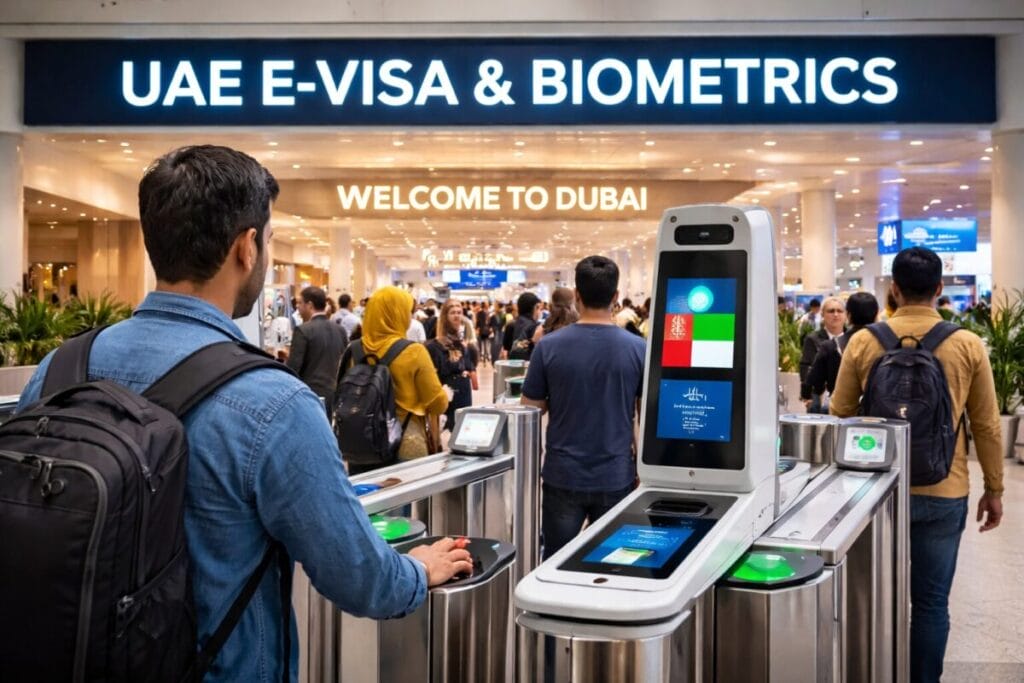
The United Arab Emirates will introduce new travel entry protocols from January 2026. The updated system will require travelers from select countries to obtain an e-visa before arrival. They must also complete biometric screening at entry points.
The policy will apply to nationals from India, Namibia, Egypt, Nigeria, Bangladesh, the Philippines, Uganda, and several other countries. Officials say the move will strengthen border security and speed up airport processing.
The decision marks a major shift in how the UAE manages inbound travel.
Why the UAE Is Updating Entry Requirements
The UAE continues to position itself as a global tourism and business hub. Visitor arrivals have grown steadily across Dubai and Abu Dhabi. Airports in both cities handle millions of international passengers every year.
Authorities want a smarter and safer immigration system. The new e-visa and biometric rules aim to:
- Strengthen identity verification
- Reduce visa fraud
- Prevent unauthorized entry
- Improve border efficiency
The country already uses advanced smart gates at major airports. The expanded biometric system will now support pre-approved digital visas for certain nationalities.
Officials also align these measures with long-term national development strategies focused on digital governance and smart services.
Countries Affected by the New UAE E-Visa Rule
Travelers from the following nations will require pre-approved e-visas and biometric screening:
- India
- Nigeria
- Egypt
- Bangladesh
- Namibia
- Uganda
- Philippines
- Other selected countries
India remains one of the largest source markets for the UAE. Millions of Indian nationals live and work in the Emirates. The new process will affect a significant volume of travelers.
African nations such as Nigeria and Egypt also record rising outbound travel to the Gulf region. Authorities believe the new system will help manage growing passenger numbers more efficiently.
How the UAE E-Visa System Will Work
The new system will operate fully online. Travelers must apply before departure.
Step 1: Online Application
Applicants will submit personal details, passport data, travel dates, and visit purpose through official UAE portals.
Step 2: Digital Approval
Immigration authorities will review the request. Approved applicants will receive an electronic visa by email.
Step 3: Biometric Capture
Upon arrival, travelers will complete biometric verification. This may include:
- Facial recognition
- Fingerprint scanning
- Identity confirmation at smart gates
The system will match biometric data with pre-approved visa records. This process reduces manual document checks.
Officials expect shorter queues and faster clearance times.
What Biometric Screening Means for Travelers
Biometric technology confirms identity using unique physical traits. Many global airports already use similar systems.
The UAE plans to expand facial recognition systems across terminals. Smart gates will verify travelers in seconds. This minimizes human error and speeds up passenger flow.
The country has invested heavily in airport modernization. Dubai International Airport and Zayed International Airport already use automated border control for eligible passengers.
The 2026 update expands this framework to more nationalities.
Impact on Tourism in Dubai and Abu Dhabi
Tourism remains a major economic pillar for the UAE. Dubai alone welcomes millions of leisure visitors annually. Attractions such as the Burj Khalifa, luxury resorts, desert safaris, and global shopping festivals drive arrivals.
Authorities do not expect the new e-visa requirement to reduce tourism demand. Instead, officials believe digital pre-clearance will improve traveler confidence.
Faster entry procedures mean visitors can begin their trips sooner. Shorter wait times enhance the overall airport experience.
The government continues to promote the UAE as a safe, modern, and tech-driven destination.
Benefits for Business Travelers
The UAE serves as a key center for global trade and finance. International conferences, exhibitions, and corporate events attract professionals year-round.
The new e-visa platform allows business visitors to complete formalities before travel. This reduces last-minute airport delays.
Biometric verification also supports smoother re-entry for frequent travelers. Executives attending events in Dubai or Abu Dhabi can expect quicker processing once registered in the system.
The reforms support the country’s ambition to remain a leading commercial gateway between Asia, Africa, and Europe.
Key Advantages of the New UAE Entry Protocol
Stronger Security
Authorities can verify identities before travelers board flights.
Faster Immigration
Automated biometric gates reduce congestion at counters.
Digital Convenience
Applicants no longer need embassy visits for visa processing.
Reduced Fraud
Advanced verification systems lower risks of document misuse.
Better Passenger Experience
Visitors spend less time in queues and more time exploring.
What Travelers Should Prepare Before 2026
Travelers from affected countries should:
- Monitor official UAE immigration updates
- Apply for e-visas well before departure
- Ensure passports remain valid
- Prepare for biometric verification at arrival
Airlines may also check e-visa approvals before boarding.
Early preparation will help avoid disruptions.
UAE Strengthens Its Global Travel Leadership
The United Arab Emirates continues to adopt smart technologies across government services. The new UAE e-visa 2026 reform reflects that strategy.
By integrating biometric entry rules with digital visas, the country aims to balance openness with security. The policy supports tourism growth while maintaining strict identity controls.
India, Nigeria, Egypt, Bangladesh, the Philippines, Uganda, Namibia, and others will now follow a structured pre-arrival approval process.
Though the system adds a new step before travel, it promises faster airport clearance and safer borders.
With this move, the UAE reinforces its reputation as one of the world’s most advanced and secure travel destinations.
For more travel news like this, keep reading Global Travel Wire