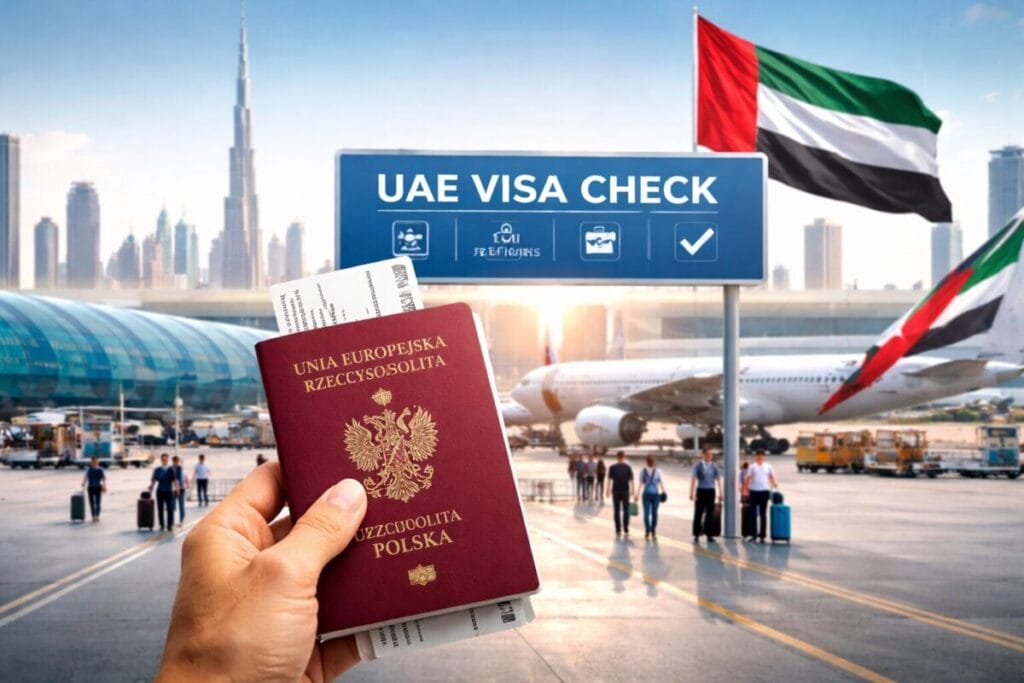
The United Arab Emirates has rolled out stricter visa on arrival policies, creating new travel hurdles for Poland, Germany, France, Italy, Sweden, Ireland, Hungary and 34 other European nations.
The change marks a major shift in Europe to UAE travel rules. For years, many European passport holders could receive a visa on arrival with minimal paperwork. That convenience has now narrowed under updated entry regulations in 2026.
Travelers must prepare documents in advance. Border checks have become more detailed. Entry approvals may require additional screening before departure.
European Countries Affected by the New Rules
The revised UAE visa on arrival framework impacts a broad list of European countries. These include:
Poland, Italy, Sweden, Ireland, Germany, France, Hungary, United Kingdom, Austria, Belgium, Bulgaria, Croatia, Cyprus, Czech Republic, Denmark, Estonia, Finland, Greece, Iceland, Latvia, Lithuania, Luxembourg, Malta, Netherlands, Norway, Portugal, Romania, Slovakia, Slovenia, Spain, Switzerland and others across the European region.
Citizens from these nations must now meet updated eligibility standards before traveling. Some travelers may need to apply for pre-approved visas depending on travel history and documentation.
What Has Changed in the Visa Process?
Under the revised UAE travel restrictions 2026 framework, authorities have introduced tighter entry checks and documentation requirements.
Advance Application Requirements
Some European travelers may need to complete online pre-registration before arrival. This reduces the previous flexibility of obtaining entry clearance directly at the airport.
Stronger Documentation Checks
Immigration officers now request clearer proof of return tickets, hotel bookings or local accommodation details. Travelers may also need to show evidence of sufficient financial means.
Stricter Compliance Review
Authorities review previous immigration records more closely. Overstays or incomplete travel histories could affect entry approval.
Potential Fee Adjustments
Visa processing charges may vary depending on nationality and visa type. Travelers should confirm the latest structure before departure.
Why the UAE Tightened Visa Rules
The UAE continues to position itself as a global tourism and business hub. Cities such as Dubai and Abu Dhabi attract millions of visitors every year. As visitor numbers grow, authorities aim to balance tourism growth with border control efficiency.
Focus on Security
The UAE government prioritizes national security. Enhanced screening helps manage risks linked to global mobility and cross-border movement.
Digital Immigration Systems
The country has invested heavily in digital governance and smart border systems. Updated visa rules align with automated immigration platforms and biometric verification systems already in place at major airports.
Sustainable Tourism Strategy
The UAE tourism strategy emphasizes long-term sustainability. By refining entry procedures, authorities can better regulate visitor flow and maintain service standards in hospitality and infrastructure.
Economic Positioning
The UAE seeks to attract investors, entrepreneurs and high-value professionals. Updated visa systems allow authorities to streamline entry categories while maintaining oversight.
Impact on European Travelers
The changes directly affect how Europeans plan trips to the UAE.
Less Spontaneous Travel
Previously, travelers could book last-minute flights and secure a visa upon landing. Now, planning ahead becomes essential. Missing paperwork could result in denied boarding or delayed entry.
Longer Preparation Timelines
Visa processing may require extra days before departure. Travelers must confirm eligibility early to avoid disruption.
Risk of Entry Refusal
Authorities may deny entry if travelers fail to meet updated requirements. This risk increases for visitors with prior visa violations or incomplete documents.
Business Travel Adjustments
Corporate travelers from Europe must coordinate with employers or local sponsors when required. Conference and exhibition visits may require formal documentation.
Tourism and Aviation Sector Response
Airlines operating routes between Europe and the UAE have started issuing travel advisories. Carriers encourage passengers to verify visa eligibility before departure.
Travel agencies across Europe also report increased inquiries about UAE visa procedures. Tour operators now advise clients to submit documentation earlier than before.
Major UAE airports remain operational and efficient. However, immigration desks apply stricter compliance checks under the new system.
Long-Term Outlook for Europe to UAE Travel
Industry experts expect short-term disruption but long-term stabilization.
Improved Border Efficiency
Digital screening may reduce congestion over time. Pre-approved travelers could experience smoother arrivals once systems fully integrate.
Controlled Visitor Flow
By regulating entry, the UAE can better manage peak travel seasons and major events.
Strong Bilateral Relations
European countries maintain strong diplomatic and economic ties with the UAE. Future updates or bilateral agreements could refine visa access further.
Continued Tourism Growth
Despite stricter rules, the UAE remains one of the Middle East’s most visited destinations. Attractions such as luxury resorts, cultural districts, global expos and shopping festivals continue to draw European tourists.
What Travelers Should Do Now
European citizens planning UAE trips should take proactive steps:
- Check passport validity well in advance.
- Confirm visa eligibility before booking flights.
- Prepare accommodation details and return tickets.
- Keep proof of sufficient funds available.
- Monitor official government updates before travel.
Advance planning now plays a key role in ensuring smooth entry.
A Strategic Shift in UAE Immigration Policy
The UAE visa on arrival update reflects a broader modernization of immigration management. Poland, Germany, France, Italy and dozens of European nations must now adapt to structured entry protocols rather than flexible airport issuance.
While the shift creates short-term travel hurdles, it aligns with the UAE’s goals of secure borders, digital governance and sustainable tourism development.
European travelers can still explore the Emirates’ world-class attractions, vibrant business landscape and cultural offerings. Careful preparation will remain essential as UAE travel restrictions 2026 continue to shape Europe to UAE travel rules.
The era of effortless visa on arrival access has evolved. Strategic planning now defines successful travel between Europe and the United Arab Emirates.
For more travel news like this, keep reading Global Travel Wire