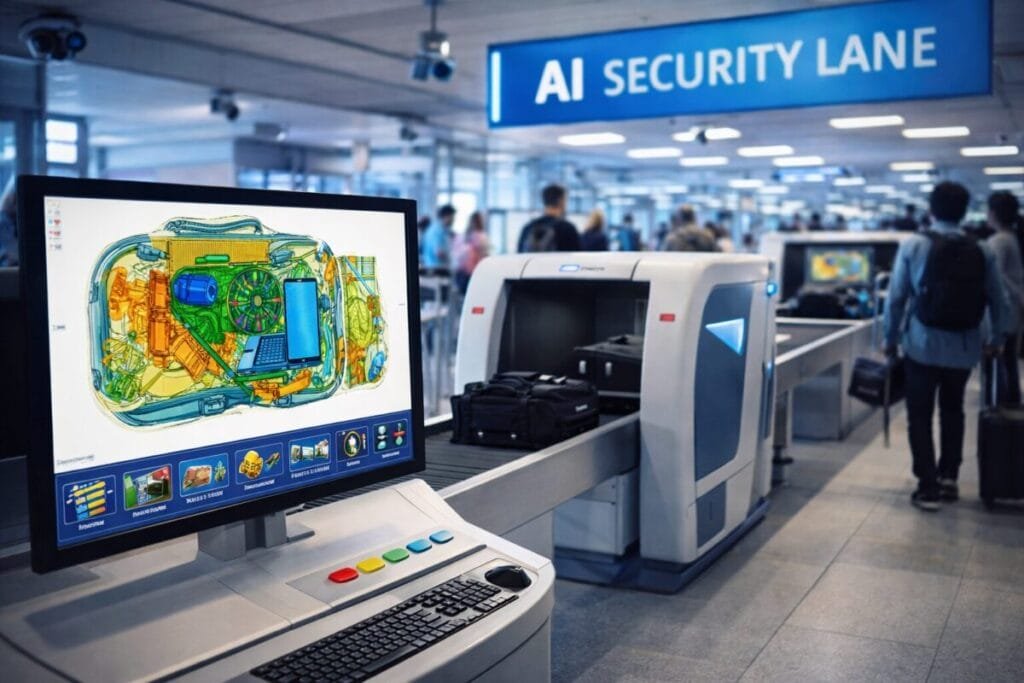
Major UK airports have begun introducing advanced security systems powered by artificial intelligence and next-generation CT scanners. These upgrades aim to streamline passenger screening while maintaining strict safety standards. Airports including Heathrow, Gatwick, Manchester, and several regional hubs are testing dynamic security lanes that promise faster and smoother travel experiences.
Security checks often create stress for travelers. Many passengers expect long lines, strict rules about liquids, and complicated bag unpacking procedures. The new technology seeks to remove these frustrations by simplifying the process without compromising safety.
Government aviation authorities continue to support innovation that enhances both efficiency and security. As international travel demand grows, airports must process higher passenger volumes while ensuring reliable safety protocols.
Dynamic Security Lanes Change Traditional Procedures
Dynamic security lanes represent a significant shift from traditional screening methods. Instead of requiring passengers to remove laptops and liquids, advanced CT scanners allow items to remain inside bags during screening.
These scanners create detailed three-dimensional images that display the contents of luggage layer by layer. Security officers gain clearer views of objects, which reduces false alarms and speeds up inspections.
Passengers participating in early trials reported faster processing times and fewer disruptions. Many travelers experienced shorter queues, which improved overall satisfaction during the airport journey.
Advanced CT Scanners Deliver High-Resolution Screening
The new systems rely on computed tomography technology similar to medical imaging equipment. Unlike older X-ray machines, CT scanners provide high-resolution images from multiple angles.
Security teams can rotate digital models of scanned items and examine potential risks more accurately. This capability allows airports to relax some previous requirements for liquid removal and electronic devices.
Authorities introduced strict liquid rules after past security threats. New imaging technology enables safer analysis without relying on those time-consuming procedures. Passengers benefit from simplified packing and reduced preparation at checkpoints.
Project trials at several UK airports have demonstrated improved detection capabilities alongside faster throughput. This combination makes the technology attractive for large-scale implementation.
Artificial Intelligence Supports Faster Decision Making
Artificial intelligence plays a key role in dynamic security lanes. AI software analyzes scanned images in real time and highlights potential threats for security staff.
Automated systems help officers focus on high-risk items instead of manually reviewing every bag. This approach improves efficiency while maintaining human oversight for final decisions.
Experts believe AI can reduce human error by providing consistent analysis. Machines process large volumes of data quickly and identify patterns that might escape manual review. However, trained staff continue to monitor operations and make final judgments.
The integration of AI reflects broader trends in aviation technology, where automation enhances performance without removing human control entirely.
Gatwick’s Flow Management System Improves Passenger Movement
Some airports combine new scanners with innovative crowd-management systems. Gatwick Airport introduced a “Call Forward” feature that directs passengers to lanes based on real-time demand.
This system adjusts automatically according to queue length and staffing levels. Clear instructions guide travelers through checkpoints, which reduces confusion and congestion.
Airport officials expect most passengers to complete security checks within five minutes once systems operate fully. Faster processing improves airport efficiency and reduces stress for travelers rushing to flights.
Infrastructure Challenges and Implementation Progress
While many passengers welcome the upgrades, airports face logistical challenges during installation. CT scanners require more space than older equipment, which forces terminals to redesign security areas.
Heathrow and Manchester have undertaken significant construction work to accommodate the new systems. Renovations sometimes create temporary disruptions, including adjusted queue layouts and updated passenger instructions.
Authorities extended implementation timelines to allow airports to complete infrastructure upgrades safely. Despite delays, the aviation sector remains committed to full deployment across major hubs.
Industry experts predict widespread adoption as airports observe positive results from early trials.
Balancing Technology and Passenger Trust
The introduction of AI-driven security raises questions about trust and transparency. Some travelers feel uneasy about machines analyzing personal belongings. Others appreciate the efficiency and consistency offered by automated systems.
Airports emphasize that human officers maintain control over final decisions. AI tools assist rather than replace trained professionals. Clear communication helps reassure passengers and encourages acceptance of the new process.
Behavioral habits also present challenges. Many travelers still remove laptops or liquids out of habit, even when rules change. Education campaigns aim to inform passengers about updated procedures and maximize system efficiency.
The Future of Airport Security in the UK
Dynamic security lanes represent a broader transformation in aviation technology. Airports seek solutions that enhance safety while improving comfort and convenience.
As passenger numbers increase worldwide, efficient security becomes essential for maintaining smooth operations. AI-powered systems provide tools that help airports manage growing demand without compromising security standards.
The shift toward advanced screening technology signals a new era for air travel. Instead of viewing security as an obstacle, passengers may soon experience it as a seamless part of their journey.
With continued investment and innovation, UK airports aim to lead global aviation in modern security practices. Faster screening, smarter technology, and improved passenger experiences promise to reshape the future of travel across the country.
For more travel news like this, keep reading Global Travel Wire