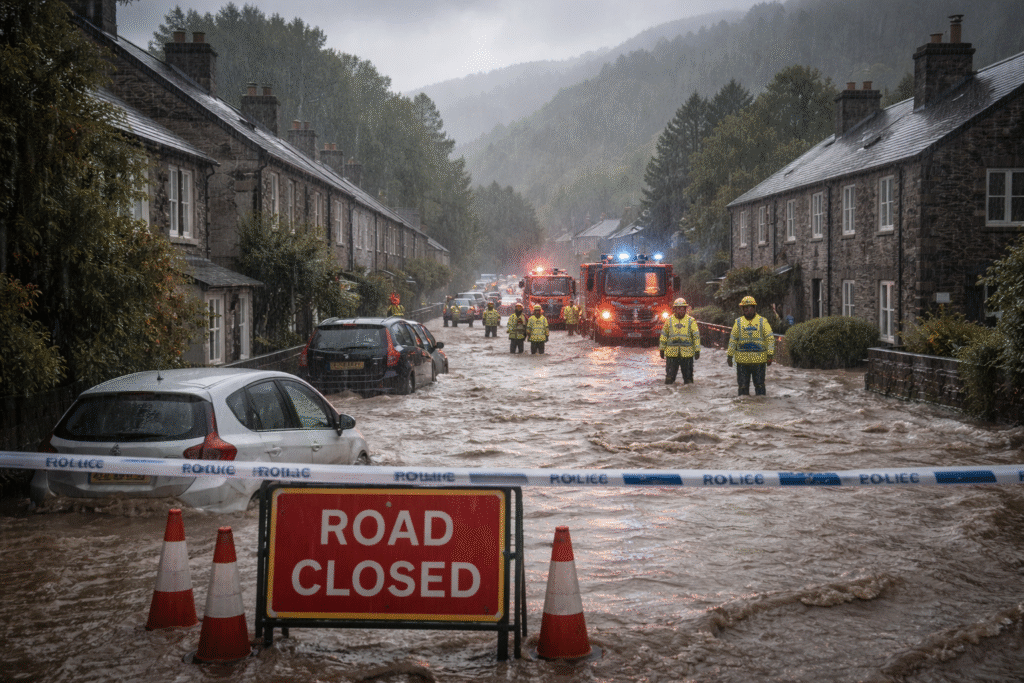
Wales is in the grip of a worsening flood emergency as intense rain, swollen rivers, and repeated storms bring widespread disruption. Communities across the country are battling severe flooding after days of relentless rainfall. The UK Met Office has issued amber warnings across parts of Wales, signalling a real risk to life and serious damage to infrastructure.
Local authorities warn that the ground is already saturated after weeks of wet weather. As new bands of rain sweep across the region, the risk of flash flooding and river overflow continues to grow. Travel networks, tourism activity, and daily life have come under heavy strain.
Amber Warnings Heighten Concerns for Residents and Travellers
The Met Office has placed much of south Wales under an amber rain warning, with yellow warnings stretching across central and northern regions. Officials caution that heavy and persistent rainfall will lead to dangerous conditions. Flood alerts remain across multiple river catchments, raising fears of further evacuations.
Storm Bram and the earlier impacts of Storm Claudia have made the current situation far more severe. Several towns, including Monmouth, Dolgellau, and communities across Gwynedd, now face rising water levels that threaten homes, businesses, and key tourist routes.
Severe Travel Disruptions Hit Tourism and Local Movement
The weather emergency has caused major travel chaos. Roads, rail lines, and rural routes have been forced to close due to flooding and debris. Tourists and residents are urged to avoid unnecessary travel, especially in high-risk zones.
Train services between Llandudno Junction and Blaenau Ffestiniog were cancelled after floodwaters reached the tracks. Long delays are expected across north and mid-Wales as heavy rain continues to hit upland areas. Tourism businesses report booking cancellations, stalled visitor movement, and difficulty receiving supplies.
Key roads, including sections of the A487 and A40, remain shut due to deep surface water. Drivers face diversions across Gwynedd, Anglesey, Pembrokeshire, and Carmarthenshire. Emergency teams warn that conditions can change within minutes, especially near rivers and low-lying roads.
Emergency Services Respond to Dozens of Flood Incidents
Fire and rescue crews across Wales have been working around the clock. Many residents have been evacuated from flooded streets, homes, and vehicles. In Gwaun-Cae-Gurwen, a driver was rescued from rising water after their car became trapped. Several homes in Neath and nearby areas were hit by fast-moving floodwater, leaving families to deal with major damage.
Residents describe waking to flooded floors, damaged furniture, and power cuts. Some communities have faced repeat flooding in recent years, adding to the emotional and financial toll.
In Pontargothi, high water levels in the River Cothi raised alarms again. Blocked debris has slowed water flow, causing levels to rise. Locals say this has increased the flooding threat for homes and farmland. Many residents fear more damage if another storm surge arrives.
Tourism Areas Brace for Continued Disruption
South Wales remains under the highest alert, including popular tourism hubs in Pembrokeshire, Carmarthenshire, and Newport. Coastal paths, national parks, and rural holiday parks have reported waterlogged grounds and accessibility issues.
Yellow warnings for Cardiff, Swansea, Rhondda Cynon Taf, and Neath Port Talbot add to concerns for tourism operators preparing for winter visitors. Northern areas, including Conwy and Denbighshire, also face prolonged heavy rain, raising the possibility of river bursts and road blockages.
Accommodation providers note increased cancellations as visitors avoid travel uncertainty. Outdoor attractions, including walking routes and heritage sites, have had to restrict access due to unsafe conditions.
Authorities Urge Preparedness as More Rain Is Expected
Natural Resources Wales continues to monitor river levels and rainfall forecasts. Officials advise residents in flood-prone zones to prepare emergency plans and keep essential items ready. Recommended items include chargers, medication, documents, and valuables.
People are encouraged to move cars to higher ground, protect livestock, and shift important belongings to upper levels of their homes. Local councils are delivering sandbags and offering support to businesses affected by water damage.
Communities Work Together as Flooding Threat Persists
Despite the challenging conditions, many communities have rallied to support neighbours, vulnerable residents, and stranded travellers. Rural towns have opened community centres to provide shelter and warmth. Volunteers are assisting with meal distribution and basic supplies.
However, the situation remains unpredictable. With the land saturated and rivers close to bursting, even small amounts of additional rain may trigger further flooding. Tourism officials stress that travellers should stay informed and follow safety guidance.
Outlook: More Rain Expected, Risks Remain High
Forecasters warn that the unsettled weather pattern may continue through the week. Additional rainfall could push rivers beyond capacity and worsen surface flooding. Authorities advise residents and visitors across Wales to remain cautious and check updated weather warnings.
As emergency services continue their efforts, Wales remains on alert for further disruption. Tourism operators hope for stabilising conditions soon, but the immediate focus is on safety and damage control as the nation navigates one of its most challenging winter weather events in recent years.
For more travel news like this, keep reading Global Travel Wire