
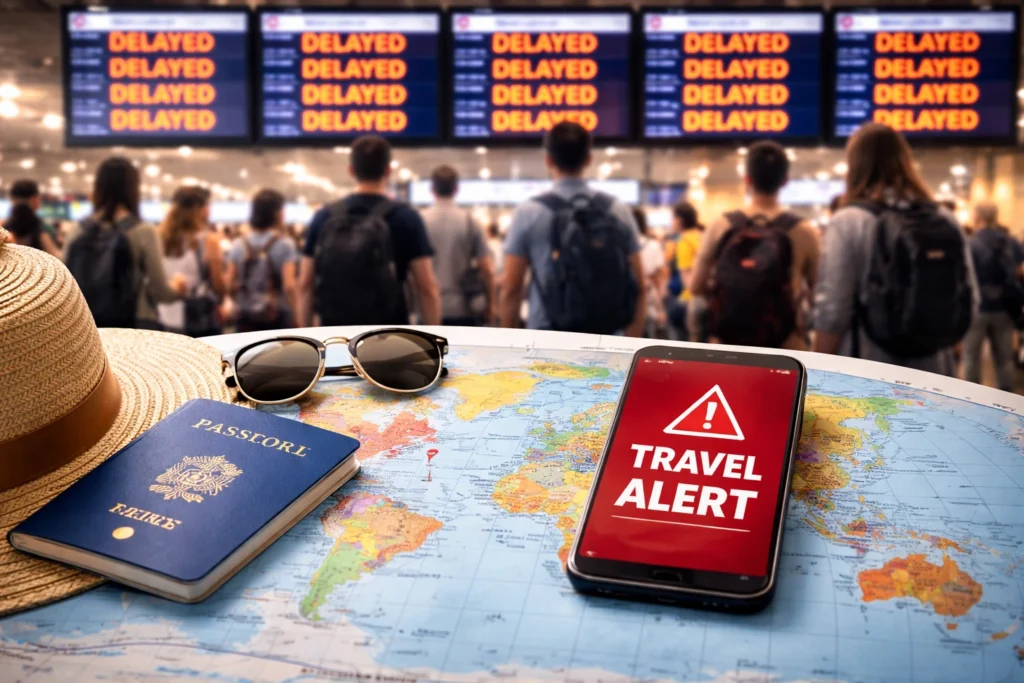
The United Kingdom has issued a major travel alert affecting more than 30 countries worldwide. Authorities took this step due to escalating tensions in the Middle East.
The advisory highlights severe disruptions in global air travel networks. Airlines now face challenges due to restricted airspace and security concerns. Travelers must prepare for delays and sudden changes.
Although many affected countries remain outside the conflict zone, disruptions continue to spread. The global aviation system now faces pressure from multiple directions.
Middle East Airspace Closures Disrupt Global Routes
The Middle East serves as a key hub for international aviation routes. Flights between Europe, Asia, and Africa rely heavily on this region.
However, ongoing conflict has forced several airspace closures. Airlines now reroute flights to avoid high-risk zones.
These changes increase travel time and fuel consumption. As a result, passengers experience longer journeys and higher ticket costs.
Furthermore, delays continue to affect connecting flights worldwide. Even travelers far from the conflict feel the impact.
Turkey Faces Delays and Increased Security Concerns
Turkey plays a vital role in connecting Europe and Asia. However, the current crisis has disrupted its aviation sector.
Major airports in Istanbul and Ankara now report frequent delays. Airlines must adjust routes due to restricted Middle Eastern airspace.
Additionally, security concerns have increased across the region. Travelers should stay alert and follow local guidance.
Airlines have also reduced services to high-risk destinations. This change affects both business and leisure travelers.
UAE Aviation Hub Experiences Major Setbacks
The United Arab Emirates operates one of the busiest aviation hubs globally. Dubai International Airport handles massive passenger traffic daily.
However, the crisis has disrupted operations across the UAE. Authorities warn travelers about potential security risks and disruptions.
Airlines based in the region have suspended several routes. Flights to nearby conflict zones have seen major reductions.
At the same time, rising fuel costs have increased ticket prices. Travelers now face higher expenses and fewer options.
India Sees Rerouted Flights and Extended Travel Times
India remains a key transit hub connecting global destinations. Airports in Delhi and Mumbai handle high passenger volumes.
However, airlines now reroute flights due to restricted airspace. This change increases travel duration significantly.
Some long-haul flights now require technical stops for refueling. These stops add hours to already long journeys.
Passengers should expect delays and remain flexible with schedules. Airlines continue to adjust operations as conditions evolve.
Singapore Emerges as Alternative Transit Hub
Singapore has become a major transit point for rerouted flights. Many airlines now use it as a safer alternative route.
However, increased traffic has led to congestion at major airports. Travelers now face longer wait times at check-in and security.
Airlines also struggle to manage the sudden surge in passengers. This situation affects both arrivals and departures.
Despite challenges, Singapore continues to maintain strong operational standards.
Japan and South Korea Face Indirect Disruptions
Japan and South Korea lie far from the conflict zone. However, their aviation networks still face disruption.
Flights to Europe often rely on Middle Eastern air corridors. With these routes closed, airlines must find alternatives.
As a result, travel times have increased significantly. Airlines have also reduced or suspended select routes.
Passengers should check flight updates regularly before departure.
Australia and New Zealand Experience Longer Routes
Australia and New Zealand depend on global air corridors for long-haul travel. The current crisis has disrupted these routes.
Flights between Europe and the southern hemisphere now take longer paths. Airlines must stop for refueling due to extended distances.
These changes increase travel time and operational costs. Passengers may also notice higher ticket prices.
Despite distance from the conflict, these countries face strong ripple effects.
Smaller Nations Also Feel Aviation Impact
Central Asian and Pacific nations also face disruptions. Countries such as Uzbekistan and Fiji rely on connected routes.
Airspace closures limit direct flight options for these regions. Airlines must adjust schedules and routes accordingly.
Passengers traveling through these regions may experience delays. Connectivity remains a key challenge for smaller aviation markets.
Airlines Cancel Flights and Adjust Schedules
Several major airlines have already cancelled flights to affected regions. Others continue to review schedules weekly.
These cancellations affect thousands of passengers globally. Travelers must stay updated through airline notifications.
In addition, airlines now reduce capacity on high-risk routes. This change limits seat availability and increases fares.
The aviation industry continues to adapt to rapidly changing conditions.
Rising Fuel Costs Push Ticket Prices Higher
Airlines now face rising fuel costs due to longer routes. These increased costs affect overall operations.
As a result, airlines pass these costs to passengers. Ticket prices for long-haul travel have started to rise.
Travelers should plan budgets carefully before booking flights. Early planning may help reduce expenses.
Essential Travel Tips for Passengers
Travelers should take proactive steps to avoid disruptions. First, check flight status regularly before departure.
Second, review travel insurance coverage for delays and cancellations. Insurance can help reduce financial risk.
Third, stay updated with official travel alerts and advisories. Reliable information helps travelers make informed decisions.
Finally, consider alternative routes if flexibility allows. Adjusting plans can reduce travel stress.
Global Travel Faces Ongoing Uncertainty
The ongoing Middle East conflict continues to impact global aviation. Airspace closures and rerouting have reshaped travel patterns.
As a result, travelers across the world face delays and rising costs. The situation remains dynamic and unpredictable.
Therefore, travelers must stay informed and prepared at all times. Careful planning will help manage risks during this period of uncertainty.
For more travel news like this, keep reading Global Travel Wire