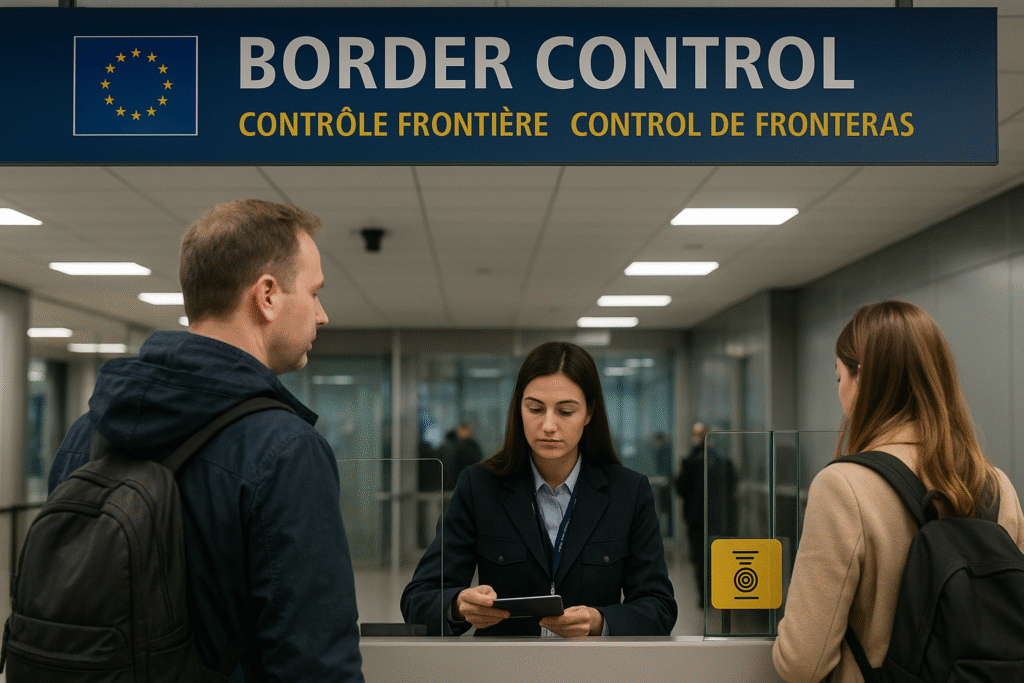
The United Kingdom has issued a wide-ranging travel advisory that reshapes how British travelers move across Europe. Spain has now joined Poland, Switzerland, France, Italy, Germany, Austria, and several other countries under new rules. These changes focus on tighter borders, stricter visa compliance, and enhanced personal identification checks.
The advisory reflects Europe’s shift toward stronger security and digital border management. Travelers should expect more checks, longer queues, and stricter enforcement of entry conditions. Advance preparation is now essential for smooth travel.
Spain Introduces Biometric Borders and Tighter Entry Checks
Spain stands at the center of these changes. As one of Europe’s busiest tourist destinations, it will fully align with the Schengen Area’s upgraded border systems.
From October 2025, Spain will adopt the Entry/Exit System. This system replaces manual passport stamping with biometric registration. Travelers must provide fingerprints and a facial image at their first point of entry.
Major airports such as Madrid, Barcelona, and Málaga are preparing for higher processing times. Peak seasons may see longer queues. British travelers should ensure passports remain valid and meet Schengen rules before departure.
France Steps Up Visa Scrutiny and Border Enforcement
France continues to tighten entry procedures. Border officers now apply Schengen rules more strictly, especially for non-EU travelers.
Visitors may need to show proof of accommodation, return tickets, and sufficient funds. Passport validity rules are also enforced more rigorously. Border checks at Paris, Nice, and regional hubs may take longer than before.
France also experiences frequent demonstrations in major cities. Travelers should remain alert, avoid large gatherings, and follow local guidance.
Italy Aligns With Schengen Security Upgrades
Italy has reinforced border controls as part of wider European reforms. Airports in Rome, Milan, and Venice are transitioning toward biometric-based entry systems.
British travelers must respect the 90-day stay limit within a 180-day period. Overstays can lead to fines or entry bans. Border officials now track entries and exits digitally, leaving little margin for error.
Security remains visible in popular tourist zones. Travelers should stay aware in crowded public areas and transport hubs.
Germany Expands Security Checks at Entry Points
Germany has strengthened security at borders and airports due to regional safety concerns. Frankfurt, Munich, and Berlin airports now operate under enhanced screening procedures.
Biometric data collection will become standard under the Schengen system. Travelers should expect longer waits at immigration, especially during holidays and summer travel periods.
Germany maintains a strong security presence at events, transport stations, and tourist landmarks. Staying alert in busy areas remains important.
Switzerland Implements Stricter Border Protocols
Although not part of the EU, Switzerland follows Schengen rules. It has introduced tougher border procedures at Zurich and Geneva airports.
Biometric registration now applies to many travelers entering the country. These checks aim to improve identity verification and prevent overstays.
Switzerland also enforces local regulations strictly. Some regions restrict face coverings in public spaces. Visitors should respect local laws to avoid fines.
Poland Tightens Controls Amid Regional Tensions
Poland faces increased scrutiny due to its proximity to conflict-affected regions in Eastern Europe. Border security has intensified, especially near eastern crossings.
Airports in Warsaw and Kraków conduct thorough document checks. Travelers should carry valid passports and remain informed about local conditions.
Access to certain border zones remains restricted. Authorities advise travelers to avoid sensitive regions and comply fully with security instructions.
Austria Enhances Border Checks Across Transit Routes
Austria has upgraded border controls at Vienna International Airport and key land crossings. These steps respond to regional security pressures and Schengen-wide reforms.
Biometric registration and identity verification now form part of standard entry checks. Travelers entering from neighboring countries may notice increased scrutiny.
Austria remains stable and safe, but travelers should monitor local advisories and avoid isolated demonstrations.
What Travelers Need to Do Before Departure
Preparation is now critical for European travel. Passports must meet Schengen validity rules. Travelers should track their days spent within the Schengen Area carefully.
Expect biometric checks, document verification, and possible delays. Carry printed and digital copies of travel documents. Arrive early at airports and border crossings.
Europe Travel Enters a More Regulated Phase
The UK travel advisory highlights a clear trend. Europe is moving toward stricter, technology-driven border management. Spain and its European neighbors are enforcing rules with greater consistency.
Travel remains open, but flexibility and preparation are essential. Travelers who stay informed and organized will continue to enjoy smooth journeys across Europe despite the changes.
For more travel news like this, keep reading Global Travel Wire