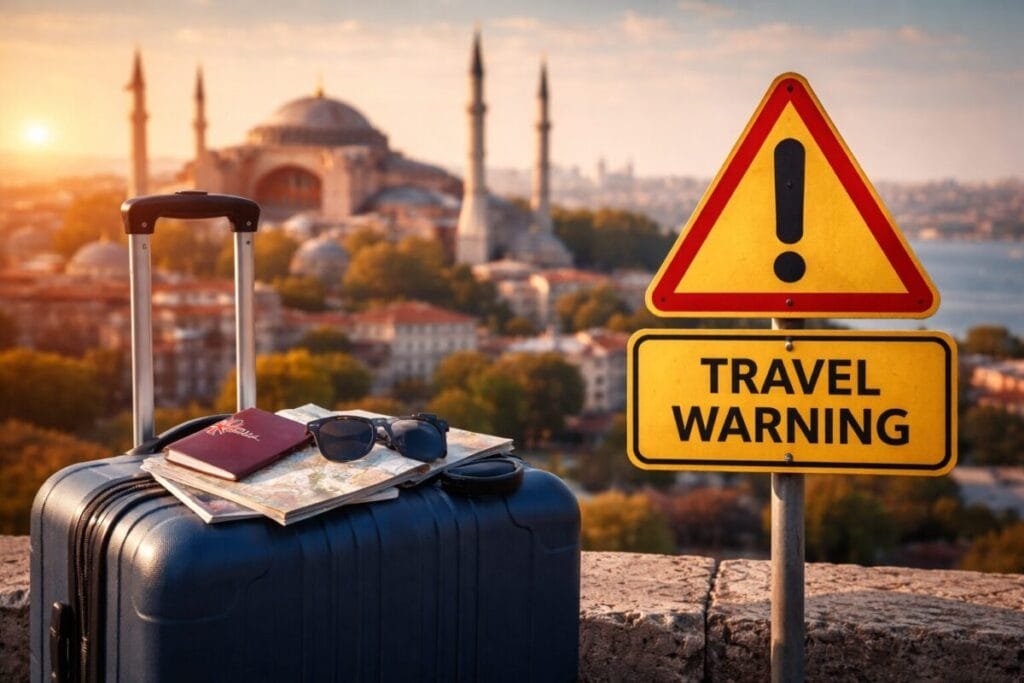
The United Kingdom has released a high-level travel advisory for several key Middle East destinations. The advisory affects Turkey, the UAE, Bahrain, Saudi Arabia, Qatar, Kuwait and other nations. It follows rising security concerns, regional tensions and newly enforced identity rules. British travelers are urged to review the alert before planning any trips to the region.
The advisory highlights growing threats across the Middle East. These include terrorism, political unrest, border tensions, and unpredictable demonstrations. The warning encourages travelers to stay alert, follow local instructions and reconsider plans to some areas.
Heightened Security Concerns Across the Region
Global security issues have risen, particularly in areas with ongoing conflicts and instability. The Middle East remains sensitive due to complex politics and past violent events. Recent risks include attacks by extremist groups, civil unrest and sudden escalations in violence.
Officials stress that demonstrations and protests can rapidly shift from peaceful to dangerous. Terrorist threats remain high in some cities, with incidents occurring at public venues and crowded tourist spots. These evolving dangers prompted the urgent advisory.
Turkey’s Inclusion in the Advisory
Turkey attracts millions of tourists each year with its rich history and culture. However, the UK advisory places special emphasis on areas near the southern border. Tensions along the Turkey-Syria border have persisted for years. Cross-border clashes and militant activity are ongoing concerns.
Travelers are warned to avoid all travel within 10 kilometers of the Syrian border. Foreign visitors are also encouraged to stay informed about local developments. Large crowds and public demonstrations should be avoided, as they can turn volatile with little warning.
UAE: Tourism Hub with Growing Caution
The United Arab Emirates remains a major global travel hub. Cities like Dubai and Abu Dhabi draw visitors for luxury, business and leisure travel. Yet, regional conflicts have introduced new security considerations.
Tensions in neighboring areas may affect stability in the Gulf. Visitors are urged to remain vigilant, especially in public spaces and near diplomatic zones. Increased identity checks and stricter border control measures are now common. Travelers should be ready for enhanced screening at airports and checkpoints.
Bahrain’s Security Challenges
Bahrain offers modern attractions and robust infrastructure. Still, it has faced periods of unrest and demonstrations. The advisory warns against visiting zones near security installations and sensitive areas.
While general crime levels remain low, the threat of extremist attacks persists. Past incidents have occurred in shopping areas and other public locations. Travelers are reminded to monitor local news and steer clear of protests or large gatherings.
Saudi Arabia: Border Concerns and Crowded Cities
Saudi Arabia is a leading tourism and pilgrimage destination. It is also a central player in regional affairs. The UK advisory flags sections of the country near the Yemen border as higher risk due to ongoing conflict there.
Other areas, such as Riyadh and Jeddah, may experience heightened security alerts. Crowds and public events can create targets for violence or unrest. Tourists are advised to avoid protests and stay in well-secured zones.
Qatar: Vigilance Recommended for Visitors
Doha draws business and leisure travelers from around the world. Yet, its location in a volatile region brings travel considerations. The UK advisory urges visitors to avoid political demonstrations and large public gatherings. Unexpected disruptions may arise in crowded areas.
As tensions grow in neighboring states, Qatar has increased security protocols. Travelers can expect thorough identity checks at transit points and public venues. Maintaining valid travel documents and staying updated on local safety news is vital.
Kuwait’s Position in the Advisory
Kuwait is widely seen as stable compared to some neighbors. Nonetheless, nearby unrest raises cautionary flags for visitors. The advisory highlights areas near the Iraq and Saudi borders where risks are more pronounced.
Threats by extremist groups have occasionally surfaced, aiming at symbolic or crowded places. Tourists are encouraged to follow local laws strictly. Dress codes and cultural norms should be respected to avoid misunderstandings.
Other Countries Facing Travel Warnings
In addition to the core group, the travel advisory covers nations with deep-rooted conflicts. Lebanon is experiencing political instability and periodic violence that can affect civilians. Syria, still in the midst of prolonged war, remains one of the most dangerous places for all travelers. Iraq also faces ongoing security struggles that make many areas unpredictable.
Visitors are strongly advised to limit travel in these countries to only essential purposes.
New Identity Requirements and Travel Guidelines
Alongside security warnings, several Middle Eastern countries have updated identity and document rules for foreign visitors. Travelers should ensure passports are valid well beyond their intended stay. Some destinations now require additional identification at all times.
Carrying official photo ID is essential. In some nations, failing to present proper identification may lead to fines or temporary detainment. Arriving with all necessary visas or permits avoids delays or complications at borders.
Travelers should prepare for thorough checks at airports, hotels and checkpoints. Being ready with documents speeds up processes and reduces stress.
Safety Tips for Travelers
Tourists heading to the Middle East amid this advisory can take key precautions:
- Stay Informed: Regularly check local news and advisories.
- Avoid Large Gatherings: Keep distance from protests and rallies.
- Follow Local Laws: Respect culture, dress codes and regulations.
- Register Travel Plans: Let friends or family know your itinerary.
- Carry Identification: Always have passport and photo ID.
Being prepared helps visitors enjoy their trip while minimizing risk.
What This Means for Tourism
Many Middle Eastern countries depend on tourism. Cities like Istanbul, Dubai and Doha remain popular worldwide. While the advisory highlights risks, it does not mean all travel must be canceled.
Instead, it underscores a need for awareness and preparation. Travelers who stay vigilant and follow advice can still experience the region’s culture and attractions with greater confidence.
Final Thought
The UK’s travel advisory is a reminder that global travel can involve risk. In regions facing tension, being cautious is not optional— it is essential. Tourists should weigh their plans carefully, stay updated and respect local guidance.
With smart preparation and awareness, visitors can protect their safety while exploring the vibrancy and heritage of Turkey and other Middle Eastern destinations.
For more travel news like this, keep reading Global Travel Wire