
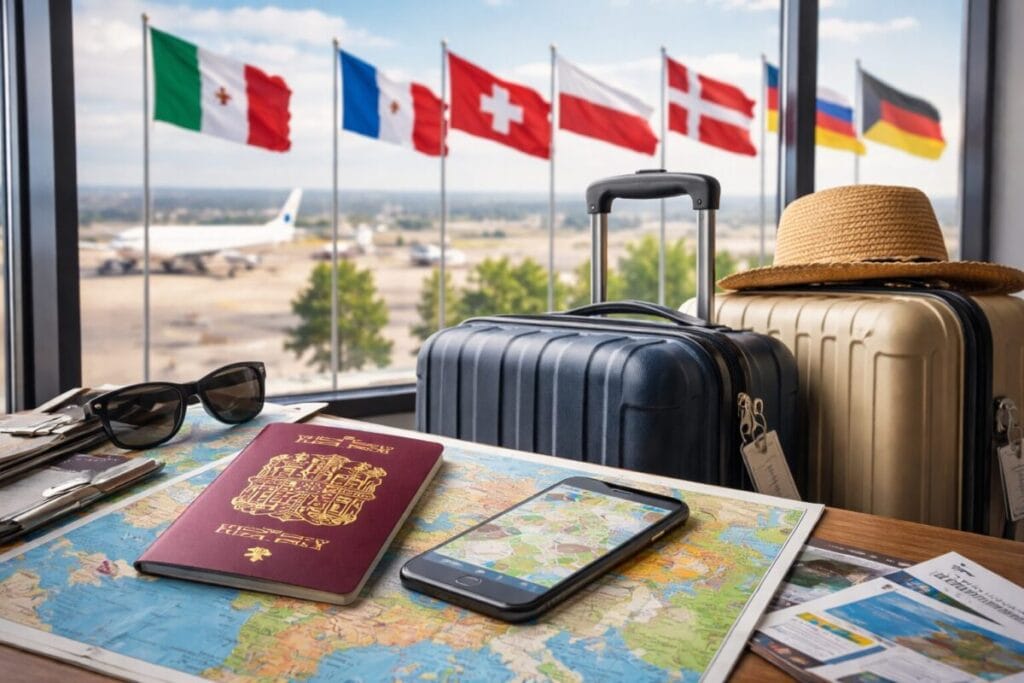
The United Kingdom has released an updated travel advisory for several major European destinations, including Italy, Switzerland, Poland, Estonia, Denmark, the Netherlands, and France. The guidance highlights growing concerns around passport validity rules, evolving security threats, and increased political demonstrations across parts of Europe.
British travelers planning trips to these popular destinations are being urged to prepare carefully. Officials advise checking travel documents, monitoring local developments, and exercising caution in crowded areas or near public gatherings.
Europe remains one of the most visited regions for UK tourists. However, shifting geopolitical dynamics and stricter border requirements are changing the travel landscape.
Why the UK Updated Its Travel Guidance
The new advisory reflects several key factors affecting travel across Europe.
First, passport validity issues remain a significant concern for UK nationals visiting Schengen countries. Since Brexit, British travelers must follow specific entry rules that differ from previous arrangements.
Second, security risks linked to terrorism threats and geopolitical tensions have prompted authorities to encourage vigilance. Increased demonstrations tied to global political developments have also created uncertainty in some cities.
Officials stress that travel is not restricted. Instead, travelers should stay informed and plan ahead to reduce risks.
Passport Rules Creating Challenges for UK Travelers
One of the most important updates involves passport requirements.
Travelers entering Schengen Area countries must ensure their passports meet strict conditions. Documents typically need to have been issued within the last ten years and remain valid for at least three months beyond the planned departure date from the region.
Failure to meet these conditions can result in denied entry at borders or airlines refusing boarding.
Many travelers remain unaware of these post-Brexit rules. Authorities recommend checking passport dates well before departure to avoid last-minute complications.
Italy: Popular Destination Facing Security and Political Pressures
Italy continues to attract millions of visitors every year. Cities such as Rome, Milan, Florence, and Venice remain top tourism hotspots.
However, authorities note increased security awareness due to ongoing global tensions. Major tourist sites and transport hubs often receive heightened monitoring.
Political demonstrations have also occurred in urban areas. While most protests remain peaceful, travelers should avoid large gatherings to reduce risk.
Officials recommend staying alert in crowded places and keeping personal belongings secure.
Switzerland: Rising Vigilance Despite Strong Safety Reputation
Switzerland is known for stability and safety. Yet the evolving international security environment has prompted higher vigilance levels.
Large cities like Zurich and Geneva draw heavy tourist traffic. Travelers are advised to remain aware in public areas, including airports, cultural venues, and major events.
Political demonstrations linked to international issues have become more visible. Visitors should follow local guidance and avoid protest locations whenever possible.
Poland: Border Sensitivities Linked to Regional Conflict
Poland’s geographic position near ongoing geopolitical tensions has influenced travel advice.
Urban centers such as Warsaw and Krakow continue to operate normally and welcome tourists. However, areas near sensitive borders may experience restrictions or increased military activity.
Travelers are encouraged to avoid conflict-adjacent regions and monitor updates on local conditions. Careful planning of travel routes and border crossings can help prevent delays.
Estonia: Baltic Security Awareness and Urban Precautions
Estonia remains a safe and modern destination, especially for digital tourism and historic experiences in Tallinn.
Still, authorities highlight increased security awareness in the Baltic region due to political tensions. Travelers should stay cautious in crowded areas and protect valuables against petty theft.
Public demonstrations occasionally take place in urban centers. Visitors should maintain distance from political gatherings and follow instructions from local authorities.
Denmark: High Safety Standards with Emerging Concerns
Denmark consistently ranks among Europe’s safest countries. However, officials note a rise in petty crime, especially pickpocketing in busy tourist zones.
Popular locations in Copenhagen attract large crowds. Travelers should secure personal belongings and remain attentive on public transport.
Political protests and debates have also become more visible. Even peaceful events may disrupt transport or public access, so avoiding demonstration areas is advised.
Netherlands: Tourist Crowds and Increased Theft Risks
The Netherlands remains a major destination for cultural tourism. Cities such as Amsterdam welcome millions of visitors annually.
Authorities warn about pickpocketing and bag theft in crowded spaces like train stations, trams, and busy streets. Simple precautions, such as using anti-theft bags, can reduce risks.
Political demonstrations have also occurred more frequently. Travelers should stay updated on local news and avoid protest zones.
France: Heightened Security and Ongoing Demonstrations
France continues to maintain strong security measures in major cities including Paris, Lyon, and Marseille.
Tourist attractions remain open, but officials advise extra awareness in busy public areas. High-profile landmarks often attract large crowds, making vigilance essential.
Economic and political protests sometimes lead to transport disruptions. Travelers should plan flexible itineraries and check local updates regularly.
Tips for Safer Travel Across Europe
Authorities recommend several practical steps:
- Check passport validity and entry requirements early.
- Monitor local news and official updates.
- Avoid demonstrations or crowded political gatherings.
- Stay alert in public spaces and tourist hotspots.
- Keep copies of travel documents and emergency contacts.
Preparation remains the best way to ensure a smooth trip.
Europe Travel Landscape Continues to Evolve
The latest UK travel advisory reflects broader changes shaping European travel. Security concerns, political developments, and updated entry rules are influencing how travelers plan their journeys.
Despite these challenges, Europe remains open and accessible. By staying informed and prepared, travelers can still enjoy safe and memorable experiences across Italy, France, Switzerland, Poland, Estonia, Denmark, the Netherlands, and beyond.
For more travel news like this, keep reading Global Travel Wire