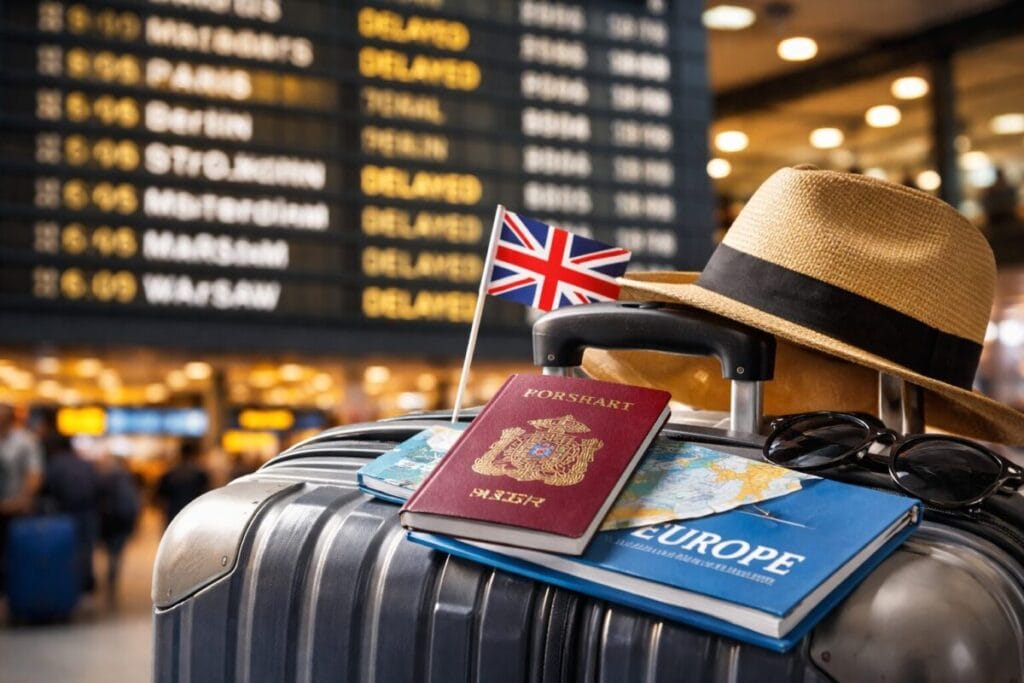
The United Kingdom has issued updated travel warnings for several European countries ahead of the busy spring season. Poland has now joined France, Sweden, Germany, Iceland, Estonia, and the Netherlands on the advisory list. The warning reflects growing concerns over stricter border procedures, evolving visa requirements, and heightened political tensions across parts of Europe.
Officials encourage travellers to prepare carefully before departure. Entry rules have changed, and new digital border systems are increasing scrutiny at checkpoints. Longer processing times are expected at airports and land crossings.
Spring and early summer are peak travel periods. Authorities want travellers to stay informed to avoid disruption and delays.
New Border Controls and Passport Rules Affect Travel Plans
European border management is undergoing major transformation. The rollout of new entry and exit monitoring systems aims to strengthen security and improve migration tracking. These systems require biometric registration, including fingerprints and photographs, at external Schengen borders.
While the process improves data accuracy, it may also increase waiting times. Travellers should expect additional identity checks and longer queues during busy periods.
Passport rules remain strict. Visitors must ensure that passports meet Schengen requirements. Documents should be issued within the last ten years and remain valid for at least three months after leaving the region.
Failure to comply can result in denied entry or penalties.
Poland Faces Heightened Security Attention
Poland has gained particular attention due to its proximity to the ongoing conflict in Ukraine. The eastern regions near the border remain sensitive areas. Increased military activity and security monitoring have led to tighter controls.
Authorities advise travellers to avoid restricted zones and follow local guidance. Most major tourist destinations remain open and safe. However, awareness of regional tensions is essential.
Travel insurance coverage has become more important. Experts recommend policies that cover cancellations or unexpected changes linked to political developments.
France Continues to Experience Demonstrations and Security Concerns
France remains one of Europe’s most popular destinations. However, recurring protests and public demonstrations have prompted safety reminders. Large cities like Paris often host marches that may disrupt transport or public areas.
Visitors should stay updated on local events and avoid crowded gatherings if tensions rise. Security measures in major tourist zones remain strong, but vigilance is advised.
Authorities also stress compliance with visa-free travel limits. Non-EU travellers can stay within the Schengen Area for up to 90 days within a 180-day period. Overstaying may lead to fines or travel restrictions.
Sweden and Germany Emphasise Public Safety Awareness
Sweden continues to attract travellers with its natural landscapes and modern cities. Despite its reputation for safety, officials note a higher security alert level linked to global geopolitical issues. Public places and major events require extra awareness.
Germany also appears in the advisory due to ongoing security considerations. Major urban centres such as Berlin and Munich attract large crowds year-round. Travellers should remain attentive in transport hubs, shopping areas, and tourist attractions.
Both countries maintain efficient public safety systems. Still, authorities encourage travellers to monitor local alerts and follow official guidance.
Iceland and Estonia Included Despite Lower Risk Levels
Iceland remains one of Europe’s safest destinations. Its inclusion in the advisory reflects broader regional considerations rather than specific threats. Border procedures and documentation checks may take longer as new systems launch.
Estonia, a growing tourism hotspot in the Baltic region, also appears on the list. Although the country experiences relatively low crime levels, geopolitical awareness remains important due to regional tensions.
Visitors should follow standard travel precautions. Ensuring proper passport stamping and compliance with stay limits is essential.
Netherlands Reminds Travellers About Security and Entry Compliance
The Netherlands continues to welcome millions of tourists each year. However, authorities warn travellers to remain cautious in crowded areas such as markets, festivals, and public transport networks.
Passport validity and visa compliance remain key issues. Travellers must track their time in the Schengen Area carefully. Digital border records will make overstays easier to detect under new systems.
Brexit and New EU Systems Reshape Travel Requirements
Post-Brexit travel rules have changed how UK nationals enter Europe. While short visits remain visa-free, documentation checks are stricter. The upcoming Entry/Exit System will automate border monitoring and replace manual passport stamping in many locations.
The transition period may cause delays as infrastructure adapts. Travellers should allow extra time for airport procedures and arrive early for departures.
Planning ahead reduces stress and ensures smoother journeys.
Essential Tips for Spring 2026 Travellers
Preparation is the most effective way to avoid travel disruption. Experts recommend several steps:
- Verify passport validity well before travel dates.
- Track Schengen stay limits carefully.
- Monitor local news and safety updates.
- Purchase comprehensive travel insurance.
- Prepare for longer border processing times.
These measures help reduce risk and support smoother travel experiences.
Europe Travel Outlook for Spring and Summer
Despite new challenges, Europe remains a leading destination for global travellers. Enhanced security measures aim to improve safety rather than restrict tourism. Visitors who plan ahead and understand evolving rules can still enjoy seamless travel across the continent.
The UK’s latest advisory serves as a reminder that international travel continues to change. Political developments, new technology, and updated immigration procedures are shaping how travellers move across borders.
For spring 2026, awareness and preparation will be key to enjoying Europe safely and confidently.
For more travel news like this, keep reading Global Travel Wire