
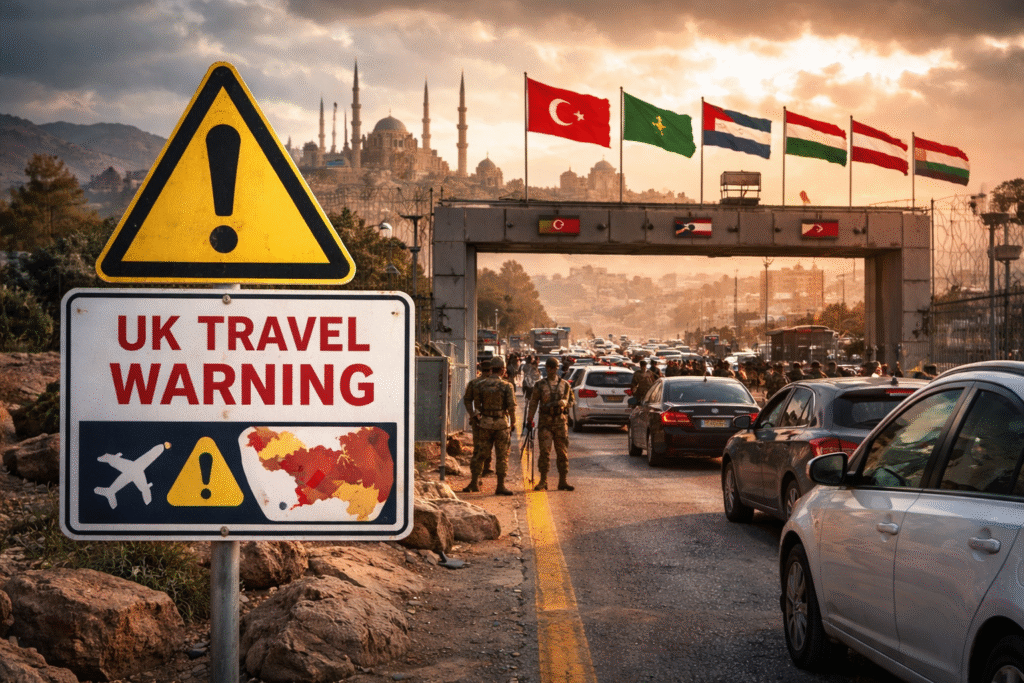
The United Kingdom has issued an urgent and wide-ranging travel advisory for British nationals planning to visit the Middle East, as regional instability, security threats, and tightening border controls continue to intensify. Turkey has now joined a growing list of countries including Saudi Arabia, Egypt, the United Arab Emirates, Bahrain, Jordan, and Kuwait that are subject to heightened travel warnings. The advisory reflects growing concerns over terrorism, political unrest, border volatility, and rising exit fees that may disrupt travel plans and pose safety risks.
The Foreign, Commonwealth & Development Office has urged travellers to exercise extreme caution, particularly in areas close to borders, major transport hubs, and crowded public spaces. While not all travel is prohibited, the guidance emphasises the need for constant vigilance, flexible planning, and awareness of rapidly changing conditions across the region.
Turkey Under Increased Scrutiny Amid Border and Security Concerns
Turkey has emerged as a focal point of the latest advisory due to its strategic location and proximity to active conflict zones. Areas near the Syrian border remain especially sensitive, with ongoing security operations and the risk of cross-border incidents. The UK authorities have highlighted concerns about the potential for terrorist attacks in public areas such as tourist attractions, shopping districts, and transport facilities.
Political tensions within the country, combined with regional spillover effects, have added to the uncertainty. While major cities and popular tourist destinations continue to operate normally, travellers are advised to avoid border regions and remain alert to local developments that could affect safety or mobility.
Saudi Arabia Faces Border Risks and Heightened Threat Levels
Saudi Arabia is also included in the advisory due to its proximity to regional conflicts and the continued risk of militant activity. Border areas, particularly those near Yemen, remain volatile, and travellers are cautioned against non-essential movement in these zones. Urban centres maintain strong security measures, but authorities warn that attacks can occur without warning, including in locations frequented by foreigners.
In addition to security risks, travellers may encounter stricter controls and additional costs related to travel documentation and exit procedures. These measures, introduced for regulatory and security reasons, can impact itineraries and require advance planning.
Egypt Remains Under Alert for Terrorism and Border Instability
Egypt continues to face persistent security challenges, particularly in remote and border regions. Areas near Libya, Sudan, and the Sinai Peninsula remain sensitive due to militant activity and ongoing military operations. While major cultural and historical destinations continue to welcome visitors, travel to certain regions is strongly discouraged.
Authorities have also cautioned travellers about the possibility of sudden border closures or changes in entry and exit requirements. These factors can affect overland travel routes and cross-border tourism plans.
UAE, Bahrain, Jordan, and Kuwait Monitor Regional Fallout
Although countries such as the United Arab Emirates and Kuwait are widely regarded as stable and well-policed, they are not immune to the broader regional climate. The advisory reflects concerns over potential spillover effects from neighbouring conflicts, as well as the risk of isolated security incidents targeting high-profile locations.
Bahrain has experienced periodic demonstrations, particularly in urban areas, which can disrupt transport and access to key sites. Jordan, meanwhile, faces challenges linked to its northern border, where regional tensions and refugee movements continue to shape the security environment.
Rising Exit Fees and Travel Costs Add Pressure
Beyond security risks, the UK advisory highlights practical challenges facing travellers, including increased exit fees, stricter visa enforcement, and administrative delays at borders. These measures, introduced by several countries to manage security and migration pressures, can significantly affect travel budgets and schedules.
Travellers are advised to budget carefully, allow extra time for border formalities, and ensure that passports, visas, and permits are fully compliant with local regulations.
What Travellers Should Do Now
British nationals planning travel to the Middle East are encouraged to stay informed, monitor official updates, and reconsider non-essential trips to high-risk areas. Those who do proceed should ensure comprehensive travel insurance, maintain flexible itineraries, and avoid political gatherings or sensitive locations.
Registering travel plans with relevant authorities and keeping emergency contact details readily available can also help reduce risks during periods of uncertainty.
Conclusion
The UK’s latest travel advisory underscores the complex and evolving security landscape across the Middle East. With Turkey joining several Gulf and regional nations under heightened warnings, travellers must navigate a combination of security concerns, border restrictions, and rising costs.
While tourism continues in many destinations, careful planning, situational awareness, and respect for local guidance are essential. As regional dynamics continue to shift, staying informed remains the most important tool for ensuring safe and responsible travel.
For more travel news like this, keep reading Global Travel Wire