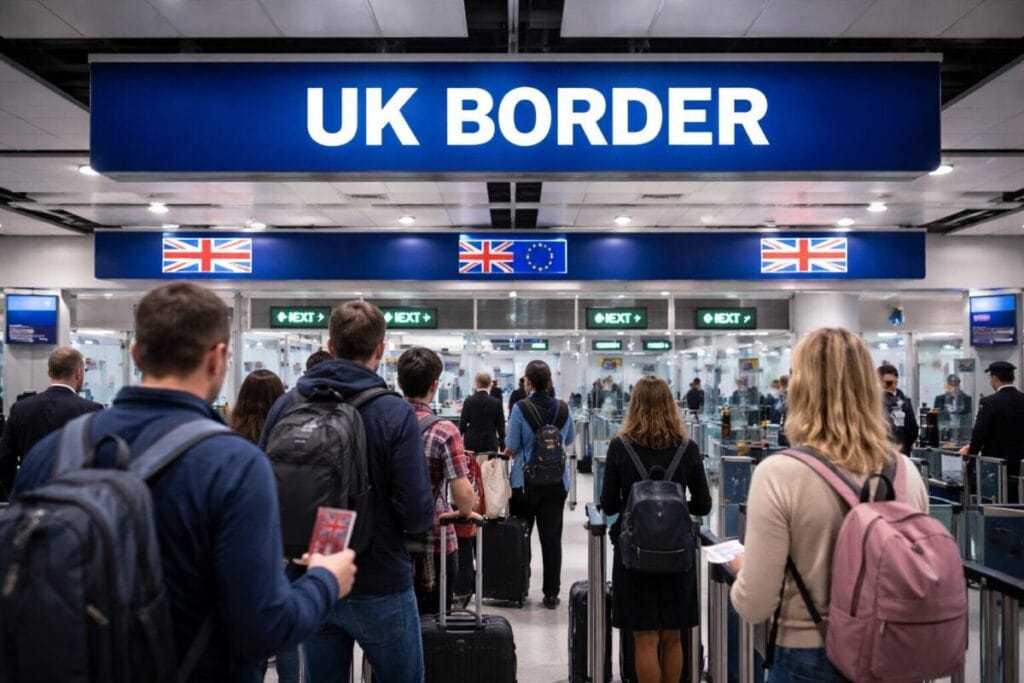
The United Kingdom is introducing significant travel changes that will reshape how dual British nationals enter the country. Beginning 25 February 2026, travelers holding British citizenship alongside another nationality must present a UK passport or a valid Certificate of Entitlement when entering the UK.
This policy marks a major shift in border control procedures. Millions of travelers from regions including North America, Europe, Asia-Pacific, Latin America, and parts of Africa will need to adjust their travel planning.
The new regulations aim to strengthen border security, simplify identity verification, and align with the UK’s evolving immigration framework.
What the New UK Passport Rules Mean
Under the updated policy, dual British nationals will no longer be allowed to enter the UK using only a foreign passport from visa-exempt or Electronic Travel Authorisation (ETA)-eligible countries.
Instead, eligible travelers must:
- Carry a valid UK passport, or
- Present a Certificate of Entitlement confirming the right of abode.
Previously, many dual nationals entered the UK using their non-British passports, especially if those countries enjoyed visa-free entry. The government has now ended this flexibility.
The new system focuses on verifying British citizenship at the point of entry rather than relying on foreign travel documents.
Who Will Be Affected by the Changes
The updated rules apply worldwide to dual nationals holding British citizenship along with another passport. Travelers from several regions will see the biggest impact.
Europe
Dual nationals residing or traveling with passports from European countries such as France, Germany, Spain, Italy, Sweden, Portugal, Switzerland, and others must comply with the new requirements.
Even though many European countries enjoy visa-free access to the UK, British dual nationals cannot rely on those passports anymore.
North America
Travelers with dual British nationality and citizenship from the United States, Canada, or Mexico will need to switch to UK documentation for entry.
These countries previously allowed straightforward entry for many travelers under visa exemption arrangements.
Latin America and Caribbean
Countries such as Brazil, Argentina, Chile, Bahamas, and Barbados are included among affected regions. Dual nationals who used their second nationality to avoid extra documentation must now adjust their plans.
Asia-Pacific
Travelers holding dual nationality with countries including Japan, Australia, New Zealand, Singapore, South Korea, and the UAE will also need to meet the new requirements.
Africa and Middle East
Dual nationals connected to countries like South Africa, Kenya, Nigeria, or Egypt must ensure they carry valid UK documentation before departure.
Why the UK Is Tightening Border Controls
The changes reflect a broader modernization of the UK’s immigration and border systems. Authorities want clearer identification of British citizens entering the country.
Several factors influenced this decision:
- Enhanced national security measures
- Improved digital border systems
- Integration with the UK’s Electronic Travel Authorisation framework
- Stronger identity verification processes
Following Brexit, the UK has continued to revise its border policies. These updates aim to streamline entry procedures while maintaining stricter oversight.
Understanding the Certificate of Entitlement
Dual nationals without a valid UK passport still have an alternative option. The Certificate of Entitlement to the Right of Abode confirms that the holder has the legal right to live and enter the UK without immigration restrictions.
Key details include:
- The certificate is placed inside a foreign passport.
- It confirms the traveler’s British right of abode.
- Processing may take several weeks.
- Applicants should plan well in advance to avoid delays.
Although the certificate provides flexibility, authorities strongly encourage eligible travelers to obtain or renew a UK passport where possible.
Potential Consequences for Non-Compliance
Travelers who ignore the new rules could face serious disruptions. Airlines and transportation providers are expected to enforce the updated requirements strictly.
Possible consequences include:
- Denied boarding at departure airports
- Entry refusal upon arrival
- Travel delays and unexpected costs
- Last-minute rebooking or document application expenses
Airlines typically verify entry eligibility before boarding. Without the correct documents, travelers may not even be allowed to begin their journey.
Global Travel Impact
The policy affects dual nationals across multiple continents. Many frequent travelers previously relied on the convenience of their second passports to simplify entry into the UK.
Now, the process requires additional preparation. Travel agencies expect increased passport applications and renewed focus on documentation checks before departure.
The change also reflects a wider global trend toward tighter border management. Several countries are investing in advanced screening technologies and stricter identity verification processes.
How Dual Nationals Should Prepare
Travelers planning a UK visit after February 2026 should take action early.
Follow this checklist:
- Verify whether you hold British citizenship.
- Renew or apply for a UK passport if needed.
- Consider applying for a Certificate of Entitlement if a UK passport is not available.
- Check airline requirements before travel.
- Allow extra time for document processing.
Early preparation will reduce stress and help ensure smooth travel.
A New Era for UK Travel Entry
The UK’s updated passport regulations mark a significant shift in international travel rules for dual nationals. By requiring proof of British status through UK-issued documentation, authorities aim to improve security while simplifying border procedures.
For travelers from the United States, Europe, Asia, Latin America, and beyond, understanding these changes is essential. Careful planning and correct documentation will be key to avoiding disruptions once the new rules take effect in February 2026.
For more travel news like this, keep reading Global Travel Wire