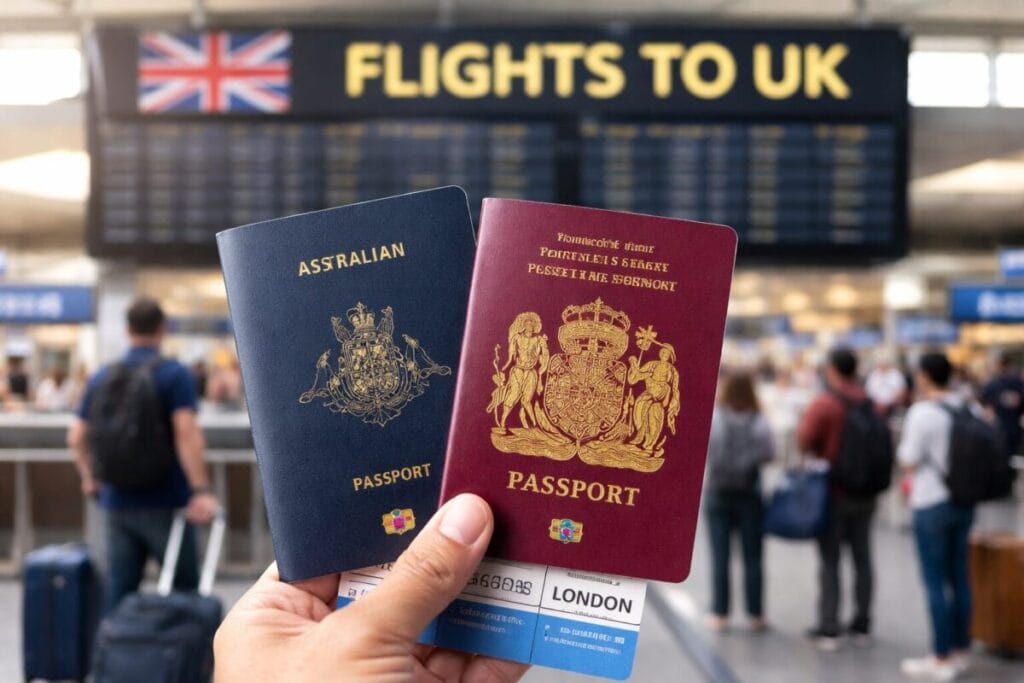
Thousands of Australian travelers could face major disruptions when traveling to the United Kingdom as new entry regulations come into effect on February 25. The updated policy requires dual nationals to enter the UK using a valid British or Irish passport instead of relying solely on an Australian passport.
The change forms part of a wider overhaul of UK border and immigration procedures. While officials say the rules aim to improve efficiency and security, many travelers remain confused about how the policy affects them.
New Passport Requirement Explained
Under the updated rules, Australian citizens who also hold British or Irish nationality must present a valid UK or Irish passport when entering the country. Travelers who previously used Australian passports alone may now face denied boarding if they fail to meet the requirement.
Airlines and transport operators are expected to enforce the rules strictly. Without proper documentation, passengers may not be allowed to board flights, ferries, or international rail services heading to the UK.
This policy reflects the UK’s ongoing transition toward more digital and controlled border systems. Authorities are encouraging eligible travelers to verify their citizenship status before booking travel.
Dual Citizenship Awareness Creates Unexpected Challenges
One of the biggest issues stems from travelers who did not realize they qualified for dual citizenship. Many Australians discover British nationality through descent, especially if parents or grandparents were born in the UK.
Travel agents report an increase in clients learning about dual citizenship only after beginning travel arrangements. This late discovery often leads to delays, cancellations, or unexpected expenses.
For example, some travelers must now apply for UK passports or special certificates before departure. Processing times and administrative requirements can complicate urgent travel plans.
Certificate of Entitlement and Alternative Options
Dual nationals who do not possess a British or Irish passport may need to apply for a Certificate of Entitlement. This document confirms the holder’s right of entry into the UK. However, the application involves additional fees and processing periods.
Travelers should consider applying well in advance, as last-minute requests may not be processed quickly enough for planned trips. Experts also advise checking family history carefully, as citizenship eligibility may extend across generations.
Electronic Travel Authorisation Not Available for Dual Nationals
Another major change affects eligibility for the UK’s Electronic Travel Authorisation (ETA). Dual nationals cannot rely on ETA or standard visitor visas if they qualify for British or Irish citizenship.
This distinction creates confusion because many travelers assume the ETA system applies to all Australian visitors. Instead, eligible dual nationals must use the correct passport or approved documentation.
Travel Industry Reports Rising Confusion
Australian travel professionals have seen a surge in inquiries from worried customers. Some travelers have already canceled or postponed trips after discovering they did not meet the new entry requirements.
Industry experts say booking travel to the UK now involves more detailed discussions about citizenship history. Questions about family origins, birthplace records, and nationality eligibility have become routine during planning.
The shift highlights how evolving immigration rules can transform a simple vacation booking into a complex legal process.
Cost and Processing Time Considerations
Obtaining a British passport involves fees and processing periods that vary depending on application type. Travelers should factor in potential delays, especially during busy travel seasons.
Authorities recommend carrying both passports if you hold dual citizenship. Use the UK passport when entering the UK and the Australian passport when returning to Australia. This approach reduces complications during border checks.
Planning ahead is essential, particularly for elderly travelers or families with fixed travel dates.
Why the UK Is Introducing These Changes
The new rules align with broader efforts to modernize UK border management. The government aims to streamline entry procedures and ensure travelers use documentation that accurately reflects their citizenship status.
Officials believe the changes will strengthen border control and improve processing efficiency. However, critics argue that communication around the new requirements has not reached all affected travelers.
Clearer guidance and public awareness campaigns may help reduce confusion as the policy rolls out.
How Australians Can Avoid Travel Disruptions
Travelers can take several steps to avoid last-minute problems:
- Check whether you qualify for British or Irish citizenship through descent.
- Apply for the correct passport or documentation well before travel.
- Confirm airline requirements prior to departure.
- Carry both passports if you hold dual nationality.
- Allow extra time for administrative processing.
Early preparation remains the best way to avoid denied boarding or costly travel changes.
Broader Impact on Global Travel Trends
The UK’s new entry rules reflect a wider global trend toward stricter border controls and clearer nationality verification. Many countries now rely on advanced digital systems that require precise documentation.
For travelers, this shift means increased responsibility to understand immigration rules before booking trips. Dual nationals may face more complex requirements than single-citizenship travelers.
As international travel continues to evolve, staying informed about entry regulations has become essential for smooth journeys.
The upcoming changes represent a significant adjustment for Australian travelers with British or Irish heritage. By understanding eligibility and preparing documentation early, travelers can reduce risks and ensure hassle-free entry into the United Kingdom.
For more travel news like this, keep reading Global Travel Wire