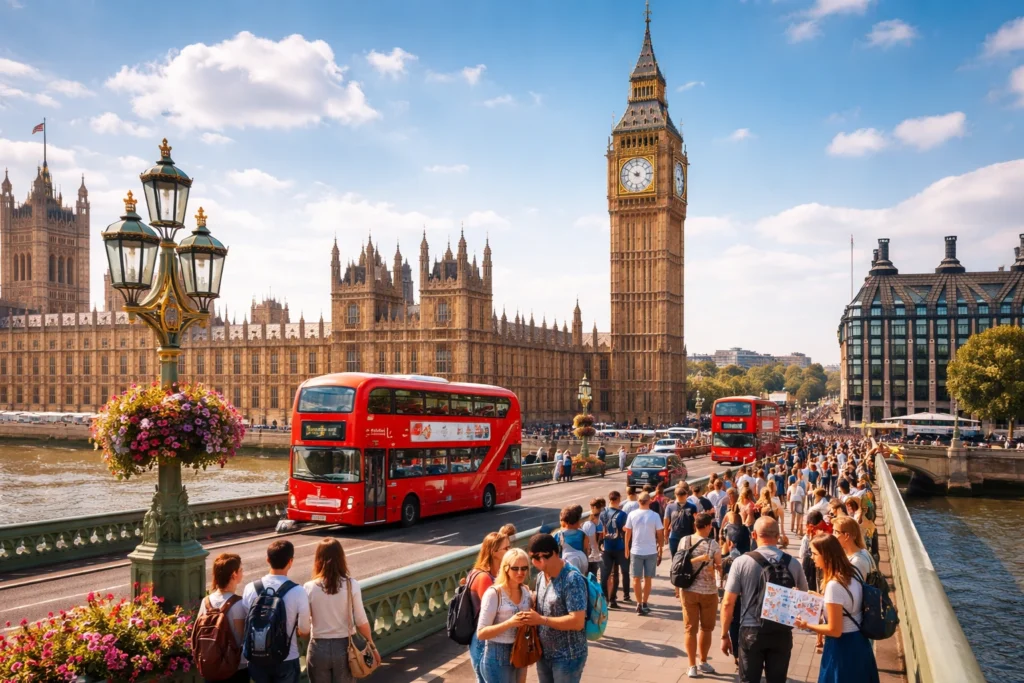
The United Kingdom is preparing for a major tourism surge in 2026. Experts expect record visitor numbers and spending levels. This growth will surpass pre-pandemic performance.
Strong demand and strategic planning drive this momentum. The UK continues to attract global travelers with culture and heritage. The tourism sector shows strong resilience and recovery.
Visitor Numbers and Spending Reach New Highs
Forecasts show that international arrivals could reach 45.5 million in 2026. This figure reflects a sharp increase from recent years.
Tourist spending may also reach £35.7 billion. This growth highlights the sector’s economic strength. Travelers continue to spend more on experiences and services.
The rise in demand builds on steady recovery trends. The UK now positions itself as a top global destination. This momentum supports long-term tourism growth.
Digital Border Systems Transform Travel Experience
The UK will introduce the Electronic Travel Authorisation system in February 2026. Travelers from 85 countries must apply for digital approval before arrival.
This system will streamline border entry and reduce waiting times. It will improve efficiency at airports and checkpoints.
Visitors will benefit from faster and smoother processing. This change enhances the overall travel experience.
Digital innovation plays a key role in tourism growth. Countries that simplify entry attract more visitors. The UK aims to lead in this area.
European Policy Changes Influence Travel Choices
Changes in European border systems will also impact travel decisions. New rules in the Schengen area may increase complexity for visitors.
Travelers may prefer simpler entry systems. The UK offers a single-entry process that reduces hassle.
This advantage may shift travel patterns toward the UK. Short-term visitors may choose Britain over multiple European destinations.
This shift can increase spending across British attractions. Museums, heritage sites, and events will benefit from this trend.
Targeted Marketing Attracts High-Value Travelers
The UK government has increased marketing efforts in key markets. These include the United States, India, China, and Gulf countries.
These regions produce high-spending travelers. Visitors from these markets often seek luxury and cultural experiences.
Marketing campaigns highlight British heritage, events, and film locations. This approach attracts travelers interested in unique experiences.
The strategy aims to increase both visitor numbers and spending. It strengthens the UK’s position in global tourism.
Tourism Growth Boosts Economic Activity
The tourism boom will support multiple industries across the UK. Hospitality, transport, retail, and culture will benefit.
Local businesses will see increased demand from international visitors. Hotels, restaurants, and shops will experience higher revenue.
Tourism also creates job opportunities. The sector will require more workers to meet demand.
Economic benefits will extend beyond major cities. Regional destinations will also attract visitors. This growth supports local communities.
Challenges Require Strategic Planning
Despite strong growth, the sector faces several challenges. Staff shortages may affect service quality. Businesses must invest in workforce training.
Airports may experience congestion due to increased passenger numbers. Efficient operations will become critical.
Popular tourist sites may face capacity pressure. Overcrowding can reduce visitor satisfaction.
The government and industry must address these issues. Proper planning will ensure a smooth travel experience.
Infrastructure Investment Becomes Essential
The UK must invest in infrastructure to support growth. Airports need upgrades to handle higher traffic.
Public transport systems must improve to connect key destinations. Efficient mobility enhances the visitor experience.
Accommodation capacity must also increase. Hotels and rental properties must meet rising demand.
Investment in digital systems will improve efficiency. Technology will play a major role in managing tourism flows.
Sustainability Shapes Future Tourism Strategy
Sustainability will remain a key focus for the UK tourism sector. Travelers now prefer eco-friendly destinations and services.
The industry must balance growth with environmental protection. Sustainable practices will ensure long-term success.
Efficient resource use and responsible tourism will become priorities. These measures will protect natural and cultural assets.
The UK aims to lead in sustainable tourism practices. This approach strengthens its global competitiveness.
Future Outlook for UK Tourism
The outlook for 2026 remains highly positive. The UK will attract millions of visitors from around the world.
Digital systems, marketing, and infrastructure improvements will support growth. The sector will continue to evolve with changing trends.
Tourism will remain a key contributor to the economy. It will drive employment and business expansion.
The UK must maintain quality and efficiency to sustain momentum. Strong planning will ensure continued success.
Conclusion
The UK tourism sector stands on the edge of a historic boom in 2026. Record visitor numbers and spending will redefine the industry.
Digital innovation, targeted marketing, and global demand will drive this growth. However, challenges require careful management.
With the right strategies, the UK will strengthen its position as a leading travel destination. The future of British tourism looks strong and promising.
For more travel news like this, keep reading Global Travel Wire