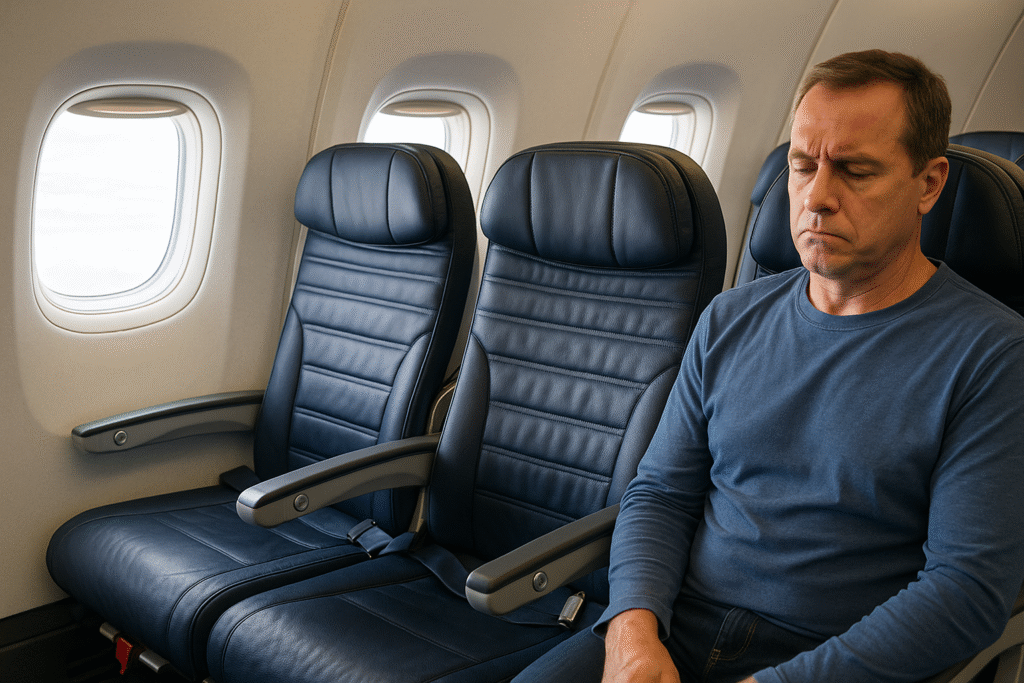
The tourism and aviation industry was shaken recently when United Airlines introduced a policy requiring passengers to pay an $86 fee for moving into empty seats. The controversy unfolded on a flight from Houston George Bush Intercontinental Airport (IAH) to Honduras, where travelers were informed that even though rows were visibly unoccupied, relocating to them was not complimentary.
For passengers heading toward Central America—a region where tourism plays a crucial role in local economies—the sudden enforcement of this fee came as a surprise. Many expected that on a half-full aircraft, comfort should be available without additional charges. Instead, they were told that moving into vacant rows was treated as a premium upgrade, intensifying the frustrations of those already navigating long flights.
A Shift in Airline Business Models
The policy reflects a broader trend within U.S. aviation. Carriers such as United, Delta, and American Airlines are increasingly adopting revenue-driven strategies designed to maximize the profitability of each available seat. Traditionally, travelers could stretch out across empty rows, especially on underbooked international flights, without objection from crew members.
Now, airlines have reframed empty seats as part of “premium economy” or “Economy Plus” services. This reclassification aligns with the growing emphasis on ancillary revenue, where airlines rely not only on ticket sales but also on extra charges for luggage, early boarding, and now seating flexibility. While this strategy boosts profits, it often clashes with passenger expectations, especially during flights departing from major tourism hubs like Houston and Miami toward Latin American destinations.
Reactions From Travelers
The backlash was immediate. Social media platforms were filled with complaints from travelers who viewed the $86 charge as excessive. Passengers described watching entire rows remain empty while they endured cramped conditions in standard economy seats.
For tourism groups and mission travelers heading to Honduras, Guatemala, and other Central American countries, this policy felt especially unfair. Many of these journeys involve long hours in flight, where comfort is not just a luxury but a necessity. The fee, therefore, was interpreted as another barrier in an already expensive travel process.
This shift is particularly concerning for regions like Honduras, where inbound tourism contributes significantly to local development. If airlines create experiences that leave travelers feeling unwelcome or overcharged, it could indirectly affect tourism flows.
United Airlines’ Defense of the Fee
United Airlines has stood by the $86 charge, arguing that it ensures fairness for customers who already paid for premium seating. According to the airline, complimentary moves to empty rows undermine the value of upgraded seats purchased in advance.
The company maintains that preserving the exclusivity of premium services is essential not only for revenue but also for consistency. United’s representatives emphasize that while they recognize passenger frustration, the system is designed to respect the investments of those who bought additional legroom.
For United, the issue is about balance—providing equity for paying customers while still offering competitive ticket prices. The airline’s approach mirrors the broader trend of ensuring profitability amid rising operational costs, fuel prices, and expanding international routes between the United States and Latin America.
Tourism and Regional Implications
The controversy extends beyond corporate policy into the broader tourism conversation. Houston is one of the busiest gateways to Central and South America, and policies enacted on flights between the U.S. and Latin American countries affect thousands of leisure and business travelers each week.
For destinations like Roatán, San Pedro Sula, and Tegucigalpa in Honduras, ensuring a positive visitor experience begins not only at the airport but also onboard flights. If passengers associate their journeys with restrictive airline practices, tourism boards in these regions may face new challenges in attracting repeat visitors.
Similarly, Caribbean nations and Central American governments that rely on U.S. carriers for inbound tourism must navigate the ripple effects of airline policies. When seat charges become a viral talking point, they influence traveler decision-making, from choosing airlines to reconsidering destinations.
Balancing Profits With Passenger Trust
The heart of the issue is the balance between profitability and passenger satisfaction. Airlines argue that every service—from extra bags to wider seats—has a cost, and charging for these services ensures competitive base fares. Yet, passengers feel nickel-and-dimed, especially when charges apply to resources that appear unused.
For Houston’s frequent flyers and international travelers heading south toward Central America, this disconnect is especially sharp. Flights often represent the first impression of a destination. Tourism stakeholders argue that airlines must recognize their role in shaping traveler perception—not just as carriers but as partners in the tourism ecosystem.
The Future of Flying Comfort
The United Airlines seat fee controversy signals the arrival of a new travel era, where flexibility is increasingly tied to additional payment. Gone are the days when passengers could casually move to an empty row after takeoff. Today, such moves are monetized, reflecting the evolution of the airline industry.
For travelers, the key takeaway is preparation. Those flying from Houston, Miami, or New York to Central America or the Caribbean should anticipate stricter seat policies and budget accordingly. For tourism authorities in destinations like Honduras, Belize, and Costa Rica, the challenge is to ensure that what awaits passengers on arrival compensates for any frustrations experienced in the air.
Conclusion
United Airlines’ $86 empty seat fee has become more than just a corporate policy—it is now part of a larger tourism and travel debate spanning the United States and Latin America. While airlines see such charges as essential for maintaining premium value, passengers view them as unnecessary barriers that diminish the joy of travel.
As this policy gains traction across the aviation industry, the question remains: can airlines sustain profitability while preserving trust and comfort? For destinations reliant on tourism, the answer may determine how smoothly travelers continue to journey between U.S. hubs like Houston and Latin American gateways like Honduras.
For more travel news like this, keep reading Global Travel Wire