
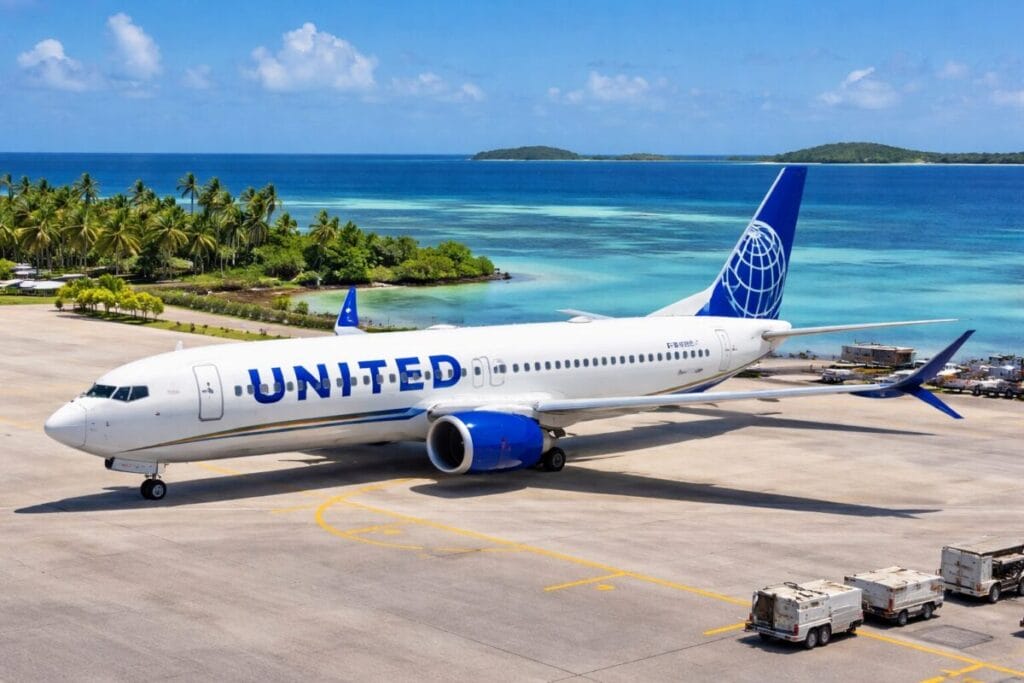
United Airlines is set to strengthen its Asia-Pacific presence with a major network expansion in 2026. The airline plans to introduce Boeing 737 MAX aircraft on several regional routes connecting Japan, Guam, Micronesia, and Southeast Asia. The move reflects growing demand for travel in the region and aims to improve connectivity between popular tourism destinations and remote island communities.
The new deployment also highlights a shift toward modern aircraft that offer better fuel efficiency, longer range, and improved passenger comfort. These upgrades are expected to support tourism growth while enhancing business and cultural exchanges across the Pacific.
New Routes Launching From Tokyo Narita
The expansion begins in late April 2026 with new Boeing 737 MAX operations from Tokyo Narita Airport. United Airlines will introduce the aircraft on routes connecting Tokyo Narita with Guam and Ulaanbaatar. Shortly after, additional service will link Tokyo Narita with Koror in Palau.
These routes play a strategic role in connecting Japan with key destinations across Micronesia and Northeast Asia. Tokyo Narita acts as a major international hub, enabling passengers to access remote island destinations through convenient transfers.
The deployment of the MAX aircraft allows the airline to operate more efficiently on medium-haul routes while maintaining competitive capacity levels. Travelers may also benefit from modern cabin features, improved fuel efficiency, and potentially smoother scheduling options.
Boosting Tourism Across Micronesia and Japan
The new services are expected to support tourism development across several Pacific destinations. Micronesian islands such as Palau and Guam remain popular among travelers seeking pristine beaches, diving experiences, and unique cultural traditions.
Guam serves as an important gateway for visitors exploring the region. Its strategic location, established tourism infrastructure, and historical significance make it a key transit hub. Improved connectivity could increase visitor numbers and encourage longer multi-destination trips within the Pacific.
Japan’s role as a connecting hub also supports inbound tourism from North America and other regions. Enhanced flight options can help distribute travelers to lesser-known destinations, which supports local economies and encourages sustainable tourism growth.
Expansion Into Southeast Asia and Taiwan
Later in 2026, United Airlines plans to expand further into Southeast Asia with new Boeing 737 MAX routes from Tokyo Narita to Cebu in the Philippines and Kaohsiung in Taiwan.
Cebu stands out as one of the Philippines’ most popular tourism destinations. Visitors are drawn to its white-sand beaches, vibrant marine life, and rich cultural heritage. Increased direct connections may boost tourism flows while supporting regional travel demand.
Kaohsiung, Taiwan’s southern port city, offers a blend of modern urban attractions and natural landscapes. The city has gained popularity among travelers interested in culinary experiences, waterfront development projects, and cultural landmarks. Adding new flight services could improve accessibility for both leisure travelers and business visitors.
The expansion into Southeast Asia reflects broader industry trends as airlines respond to growing travel demand within the region. Short- and medium-haul routes remain essential for connecting emerging tourism markets with established aviation hubs.
The Island Hopper Gets a Modern Upgrade
One of the most notable developments is the introduction of the Boeing 737 MAX on the iconic Island Hopper service. Beginning in December 2026, the aircraft will operate this multi-stop route connecting Guam with several Pacific island destinations, including Chuuk, Pohnpei, Kosrae, Kwajalein, Majuro, and Honolulu.
The Island Hopper is widely known for its unique itinerary across remote islands. It serves both tourists and local communities, providing essential air access where alternatives remain limited. The introduction of the MAX aircraft represents a significant modernization of this historic route.
Passengers may experience improved onboard comfort, enhanced reliability, and more efficient operations. The aircraft’s advanced technology also supports lower fuel consumption, aligning with broader sustainability goals within the aviation industry.
Supporting Regional Connectivity and Economic Growth
United Airlines’ investment in the Boeing 737 MAX highlights the growing importance of regional connectivity in the Asia-Pacific aviation market. Increased air links can encourage tourism, facilitate trade, and strengthen cultural exchange between destinations.
As travel demand continues to rise across Asia, airlines are focusing on flexible aircraft that can operate efficiently on diverse routes. The 737 MAX offers the range required for trans-Pacific regional flights while maintaining operating costs that support competitive fares.
For smaller island nations, improved air service plays a critical role in economic development. Tourism remains a major contributor to many Pacific economies, and enhanced connectivity can help attract new visitors while supporting local businesses.
A Strategic Step Toward Future Growth
United Airlines’ Asia-Pacific expansion marks a significant milestone in its long-term network strategy. By introducing modern aircraft on key regional routes, the airline aims to meet rising passenger demand while improving operational efficiency.
Travelers can expect better connections between Japan, Micronesia, and Southeast Asia, along with expanded access to destinations that were previously harder to reach. As the aviation industry continues to recover and evolve, investments in new aircraft and regional networks signal a strong focus on growth within the Asia-Pacific travel market.
The upcoming Boeing 737 MAX services highlight the increasing importance of flexible, fuel-efficient aircraft in shaping the future of international travel and tourism across the Pacific.
For more travel news like this, keep reading Global Travel Wire