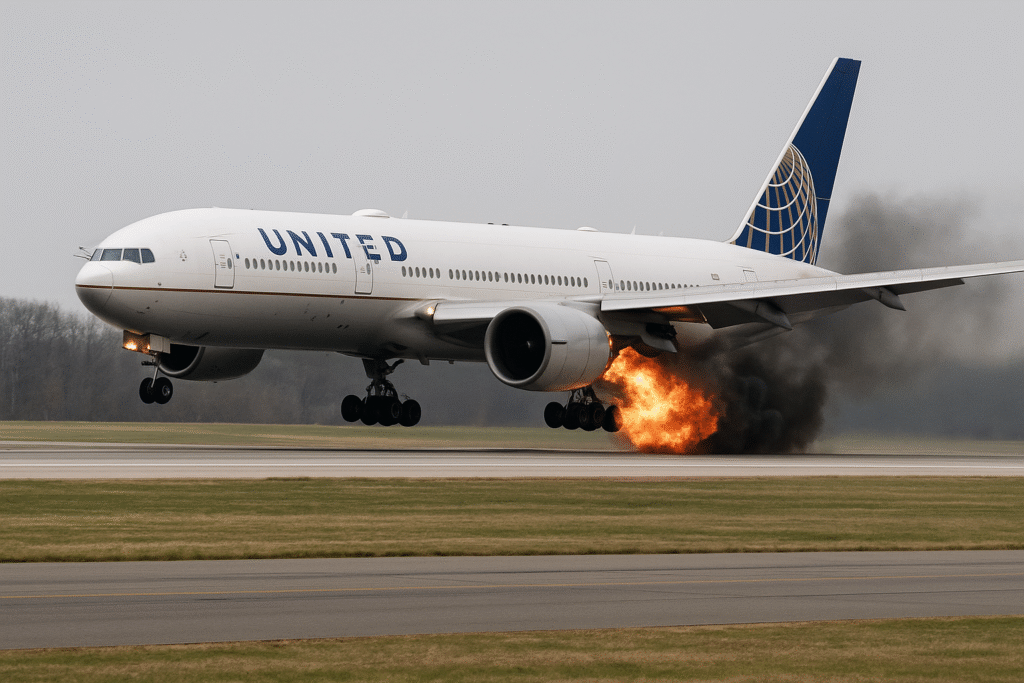
A United Airlines international flight bound for Tokyo made a precautionary return to Washington Dulles International Airport after an engine failure shortly after takeoff. The incident involved a Boeing 777-200ER carrying 275 passengers and 15 crew members.
The aircraft returned safely. No injuries were reported. Emergency teams responded promptly, and passengers disembarked without incident. While the outcome remained positive, the event has renewed focus on airline safety and aircraft maintenance in global aviation.
What Happened After Takeoff
The flight departed Dulles on a scheduled long-haul journey to Japan. Moments after takeoff, part of the engine cowling detached. The damage triggered an engine fire.
Debris falling from the aircraft caused a small brushfire on the ground near the airport perimeter. Fire crews contained the blaze quickly. The situation did not threaten airport operations or nearby communities.
Inside the aircraft, the flight crew followed standard emergency procedures. Pilots shut down the affected engine and coordinated with air traffic control. The aircraft returned to Dulles within a short time frame.
Crew Response and Emergency Handling
The incident highlighted the importance of crew training and preparedness. Pilots relied on established protocols designed for engine malfunctions during critical flight phases.
Cabin crew maintained calm communication with passengers. They provided clear instructions and ensured safety throughout the return and landing process. Emergency services stood by as a precaution.
This coordinated response helped avoid panic and ensured a smooth evacuation after landing. Such procedures remain central to modern aviation safety systems.
Aircraft Type and Maintenance Focus
The Boeing 777-200ER has a long service history in international aviation. Airlines worldwide use it for long-haul routes due to its range and reliability.
However, incidents involving older wide-body aircraft often renew discussions around maintenance cycles and fleet upgrades. Airlines operate under strict inspection schedules, especially for engines, external components, and fire prevention systems.
This event may lead to additional inspections across similar aircraft models. Airlines often take proactive steps after such incidents to reassure regulators and passengers.
Passenger Confidence in Long-Haul Travel
As international travel continues to rebound, passenger confidence remains a key concern. High-profile incidents can cause anxiety, even when outcomes remain safe.
Travelers today expect transparency, fast communication, and visible safety measures. Airlines now place greater emphasis on sharing accurate information during disruptions.
Clear updates, timely announcements, and post-incident support play a major role in rebuilding trust. This approach has become especially important in the post-pandemic travel environment.
Implications for Airline Safety Standards
Engine-related events draw attention to the complexity of modern aircraft systems. While rare, such failures test the resilience of aviation safety frameworks.
Airlines may increase the use of real-time engine monitoring tools. These systems detect early signs of wear or overheating. Predictive maintenance helps reduce unexpected failures.
Fire containment materials, improved cowling designs, and advanced suppression systems also remain areas of continuous improvement. Industry investment in these technologies continues to grow.
The Role of Aviation Authorities
Aviation authorities typically review incidents involving mechanical failure. These reviews aim to identify root causes and prevent recurrence.
Such oversight supports consistent global safety standards. Airlines often cooperate fully, sharing data and maintenance records.
Findings from investigations can lead to revised inspection guidelines, updated training programs, or design improvements across fleets.
Growing Demand for Passenger Support Services
Incidents like this also highlight the importance of passenger support. Travelers increasingly rely on travel insurance, rebooking assistance, and customer care services during disruptions.
Airlines now work closely with ground teams to manage delays, accommodations, and onward travel. Efficient handling helps reduce frustration and protects brand reputation.
Customer experience during emergencies often shapes long-term loyalty more than the incident itself.
Impact on Global Routes and Operations
Long-haul international routes involve higher operational complexity. Aircraft endure extended flight hours, varied climates, and heavy passenger loads.
As global traffic increases, airlines may adopt tighter maintenance schedules for such routes. Some carriers may accelerate fleet renewal plans to introduce newer, more fuel-efficient aircraft.
Crew training programs also evolve. Simulated emergency scenarios help crews stay prepared for rare but critical situations.
Aviation Resilience and the Road Ahead
This United Airlines incident serves as a reminder that aviation safety relies on constant vigilance. Even with advanced technology, unexpected events can occur.
The safe outcome reflects strong systems, skilled crews, and effective coordination. These elements form the backbone of commercial aviation.
Looking ahead, airlines will continue investing in safety innovation, transparent communication, and passenger care. As air travel grows, resilience and trust will remain central to the industry’s future.
The event reinforces a clear message: safety remains the top priority in global air travel, and continuous improvement keeps millions flying with confidence every day.
For more travel news like this, keep reading Global Travel Wire