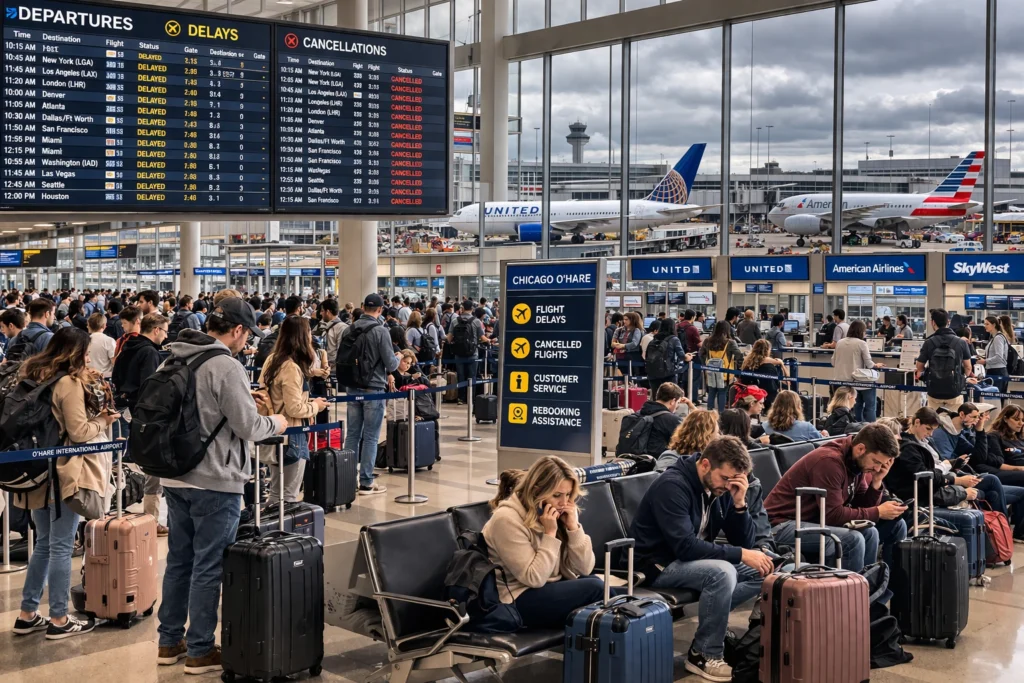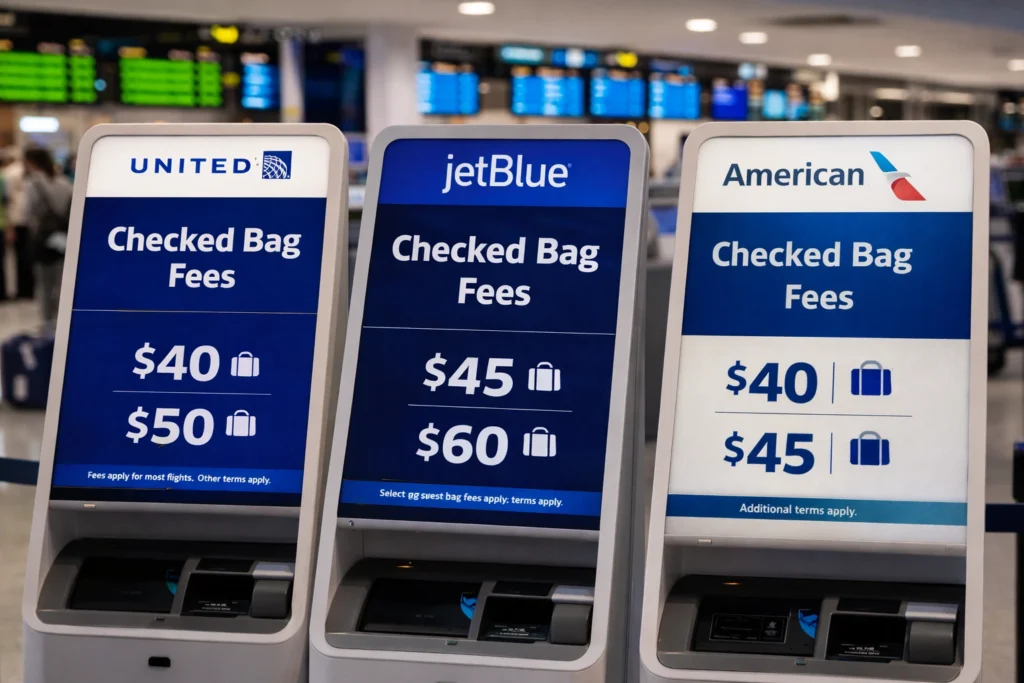
United Airlines has increased checked baggage fees for 2026. The move follows similar actions by JetBlue and American Airlines as fuel costs continue to rise .
The new charges took effect on April 3, 2026. They apply to both domestic and international routes. Travelers now face higher costs for checked luggage across many markets.
United Airlines Raises Baggage Fees
United Airlines has added about $10 to first and second checked bags. Third checked bag fees have increased even more, depending on the route.
This marks the airline’s first baggage fee increase in more than two years. The change reflects rising operational costs, especially fuel prices.
Jet fuel prices have surged in 2026. Airlines now face higher expenses, which affect pricing strategies.
United has chosen to adjust baggage fees rather than raise base fares significantly. This approach allows more flexibility in pricing.
Rising Fuel Costs Drive Changes
Fuel remains one of the largest expenses for airlines. It accounts for a significant share of operating costs.
Recent geopolitical tensions have disrupted fuel supply. This has caused a sharp increase in jet fuel prices.
Airlines must manage these higher costs while maintaining profitability. Many carriers are passing some of the burden to passengers.
Baggage fees offer a targeted way to recover costs. They affect travelers who check bags while keeping ticket prices competitive.
JetBlue Introduces New Fee Structure
JetBlue has also increased its baggage fees in 2026. The airline has adjusted prices for both first and second checked bags.
The first checked bag now costs more during off-peak travel. The second bag sees higher charges, especially during peak periods.
These changes reflect rising operational costs and market conditions. JetBlue aims to balance affordability with financial stability.
The airline continues to monitor fuel prices and demand trends. Further adjustments may follow if costs remain high.
American Airlines Takes a Different Approach
American Airlines has updated parts of its fee structure. However, it has not introduced increases as large as United or JetBlue.
Instead, the airline has focused on additional charges. These include airport handling fees and last-minute baggage costs.
This strategy allows American to manage costs without major changes to standard baggage fees.
It also highlights how airlines respond differently to the same challenges.
Delta Maintains Current Pricing
Delta Air Lines has not announced major baggage fee increases for 2026. The airline continues to offer its existing pricing structure.
This decision may help Delta stay competitive in a rising-cost environment.
However, Delta may adjust other pricing elements if fuel costs remain high.
Airlines often use a mix of strategies to manage expenses. These include ticket pricing, ancillary fees, and operational efficiencies.
Impact on Travelers
Higher baggage fees will affect many passengers. Travelers who check multiple bags will see the biggest impact.
International travelers may face higher overall trip costs. This is especially true for long-haul journeys.
Airlines recommend planning ahead to reduce expenses. Packing lighter can help avoid additional charges.
Pre-paying for baggage online may also offer savings. Many airlines provide discounts for early payment.
Broader Impact on Tourism
Rising travel costs may influence tourism patterns. Some travelers may adjust plans or choose shorter trips.
Destinations that rely on international visitors could see changes in demand.
Airlines must balance cost recovery with maintaining passenger demand. Competitive pricing remains important for tourism growth.
Despite higher fees, travel demand remains strong in 2026. Many travelers continue to prioritize leisure and business trips.
Industry Trends and Future Outlook
The increase in baggage fees reflects a broader trend in aviation. Airlines are relying more on ancillary revenue.
Additional charges for services help offset rising costs. These include baggage, seat selection, and onboard services.
Industry analysts expect more airlines to review their fee structures. Further adjustments may occur if fuel prices stay high.
Airlines will continue to adapt to changing market conditions. Flexibility in pricing will remain key to long-term success.
Tips for Managing Travel Costs
Travelers can take steps to reduce expenses. Packing efficiently can help avoid extra baggage fees.
Joining airline loyalty programs may offer benefits such as free checked bags.
Some credit cards also include baggage fee coverage. These options can provide savings for frequent travelers.
Planning ahead and comparing airline policies can also help reduce costs.
A Changing Cost Landscape for Air Travel
The rise in baggage fees signals a shift in airline pricing strategies. Carriers are adjusting to higher operating costs while maintaining service levels.
United Airlines has led this change in 2026, with other airlines following similar paths.
Passengers must now adapt to a new cost environment. Awareness and planning will be essential for managing travel expenses.
As the aviation industry evolves, pricing models will continue to change. Travelers can expect ongoing adjustments as airlines respond to global economic conditions.
For more travel news like this, keep reading Global Travel Wire