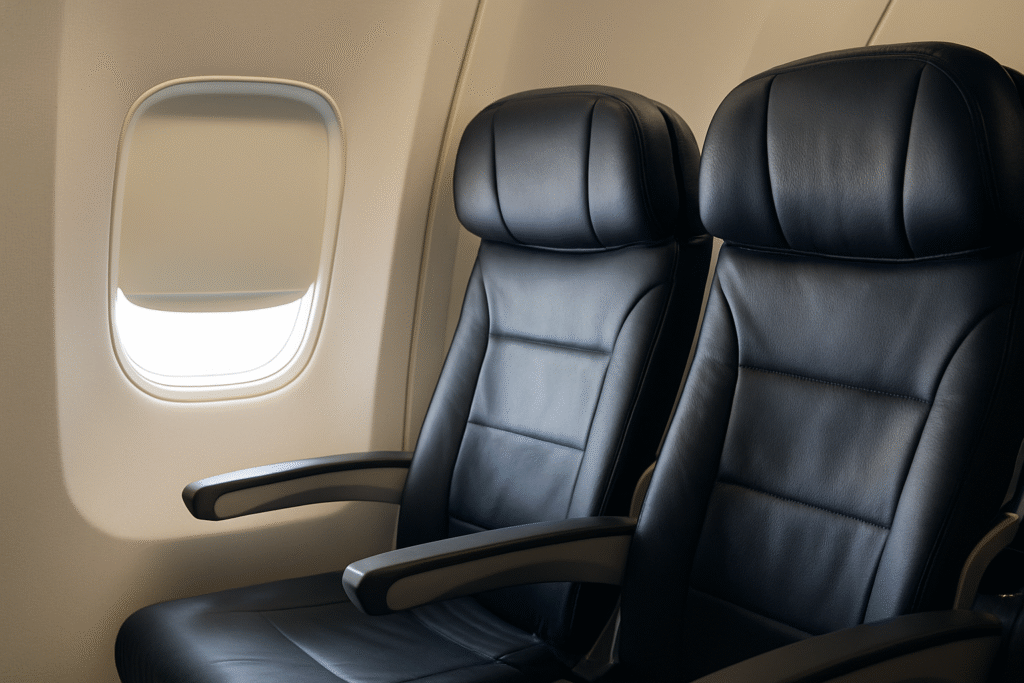
United Airlines is facing growing legal and consumer backlash over its definition of a “window seat.” Several U.S. passengers claim the airline misled them into paying extra for seats positioned next to the aircraft wall but offering no actual window. United argues that the term “window seat” refers only to the seat’s cabin position, not a guaranteed view.
This dispute, centered on aircraft such as the Boeing 737 MAX and other narrow-body models, has become a flashpoint for broader concerns over airline transparency. As more travelers pay added fees for preferred seating, clarity around seat features has become increasingly important.
What Sparked the Window Seat Lawsuit?
The issue emerged when passengers discovered that certain seats labeled as “window seats” were placed beside a solid fuselage panel. Many had paid extra expecting a view. These complaints soon escalated into legal action, arguing that marketing a windowless seat as a window seat was misleading.
United maintains that the term describes seat location only. The airline insists that its seating descriptions follow industry standards and that customers are made aware of aircraft configurations during booking.
The case continues in U.S. courts, with implications for how airlines define and market premium seating. The verdict may reshape future seat labeling rules and influence how airlines disclose aircraft layouts.
Why This Matters for U.S. and Global Airlines
United Airlines is not the only carrier under scrutiny. Travelers worldwide have raised similar concerns about seat labeling, especially as airlines increasingly rely on ancillary revenue. Fees for window seats, aisle seats, extra legroom, and early boarding have become major profit drivers.
As more customers pay for upgrades, expectations for transparency are stronger than ever. Industry analysts note that misleading seat information could trigger stricter consumer protection rules. Airlines may soon face tighter advertising guidelines requiring clearer seat descriptions across booking platforms.
A shift in regulations could also affect pricing strategies. If airlines must revise labeling or refund customers for unclear seat features, premium seat fees may increase to balance revenue losses.
Impact on Tourism and the Wider Travel Industry
Higher airfare costs linked to new regulations or legal settlements may influence traveler decisions. When seat selection fees rise, budget-conscious passengers may reduce spending on accommodations, tours, and other travel-related services.
Destinations dependent on high visitor volume could feel the effects most strongly. A decline in flight frequency or rising travel expenses often leads to reduced occupancy rates and lower spending at hotels and restaurants. Tourism businesses, especially in high-traffic cities, may need to adjust their pricing or marketing strategies to remain competitive.
How Travelers Can Avoid Seat Selection Surprises
1. Check Seat Maps Carefully
View the aircraft layout before finalizing your booking. Some narrow-body planes, including certain Boeing and Airbus models, have windowless seats in the “window” position. Taking a screenshot of the seat map can help you compare later.
2. Understand Seating Fees
Seat selection costs differ widely across airlines and even across flights operated by the same airline. Before paying extra, verify what the seat offers. Not all premium seats guarantee a better view.
3. Know Your Consumer Rights
Many regions protect travelers from misleading advertising. If you paid for a feature that didn’t exist, you may be eligible for compensation or a refund. Understanding these rights helps travelers make informed decisions.
4. Book Early
Early booking increases the likelihood of securing your preferred seat type at a lower cost. Last-minute reservations often come with higher fees and fewer options.
5. Stay Flexible
If your travel dates or routes can shift, you gain more options. Flexibility often means cheaper fares and better seat availability.
6. Consider Alternative Airlines
If transparency matters to you, compare seat policies across carriers. Smaller or budget airlines sometimes provide clearer seat descriptions and lower fees than legacy carriers.
Important Factors to Review Before Booking
Different aircraft have different interior designs. Even on long-haul flights, certain aircraft models include seats without windows in traditional window positions. United Airlines, for example, operates a wide mix of Boeing and Airbus fleets, each with its own configuration.
Travelers should also consider connection times, seasonal pricing, and peak travel periods. Off-peak flights often offer lower fares and more seat choices. Understanding seat selection policies before checkout can prevent dissatisfaction later.
What This Means for the Future of Seat Transparency
The United Airlines window seat lawsuit highlights a rising demand for honesty in airline marketing. As travelers become more aware of hidden fees and ambiguous seat labels, airlines may soon face increased pressure to simplify and clarify their offerings.
Greater transparency will likely benefit passengers, leading to clearer booking processes and fewer surprises. The aviation industry, however, may need to rethink how it prices premium seating to maintain profitability.
For travelers, the best strategy remains simple: review seat maps closely, understand what you are paying for, and stay informed about your rights. As the industry adapts, clearer communication between airlines and passengers will shape a more customer-focused future in air travel.
For more travel news like this, keep reading Global Travel Wire