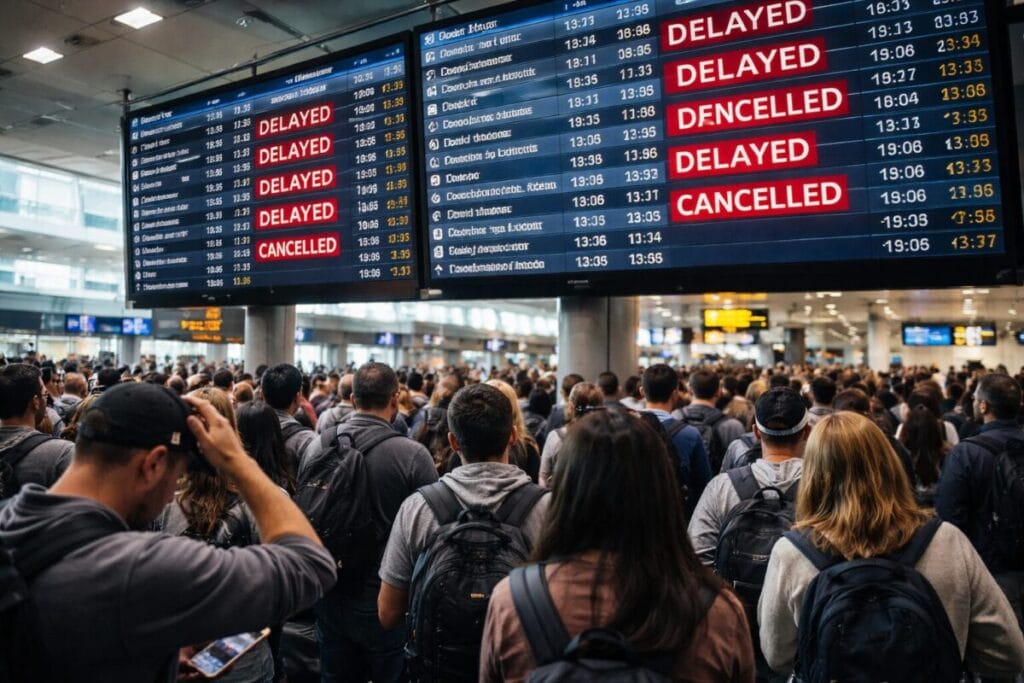
Air travel across the United States continues to face serious disruption, as thousands of passengers encounter delays and cancellations at major airports. Recent operational data shows nearly 4,867 flight delays and 215 cancellations affecting domestic and international routes.
Major carriers including Alaska Airlines, United Airlines, American Airlines, Delta Air Lines, Hawaiian Airlines, JetBlue, and several regional operators are struggling to maintain schedules. Disruptions have impacted busy hubs such as Seattle, Chicago, Dallas–Fort Worth, Atlanta, Honolulu, and New York City airports.
Travelers now face longer wait times, missed connections, and last-minute itinerary changes as airlines attempt to stabilize operations.
Why Are Flights Getting Delayed?
Several factors are driving this widespread disruption across the aviation network.
Staffing and Operational Constraints
Airlines continue rebuilding workforce capacity after pandemic-era reductions. Crew shortages still affect pilot availability, cabin crew assignments, and ground operations.
Maintenance staffing and airport ground handling teams also face pressure during peak travel periods, slowing aircraft turnaround times.
Weather and Climate Impacts
Unpredictable weather patterns have intensified delays. Severe storms, winter conditions, heatwaves, and fog continue to disrupt schedules across both coastal and inland airports.
Busy hubs often see cascading delays when storms ground flights, causing aircraft and crews to miss their next assignments.
Passenger Demand Rebound
Air travel demand remains strong. More passengers are flying for leisure and business, especially during holiday seasons and long weekends. Increased traffic strains airport infrastructure and airline scheduling systems.
When flights operate at full capacity, recovery from disruptions becomes more difficult.
Airlines Facing the Most Delays
Operational data highlights variation among carriers.
American Airlines recorded the largest number of delayed flights, with nearly one-third of operations experiencing schedule shifts. Delta Air Lines and United Airlines also faced hundreds of delayed departures despite maintaining low cancellation percentages.
Regional carriers supporting major airlines showed mixed performance. Some regional operators experienced higher delay percentages due to tighter scheduling and limited spare aircraft availability.
Low-cost carriers such as Spirit and Frontier also reported delays, though cancellation rates stayed relatively low compared with previous years.
Airports Experiencing the Worst Disruptions
Certain airports continue to see heavier operational challenges than others.
Washington Reagan National Sees Heavy Impact
Washington’s Reagan National Airport reported the highest delay percentage among key hubs. Nearly six out of ten flights experienced delays, along with the highest number of cancellations in the dataset.
Congested airspace and tight runway capacity often slow flight movement at this airport.
Dallas–Fort Worth and Philadelphia Under Pressure
Dallas–Fort Worth International Airport and Philadelphia International Airport also recorded significant delays. As major connecting hubs, disruptions there affect flights nationwide.
Even short weather disruptions quickly ripple across airline networks.
New York and Chicago Airports Struggle
New York airports including LaGuardia, Newark, and JFK continue facing congestion challenges, especially during peak hours. Chicago O’Hare also recorded consistent delays due to heavy traffic and weather variability.
Some Airports Show Better Stability
Not all airports experienced severe disruption.
Anchorage International Airport recorded one of the lowest delay percentages despite handling cargo and passenger operations. Several West Coast airports also managed relatively smoother operations compared to major eastern hubs.
Airports with less congestion or more flexible scheduling recovered faster when disruptions occurred.
Impact on Travelers
Passengers across the country continue dealing with unpredictable travel conditions.
Common traveler challenges include:
• Missed connections and overnight delays
• Long customer service wait times
• Limited rebooking options during peak travel
• Higher last-minute airfare prices
• Increased baggage transfer delays
International travelers face additional complications when domestic delays cause missed global connections.
Airlines Working on Recovery Measures
Airlines are gradually improving resilience through several measures.
Increased Crew Hiring
Major carriers continue hiring pilots, cabin crew, and maintenance staff to support expanded operations.
Improved Scheduling Buffers
Some airlines now build extra time into schedules, allowing better recovery after delays.
Technology Investments
Airlines and airports are investing in digital systems to improve crew management, passenger communication, and weather monitoring.
Real-time travel alerts and mobile rebooking tools help passengers respond faster to schedule changes.
Travel Tips for Passengers
Travelers can reduce disruption risks with careful planning.
• Book early flights to avoid cascading delays.
• Allow extra connection time between flights.
• Track flight status through airline apps.
• Carry essentials in hand luggage.
• Consider travel insurance for important trips.
Flexibility remains key, especially during peak seasons.
Outlook for US Air Travel
While delays and cancellations remain a concern, industry leaders expect gradual improvement as staffing stabilizes and operational planning improves.
However, rising passenger demand and unpredictable weather may continue causing occasional disruptions across major hubs.
For now, travelers should stay prepared for potential schedule changes while airlines work to strengthen network reliability.
Air travel demand remains strong, but smooth operations will depend on continued investment in workforce, infrastructure, and smarter scheduling solutions.
For more travel news like this, keep reading Global Travel Wire