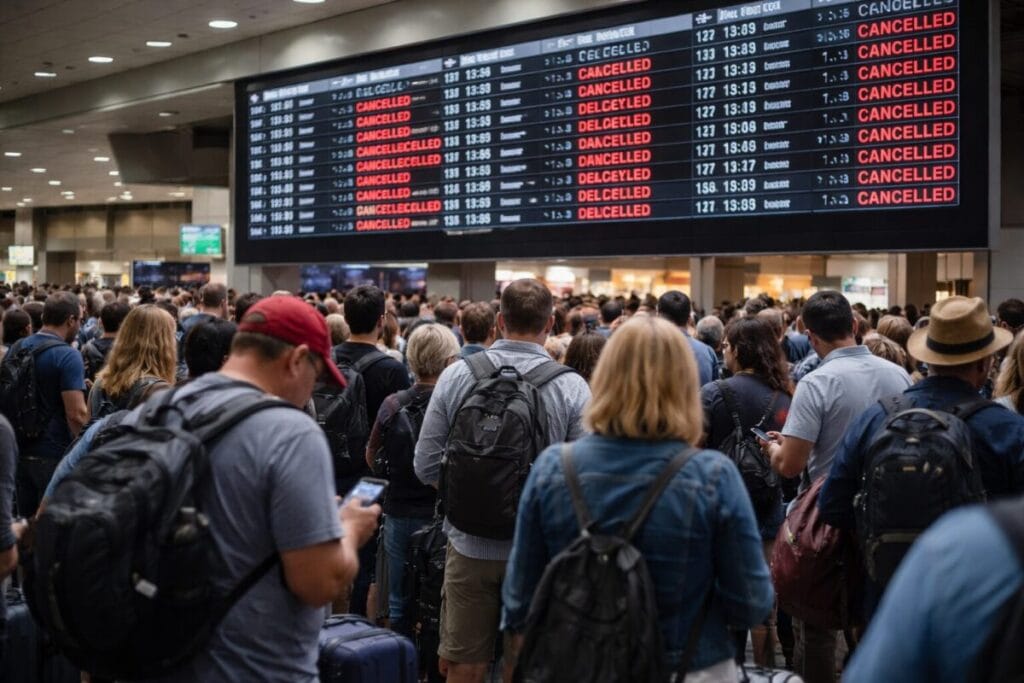
The US aviation system is facing significant disruption after more than 183 flights were cancelled and over 6,600 experienced delays across major airports. Airlines including United, American, Delta, Southwest, Alaska, and regional carriers struggled to maintain schedules as multiple operational challenges collided.
Travel chaos spread across major hubs such as Atlanta, Minneapolis, Salt Lake City, Denver, Miami, Chicago, and Los Angeles. These disruptions created ripple effects throughout domestic and international routes. Passengers reported missed connections, extended waiting times, and last-minute schedule changes.
Industry experts note that several factors contributed simultaneously. Strong travel demand, adverse weather patterns, airport congestion, and operational bottlenecks pushed airline networks beyond normal capacity.
Airlines Struggle to Maintain On-Time Performance
Performance varied widely among carriers. Regional airline SkyWest recorded the highest number of delays, highlighting challenges faced by feeder networks that connect smaller cities to major hubs. Large carriers such as Delta Air Lines, American Airlines, and United Airlines also experienced heavy disruptions.
Southwest Airlines reported one of the largest shares of delayed flights. This indicates how high-frequency domestic schedules become vulnerable when weather or staffing issues affect multiple hubs at once.
Despite delays, demand for air travel remains strong. Premium cabin bookings and corporate travel continue to rise, suggesting travelers remain willing to fly even during operational uncertainty.
Low-cost airlines such as Spirit and Allegiant experienced fewer cancellations compared to larger network carriers, although delays still affected many flights. The situation reflects a broader trend where complex airline schedules struggle to recover quickly once disruptions begin.
Weather, Staffing, and Congestion Drive the Crisis
Several key factors triggered the nationwide disruption. Severe weather patterns impacted flight paths and airport operations in different regions simultaneously. Winter storms and shifting wind patterns forced airlines to adjust routes, leading to cascading delays.
Airport congestion added further pressure. Major hubs already operate close to capacity during peak travel periods. When delays occur early in the day, aircraft rotations become disrupted, which spreads delays throughout the system.
Staffing challenges also played a role. The aviation industry continues to adjust after pandemic-era workforce reductions. Air traffic control staffing levels and ground operations efficiency can influence how quickly airlines recover from unexpected events.
Major Airports Face Significant Operational Pressure
Many of the country’s busiest airports reported noticeable delays. Minneapolis/St. Paul and Salt Lake City recorded higher cancellation rates compared to other hubs. Chicago O’Hare and Denver International saw substantial delay numbers due to heavy traffic volumes.
Los Angeles International Airport reported some of the highest delay percentages, reflecting ongoing congestion challenges. Las Vegas’ Harry Reid International Airport and Phoenix Sky Harbor also experienced elevated delay rates.
Atlanta’s Hartsfield-Jackson International Airport, one of the busiest in the world, maintained relatively low cancellation numbers but still faced considerable delays. Miami International Airport experienced moderate disruptions despite lower cancellation levels.
Even smaller airports such as Aspen and Des Moines reported higher cancellation percentages, demonstrating how weather and operational challenges impact both large hubs and regional facilities.
Passenger Impact and Travel Industry Implications
The disruptions affected thousands of travelers across the country. Many passengers faced missed connections or extended layovers. Airlines increased rebooking efforts and adjusted schedules to restore operations.
Travel experts advise passengers to monitor flight updates closely during peak seasons. Flexible booking policies and travel insurance have become increasingly important as airline reliability fluctuates.
From a tourism perspective, large-scale delays can influence destination arrivals and hotel occupancy patterns. Cities dependent on tourism may experience temporary fluctuations in visitor numbers when major hubs encounter disruptions.
However, strong underlying demand suggests that tourism recovery remains steady. Travelers continue to prioritize leisure trips, business travel, and visiting friends and family.
Airlines Adapt to Growing Travel Demand
US airlines are expanding routes and increasing flight frequencies to meet rising demand. While this growth supports tourism and economic activity, it also increases operational complexity.
Airlines are investing in technology and schedule optimization tools to improve resilience. Advanced forecasting models help carriers anticipate weather disruptions and adjust schedules earlier. Some airports are also upgrading infrastructure to handle larger passenger volumes more efficiently.
Government aviation agencies continue working with airlines to enhance safety and operational reliability. Air traffic management improvements and modernization efforts aim to reduce delays in the long term.
Outlook for US Air Travel
The recent surge in delays highlights how interconnected the aviation system has become. Even minor disruptions at major hubs can spread quickly across the network. As travel demand continues to grow, airlines must balance capacity expansion with operational stability.
Industry analysts expect occasional disruption spikes during peak travel seasons, especially when weather and demand pressures overlap. Passengers may need to plan with additional buffer time and remain flexible when traveling through major hubs.
Despite current challenges, the US aviation industry continues to recover and evolve. Investments in infrastructure, workforce training, and technology could improve reliability in the coming years.
For now, travelers should stay alert, check flight statuses regularly, and prepare for possible changes as airlines navigate one of the busiest travel periods in recent years.
For more travel news like this, keep reading Global Travel Wire