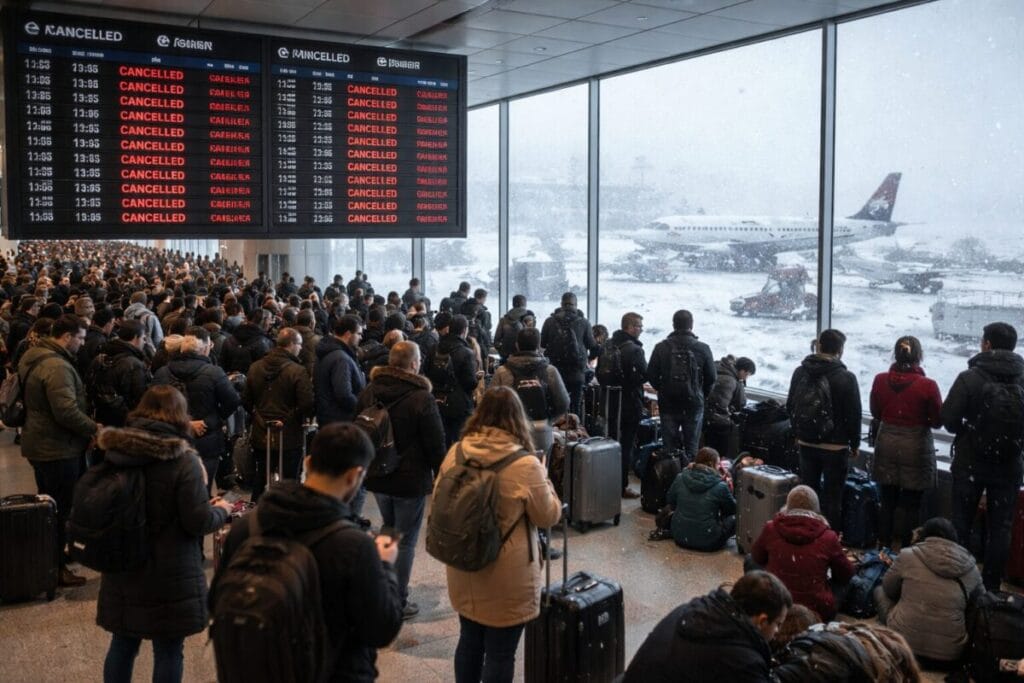
Winter Storm Fern has plunged the US travel industry into crisis. Major airlines are cancelling flights at unprecedented levels. Travelers face massive delays, rebookings, and stranded journeys as the storm sweeps across major aviation hubs.
The impact spans coast to coast. Airport terminals remain packed with frustrated passengers seeking answers and alternative flights. Storm Fern has created one of the worst winter airline disruptions in recent years.
Airlines Face a Nationwide Meltdown
Airlines such as American, Delta, United, Southwest, and JetBlue are battling severe weather conditions. Their operations teams are struggling to keep schedules moving. Many flights are now cancelled hours before departure due to worsening forecasts.
The winter storm’s snow, ice, and freezing rain have shut down key airport functions. Runways must be cleared repeatedly. Aircraft require extended de-icing. Gate schedules are jammed. Crew rotations are disrupted. The result is a system-wide gridlock that continues to escalate hour by hour.
Major Airports Hit Hard
Fern is hitting some of the busiest travel hubs in the country. Airports in New York, Chicago, Boston, and Atlanta remain under weather alerts. Forecasts warn that snowfall and icy conditions may continue through multiple days.
Airports with heavy international traffic are also affected. Flight boards show widespread delays on transatlantic and transpacific routes. Travelers bound for Europe and Asia are stuck overnight in terminals as storm conditions delay departure windows.
Delta Air Lines Battles Storm Delays in Key Hubs
Delta initiated early cancellations to prevent passengers from getting stranded mid-journey. Its main hub in Atlanta has faced long ground operations stoppages. Snow and ice at this key connecting point ripple through Delta’s entire network.
Passengers have reported long rebooking lines and limited seat availability. High connection volumes at Atlanta, New York, and Boston make scheduling recovery slow and complex. Delta has expanded rebooking options for affected customers, but demand remains intense.
American Airlines Sees Wide Network Disruptions
American Airlines issued broad travel waivers for airports across the East Coast, Southeast, and Midwest. Philadelphia, Charlotte, and New York are among the worst impacted.
American’s system depends heavily on large hub flows. When a single hub slows, multiple destinations are affected. The storm’s timing has collided with peak travel demand, creating a difficult recovery window.
United Airlines Faces Ripple Effects Nationwide
United is managing disruptions across its Chicago and Newark hubs. Both cities remain under winter storm warnings. Snow and freezing rain slow runway usage and reduce hourly departure capacity. Aircraft require multiple rounds of de-icing, extending ground time and pushing back schedule blocks.
United’s international divisions are also impacted. Long-haul flights require precise timing for crew availability and equipment rotation. When delays push beyond crew hour limits, cancellations multiply.
Southwest Struggles With Tight Turnarounds
Southwest Airlines is facing major delays across hubs in Dallas, Baltimore, and Philadelphia. Its business model relies on quick aircraft turnaround times. Winter weather conditions make rapid scheduling impossible.
When one flight falls behind, subsequent routes cascade into further delays. Many Southwest travelers now report missed connections and limited rebooking options during peak hours.
JetBlue Takes Direct Hit in the Northeast
JetBlue’s strong Northeast footprint places it directly in Fern’s path. Airports in New York and Boston remain under heavy snow alerts. Runway conditions and limited visibility force air traffic controllers to reduce the number of hourly flight movements.
JetBlue’s network includes high-volume business and holiday travelers. Many of those trips are now postponed or cancelled. Passengers are seeking alternative modes of transport or waiting days for new seats.
Government Weather and Aviation Agencies Sound Alarms
The National Weather Service has issued multiple winter storm warnings across eastern and central states. Forecasts show heavy snow, freezing rain, and hazardous cold wind chills.
The Federal Aviation Administration has warned that winter weather is reducing runway throughput at major commercial airports. Air traffic flow programs are in effect to prevent overcrowded airspace during peak weather windows. These measures safeguard flight safety but result in long departure queues and shifting arrival times.
Travelers Face Real-World Consequences
Thousands of passengers remain stranded in airports without confirmed itineraries. Hotels near major airport hubs have reached capacity. Customer service phone lines are backlogged. Airline apps struggle to keep up with request volumes.
The storm has turned winter travel into a multi-day logistical challenge. Families, business travelers, and tourists are experiencing significant financial and personal disruptions.
What Travelers Should Do Now
Experts advise travelers to stay informed and prepare for continued schedule instability:
• Check flight status frequently
• Expect delays through the next 72 hours
• Avoid arriving at airports too early
• Allow extra travel days when possible
• Prepare for possible overnight stays
• Monitor weather advisories
Winter Storm Fern has created a nationwide travel emergency. Airlines and airports are working to recover schedules, but the storm’s scale means delays could continue beyond the current forecast period.
For more travel news like this, keep reading Global Travel Wire