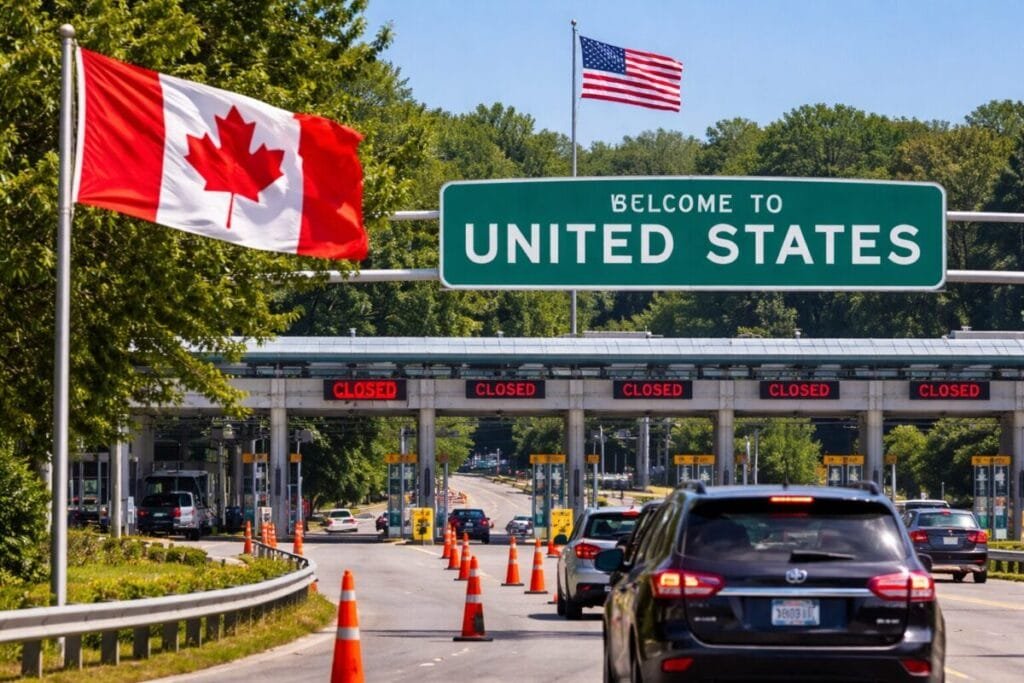
US border states are reporting a significant downturn in Canadian visitation in 2025. The shift is impacting regional tourism economies that have long relied on cross-border travelers from Canada. Montana, Alaska, Washington, Idaho, South Dakota, New Hampshire, and others are now facing a tourism slowdown fueled by tighter visa rules, political strain, and currency challenges.
Industry officials warn that the current year has marked one of the steepest cross-border tourism declines in decades.
Montana Shows Steep Decline in Canadian Travel
Montana, traditionally a top entry point for Canadian motorists and leisure travelers, has seen one of the largest decreases. Canadian border crossings in the state dropped 26% in August 2025 compared to the previous year. Spending also fell, affecting well-known travel hubs including Kalispell, Big Sky, and communities near Glacier National Park.
Kalispell saw winter spending from Canadian visitors dip by double digits, while Big Sky reported fewer seasonal guests. Tourism operators in these areas depend heavily on winter sports, outdoor recreation, and retail spending from cross-border visitors.
Local businesses report softer hotel bookings and lower retail activity as the trend continues into the fall tourism season.
Washington and Idaho Experience Reduced Vehicle Crossings
Washington has also recorded a sharp change in travel behavior. Border ports such as Peace Arch and the Pacific Highway saw a reduction of roughly 24% in Canadian entries over the first ten months of 2025. The drop affected coastal cities, day-trip retail traffic, and hotel occupancy rates in major urban centers including Seattle and Tacoma.
Idaho is experiencing a similar trend. The state reported a 27% decrease in Canadian vehicle crossings, affecting tourism communities in northern Idaho known for lake resorts, hiking, and seasonal Canadian homeownership. Businesses in Coeur d’Alene and Sandpoint have expressed concern about long-term economic effects if cross-border travel fails to rebound.
Other Border States Feel Economic Pressure
The pattern extends across the northern border:
- South Dakota recorded a 20% reduction in Canadian tourism earlier in the year, impacting hospitality and restaurant sectors.
- New Hampshire saw the steepest reported decline at approximately 30% during the peak summer period.
- North Dakota, Minnesota, Michigan, and Maine each reported declines ranging from 11% to 25%.
Retail centers that rely on weekend Canadian shoppers have been among the hardest hit. States with national parks, outdoor recreation, and event tourism have also been affected.
Political and Visa Shifts Reshape Travel Patterns
Tourism analysts cite political tensions between the United States and Canada as a key factor behind the downturn. Disagreements over trade, border posture, and environmental policies have strained bilateral relations. Many Canadians now perceive the US as a more difficult travel environment, especially for leisure trips.
Alongside political strain, new visa and entry screening procedures introduced in 2025 have slowed processing times and increased administrative steps for travelers. Families, seniors, and repeat visitors who previously crossed with ease are facing more paperwork and longer wait periods.
Industry groups argue that these hurdles have discouraged spontaneous cross-border travel and reduced repeat visitation.
Economic Pressures Influence Canadian Spending Abroad
Currency differences are also shaping travel decisions. A weaker Canadian dollar makes US travel more expensive, especially for shopping, dining, and extended hotel stays. Tourism officials note that Canadian households are prioritizing domestic vacations or choosing destinations perceived as better value for money.
At the same time, Canadian travelers continue to increase trips to Europe and overseas markets offering attractive travel packages and competitive currency exchange dynamics.
Pandemic Legacy Still Influencing Mobility
Even as travel restrictions have lifted globally, pandemic-era behaviors remain influential. The extended US-Canada border closure that persisted during the height of the pandemic disrupted established cross-border travel norms. Many travelers who once crossed multiple times a year changed their habits and never fully returned to pre-pandemic levels.
Domestic tourism initiatives launched by both countries during the pandemic also encouraged travelers to explore local and regional attractions rather than international ones.
Tourism Sector Considers Strategic Adjustments
With the decline expected to continue through the year, tourism authorities and local businesses are now considering strategic adjustments. States are evaluating new marketing campaigns aimed at US-based travelers, while exploring the potential to tap emerging international markets.
Hospitality owners are reducing seasonal employment levels, offering promotional packages, and introducing incentives designed to increase domestic bookings. Retailers are shifting inventory and adjusting pricing to appeal to regional visitors.
Looking Ahead: A Rebuilding Phase for Cross-Border Tourism
Experts say a rebound is possible, but it will require improved political dialogue, streamlined visa rules, and stronger tourism diplomacy between the US and Canada. Until then, northern border states are entering a transition period that emphasizes diversification and innovation.
The US-Canada tourism corridor has been one of the most stable in North America for generations. However, 2025 marks a pivotal year in which border travel patterns are being reshaped by new geopolitical and economic realities.
For more travel news like this, keep reading Global Travel Wire