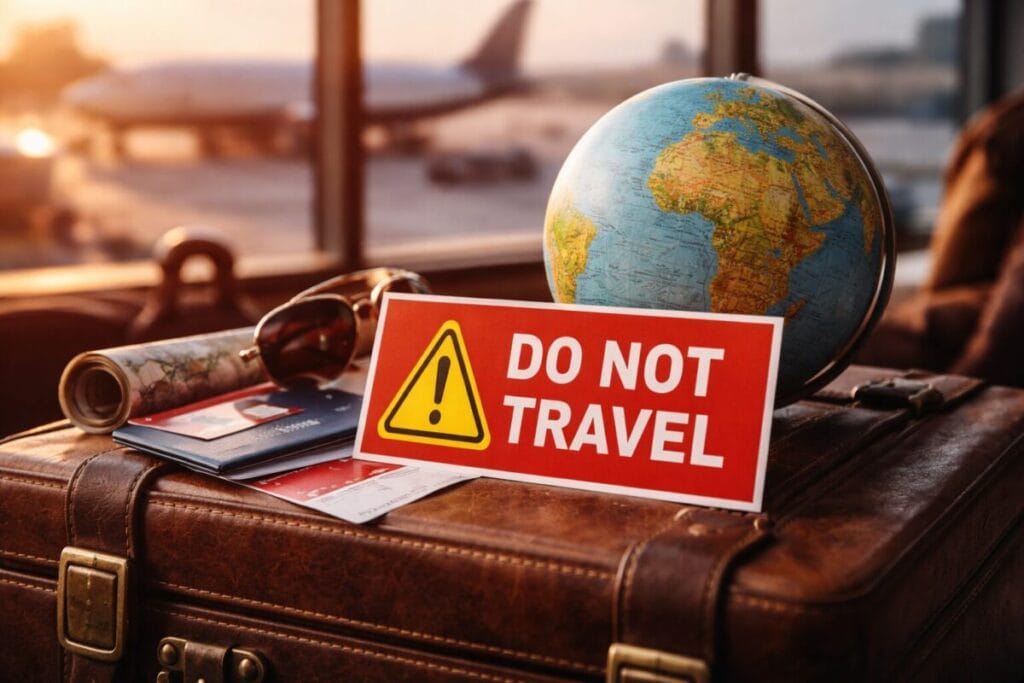
The United States has updated its highest travel warning for 2026, placing Libya alongside Venezuela, Russia, Yemen, Somalia, North Korea, Mali, Haiti, Iran, Sudan, Iraq, and several others under the Level 4 “Do Not Travel” advisory. This classification reflects serious safety concerns. Authorities warn that travelers could face life-threatening risks due to conflict, crime, terrorism, or unstable political conditions.
The advisory signals an urgent need for caution. Travelers should avoid these destinations because security conditions remain unpredictable. Government officials emphasize that emergency assistance may be limited or unavailable in many of these locations.
Understanding the US Travel Advisory System
The United States uses a four-tier travel advisory framework to help citizens assess safety risks abroad.
- Level 1: Exercise normal precautions.
- Level 2: Exercise increased caution.
- Level 3: Reconsider travel.
- Level 4: Do not travel.
Level 4 represents the most serious warning. Officials assign it when widespread dangers exist across large areas or throughout an entire country. In such environments, basic safety precautions may not reduce risk. Travelers could face sudden disruptions, violence, or limited access to medical and diplomatic support.
Why Countries Receive Level 4 Status
Authorities evaluate multiple risk factors before issuing a Level 4 advisory. These include:
Armed Conflict and Political Instability
Countries experiencing civil war, regional conflict, or unstable governance often receive high-risk classifications. Armed groups and sudden political shifts increase uncertainty for visitors.
Crime and Security Threats
High levels of violent crime such as robbery, kidnapping, or assault create unsafe environments. Weak law enforcement or limited judicial systems can worsen the danger.
Terrorism Risks
The presence or threat of extremist groups remains a major factor. Areas facing terrorist activity may experience sudden attacks targeting public spaces or transportation hubs.
Health and Infrastructure Challenges
Limited healthcare access or damaged infrastructure can complicate emergencies. Travelers may struggle to find hospitals, evacuation services, or reliable transport.
Risk of Detention or Legal Issues
In certain regions, foreign travelers face heightened risk of wrongful detention or strict legal enforcement without adequate protections.
These combined conditions create environments where tourism becomes unsafe and unpredictable.
Countries Included in the 2026 Level 4 “Do Not Travel” List
The latest advisory identifies more than twenty destinations worldwide as extremely dangerous for travel. These locations span several continents and reflect diverse security challenges.
Current Level 4 destinations include:
Afghanistan
Belarus
Burkina Faso
Myanmar (Burma)
Central African Republic
Gaza
Haiti
Iran
Iraq
Lebanon
Libya
Mali
Niger
North Korea
Russia
Somalia
South Sudan
Sudan
Syria
Ukraine
Venezuela
Yemen
Each country appears on the list for specific reasons. However, most share overlapping threats such as armed conflict, widespread crime, terrorism risks, or unstable political environments.
Regional Trends Driving Global Travel Risks
A review of the advisory list reveals several geographic patterns.
Africa and the Sahel Region
Several African countries face insurgencies and cross-border security challenges. Weak governance structures and ongoing conflicts contribute to elevated risk levels.
Middle East Conflict Zones
Many countries in the Middle East remain unstable due to prolonged wars, regional tensions, or political unrest. Infrastructure damage and humanitarian crises further complicate travel safety.
Eastern Europe and Geopolitical Tensions
In parts of Europe, military conflicts and strained diplomatic relations have increased risks for foreign visitors. Authorities also warn about detention risks and limited consular access.
Caribbean and Latin America Challenges
Some destinations struggle with political instability, economic crisis, or high crime rates. These issues can rapidly change local security conditions.
Impact on Tourism and Global Travel Planning
Level 4 advisories influence travel decisions worldwide. Tour operators, airlines, and insurance providers often adjust policies when destinations receive high-risk designations. Tourism infrastructure in affected regions can decline quickly. Hotels, transportation networks, and local services may become unreliable.
Travelers should research safety conditions carefully before booking international trips. Government advisories offer updated assessments of security threats and help individuals make informed decisions.
What Travelers Should Consider Before International Trips
Responsible travel planning now requires greater awareness of global risks. Experts recommend several steps:
- Review official safety updates regularly.
- Understand local laws and cultural expectations.
- Purchase comprehensive travel insurance.
- Prepare contingency plans for emergencies.
- Monitor news and security developments before departure.
Travelers should also register travel details with their government when possible. This step helps authorities provide assistance during emergencies.
Growing Importance of Safety Awareness in Tourism
Global travel remains popular, but safety conditions continue to shift due to geopolitical tensions and regional conflicts. The expanded Level 4 advisory highlights how quickly tourism landscapes can change. Destinations once considered emerging markets for travel may become unsafe within short periods.
For tourists, awareness and preparation remain the best defense. Understanding travel advisories helps reduce risk and encourages safer international experiences.
For more travel news like this, keep reading Global Travel Wire