
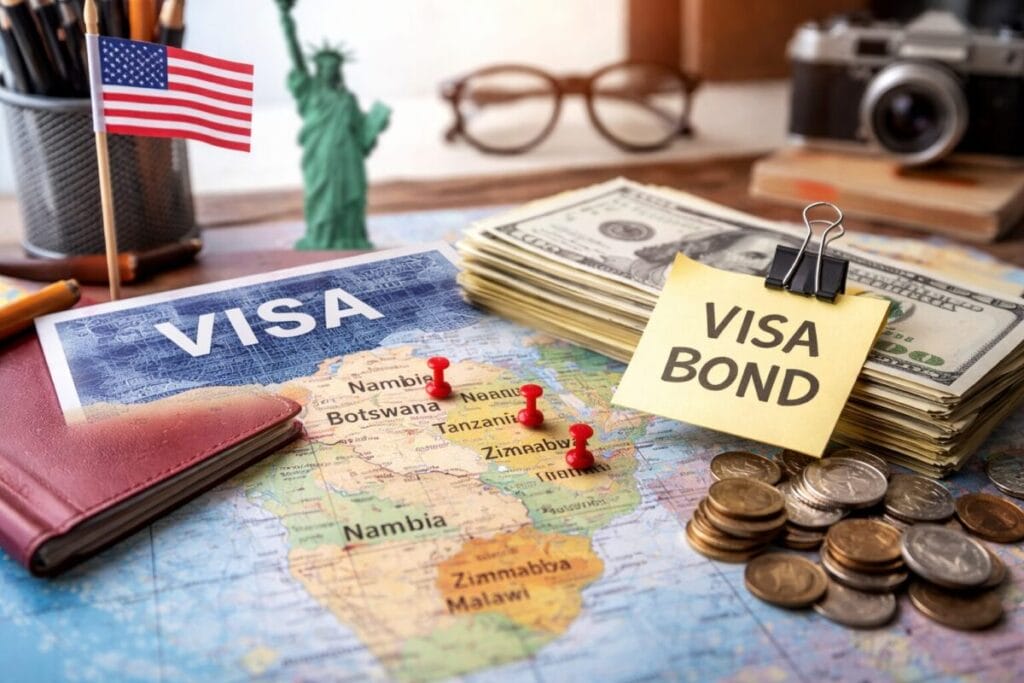
The United States has expanded its controversial Visa Bond Pilot Program in 2026, adding dozens of countries to a list of nations facing stricter visa rules and significant financial requirements. Travelers from Namibia, Tanzania, Botswana, Zimbabwe, Malawi, Togo, and several other African and global destinations may now need to pay a refundable bond before entering the country on certain visas.
The policy signals a major shift in US immigration enforcement. Officials aim to reduce visa overstays and strengthen compliance with entry rules. However, critics warn that the new system could create financial barriers for many travelers.
What Is the US Visa Bond Program?
The Visa Bond Pilot Program requires some foreign visitors to deposit a cash bond before receiving approval for short-term visas. The bond amount typically ranges from $5,000 to $15,000 depending on the applicant’s risk profile.
US consular officers assess each applicant individually. Factors include visa history, overstay risk, and broader immigration data. Travelers receive their money back after leaving the United States within the permitted timeframe.
Authorities introduced the program as a tool to discourage visa violations. Officials believe financial guarantees can reduce overstays and improve adherence to immigration laws.
Expansion in 2026: More Countries Added
Initially applied to a smaller group of nations, the program has expanded significantly. As of January 2026, travelers from 38 countries may face the bond requirement for B1/B2 business and tourist visas.
Several African countries now included are:
- Namibia
- Tanzania
- Botswana
- Zimbabwe
- Malawi
- Togo
- Nigeria
- Uganda
- Senegal
- Zambia
Additional countries from Asia, the Caribbean, and other regions also appear on the updated list.
The expansion reflects US concerns over visa overstay rates and broader immigration policy priorities.
How the New Rules Affect Travelers
Applicants must still meet standard visa requirements. These include financial proof, travel plans, and interviews at US embassies or consulates. However, the bond introduces an additional financial hurdle.
Key impacts include:
- Higher upfront travel costs
- Longer preparation timelines
- Greater uncertainty during visa interviews
- Limited flexibility for budget travelers
Consular officers decide whether to require a bond during the interview process. This means some applicants may not know about the additional requirement until late in their application journey.
For many travelers, especially from developing economies, gathering several thousand dollars for a refundable deposit may be difficult.
Entry Through Designated Airports
Travelers subject to the bond rules must use specific ports of entry. These designated airports include major international hubs such as New York JFK, Los Angeles International Airport, Chicago O’Hare, Washington Dulles, Atlanta International Airport, Boston Logan, and Newark Liberty.
Some Canadian airports offering US preclearance also serve as designated entry points.
Using approved airports helps authorities track compliance and manage the program efficiently. Travelers who fail to follow entry and exit requirements risk losing their bond.
Why the US Is Tightening Visa Policies
US authorities cite increasing visa overstay concerns as a primary reason for expanding the program. Overstays occur when visitors remain beyond the authorized period on their visa.
Officials also consider:
- Historical immigration trends
- Risk assessments based on nationality or travel patterns
- Enforcement priorities within US immigration policy
Supporters argue that the bond system encourages compliance without banning travel outright. Instead of denying visas, authorities use financial incentives to promote timely departures.
Concerns Raised by Travel and Tourism Experts
Industry stakeholders and immigration advocates have expressed concerns about fairness and accessibility. They believe the bond requirement could disproportionately affect travelers from lower-income nations.
Common criticisms include:
- Financial barriers for tourism and business exchange
- Reduced cultural and academic travel opportunities
- Increased complexity for international mobility
Tour operators worry that higher costs may discourage visitors, potentially reducing cross-border tourism and limiting business networking opportunities.
Economic and Social Impact on African Travelers
Countries such as Zimbabwe, Malawi, and Tanzania face economic challenges that make large deposits harder for many citizens. The bond amount may equal several months or even years of average income.
Travel experts predict several possible outcomes:
- Fewer leisure travelers heading to the United States
- Shift toward regional or alternative international destinations
- Increased reliance on group travel sponsorships or corporate backing
Business travelers and students may still pursue visas but could face added financial planning.
What Travelers Should Prepare For
Applicants planning trips to the United States should prepare carefully. Understanding the updated rules can reduce surprises during the visa process.
Recommended steps include:
- Preparing additional funds in case a bond is required
- Confirming eligible entry airports
- Allowing extra time for visa processing
- Reviewing visa conditions carefully before travel
Travel advisors suggest staying informed about changing immigration policies, as pilot programs often evolve based on results.
The Future of the Visa Bond Program
The expanded Visa Bond Pilot Program represents a significant change in US travel policy. Authorities view it as a flexible tool to address immigration compliance while still allowing visitors to enter legally.
However, global reaction remains mixed. Some governments and travel industry leaders call for more balanced approaches that maintain security while encouraging tourism and business exchanges.
As the program develops, its long-term impact on international travel patterns, especially from Africa and emerging markets, will become clearer. For now, travelers from the listed countries must navigate a more complex and costly journey when planning visits to the United States.
For more travel news like this, keep reading Global Travel Wire