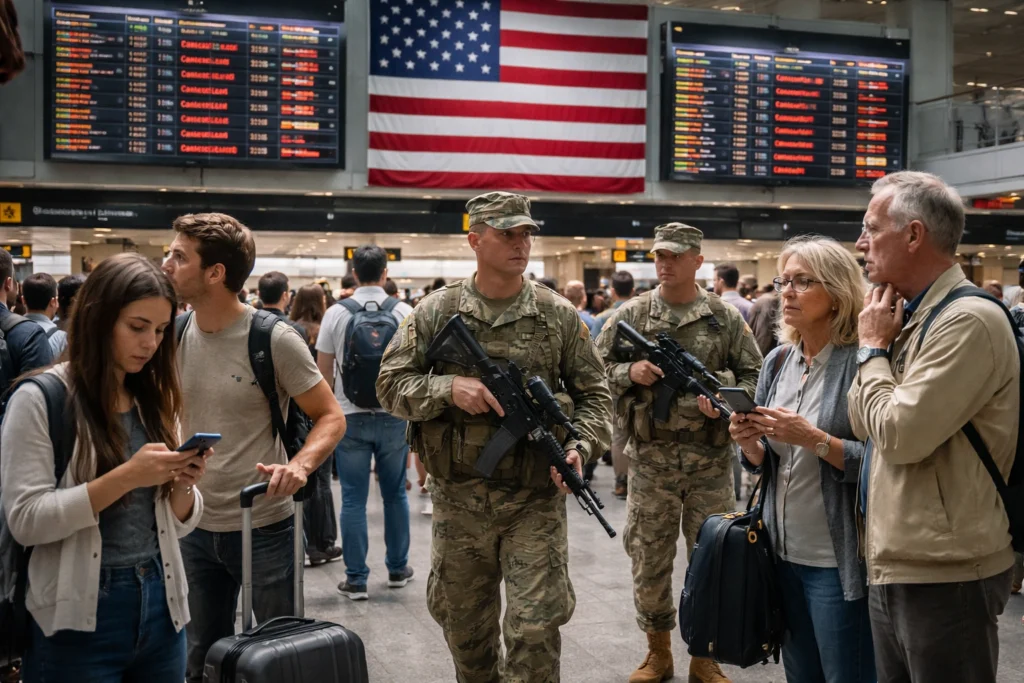
The United States government has issued an updated global travel advisory. Officials warn of rising risks as geopolitical tensions escalate in the Middle East.
The advisory comes from the US Department of State. It highlights potential threats to American citizens abroad and ongoing disruptions to international travel.
Authorities urge Americans to remain alert while traveling. They also recommend monitoring official updates from embassies and consulates worldwide.
Airspace Closures Disrupt Global Flight Networks
Airspace restrictions across parts of the Middle East are causing major travel disruptions. Airlines are cancelling flights and rerouting aircraft to avoid affected zones.
Major aviation hubs such as Dubai, Abu Dhabi, and Doha have reported delays and temporary shutdowns. These disruptions have impacted thousands of passengers.
Airlines now face longer flight paths and higher fuel costs. These changes are affecting schedules across Europe, Asia, and beyond.
Travellers should expect delays, cancellations, and last-minute changes. The situation remains fluid as geopolitical tensions continue.
Official Guidance for American Travellers
The US Department of State advises citizens to stay informed at all times. Travellers should check official advisories before making plans.
Officials recommend enrolling in the Smart Traveler Enrollment Program (STEP). This service provides real-time alerts and safety updates.
Americans should also follow official communication channels for updates. These include embassy alerts and verified government platforms.
Flexible travel planning is essential during this period. Travellers should prepare for sudden itinerary changes.
Tourism Industry Faces Global Ripple Effects
The crisis is affecting tourism beyond the Middle East. Flight disruptions are reducing travel demand across multiple regions.
Destinations in Europe and Asia are seeing changes in booking patterns. Some travellers are delaying or cancelling trips due to uncertainty.
Tourism-dependent economies may face short-term challenges. Airlines and hotels are adjusting operations to manage shifting demand.
In the Middle East, visitor numbers to key cities have declined. Safety concerns and travel uncertainty are influencing traveller decisions.
Travel Advisors Play Key Role During Crisis
Travel advisors are helping travellers navigate ongoing disruptions. They assist with rebooking flights and finding alternative routes.
Their role has become critical during this period of uncertainty. Many travellers rely on expert guidance to manage changing conditions.
Advisors maintain direct contact with airlines and authorities. This allows them to provide timely updates and solutions.
What Travellers Should Do Now
Travellers should review official advisories before departure. Monitoring updates can help avoid unexpected disruptions.
Booking flexible tickets can reduce financial risk. Travel insurance that covers geopolitical disruptions is also recommended.
Those planning trips to affected regions should reconsider their itineraries. Alternative destinations may offer safer travel options.
Staying prepared and informed remains the best strategy. This approach helps travellers manage risks during uncertain times.
Global Travel Outlook Remains Uncertain
The situation in the Middle East continues to evolve. Airspace closures and disruptions may persist in the coming weeks.
Airlines and governments are working to manage the impact. However, uncertainty remains a key challenge for global travel.
The US global travel advisory reflects the seriousness of the situation. It also highlights the need for caution and preparedness.
For now, travellers must remain flexible and informed. These factors will shape safe and successful journeys in 2026.
For more travel news like this, keep reading Global Travel Wire