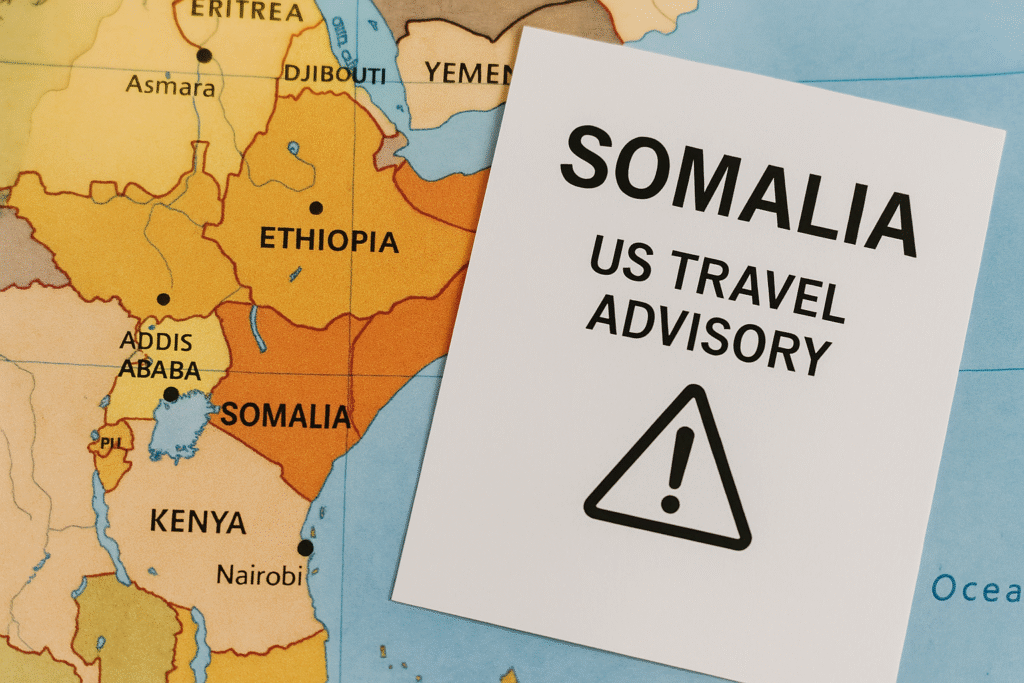
The United States has issued a critical advisory urging citizens to avoid all non-essential travel to Somalia. The warning follows a major breach in Somalia’s new e-visa system and a rapid rise in security threats. With the holiday season nearing, the advisory has raised concerns among travelers who were considering destinations off the beaten path.
Somalia introduced its new e-visa platform in September 2025 to simplify arrivals and support its growing tourism sector. However, a large-scale cyberattack exposed sensitive personal data from thousands of applications, including several belonging to U.S. travelers. Combined with worsening security conditions, this has pushed the U.S. to reinforce its highest-level “Do Not Travel” alert.
Growing Tourism Faces New Challenges
Somalia has seen an unexpected rise in foreign visitors over the past two years. Tourist numbers nearly doubled in 2024, driven by renewed interest in the nation’s natural landscapes, coral-rich coastlines, and cultural heritage. Local authorities have been promoting the country’s potential, hoping to shift global perceptions and attract international investment.
New hotels, guided tour services, and infrastructure upgrades have contributed to a cautious yet noticeable tourism revival. Travelers seeking untouched destinations have shown interest in Somalia’s beaches, ancient port cities, and archaeological sites. Despite the progress, the sudden spike in cyber and security concerns now overshadows the optimistic outlook.
Somalia’s E-Visa System Compromised
The new e-visa system was developed to offer faster, more efficient entry for visitors. It aimed to remove the need for in-person applications while supporting Somalia’s efforts to modernize its travel procedures. But the system quickly became a target for hackers.
According to U.S. officials, the breach exposed personal details such as names, birth dates, photos, email addresses, and home addresses. Thousands of American applicants were among those affected. The incident raised serious concerns about identity theft, fraud risks, and the vulnerability of Somalia’s digital systems.
The breach also raises doubts about Somalia’s capability to safeguard visitor data. This comes at a sensitive time when global travel relies heavily on secure digital platforms. For travelers, especially from the United States, the breach has created fears about long-term implications on personal privacy.
US Issues Highest-Level Travel Warning
The U.S. Department of State has reaffirmed a “Level 4: Do Not Travel” advisory for Somalia. This warning is reserved for the most dangerous destinations and reflects significant concerns related to terrorism, civil unrest, crime, kidnapping, and piracy.
Somalia continues to face attacks linked to extremist groups, including al-Shabaab, which regularly targets government sites, hotels, markets, and transportation hubs. The unpredictability of such attacks remains one of the strongest reasons behind the U.S. advisory.
Kidnappings, armed robberies, and assaults remain high in both urban and rural areas. Foreigners, especially Westerners, are often targeted because they are perceived as high-value hostages. Meanwhile, piracy along Somalia’s coast, though reduced from previous years, still poses a threat to vessels in the region.
The lack of reliable emergency services and limited consular assistance outside Mogadishu further compounds the risks.
Safety Tips for Essential Travel
Some travelers may still need to enter Somalia for business, family emergencies, or humanitarian work. For them, U.S. authorities recommend adopting strict safety measures.
Travelers are urged to create personal emergency plans and ensure family members know their itinerary. Preparing legal documents, including a will or power of attorney, is also recommended because of the unstable environment.
The U.S. advises avoiding travel beyond the secure zone around Mogadishu’s international airport, where most diplomatic personnel are confined. Travelers should make arrangements for rapid evacuation if needed and must have contingency travel routes through neighboring countries.
Additionally, individuals are advised to keep their belongings minimal, leaving valuable items behind to reduce theft risks.
Infrastructure Limitations Add to Traveler Risks
Despite efforts to improve national infrastructure, Somalia still faces major gaps. Healthcare services remain limited, especially in remote regions. Many medical facilities lack equipment, supplies, and trained professionals. For travelers, this means that emergency treatment may be difficult or impossible to access.
Communication networks are also inconsistent, making it hard for visitors to stay in contact with families or embassies. Roads outside major cities often suffer from poor maintenance and security checkpoints controlled by armed groups.
These challenges make independent travel dangerous, even for seasoned explorers.
Looking Ahead: Can Somalia Restore Tourism Growth?
Somalia holds tremendous potential as a tourism destination. Its beaches, marine life, centuries-old ruins, and unique nomadic culture once attracted adventurers worldwide. With stability and investment, the country could reclaim its reputation as a gateway to ancient trade routes and natural wonders.
However, for tourism to flourish, Somalia must improve its security, strengthen cyber protections, and rebuild trust among international visitors. Addressing the e-visa breach is a critical first step. Without safer systems and stronger national security, the risks will continue to deter travelers.
Conclusion
The U.S. government’s travel advisory highlights the serious challenges facing Somalia today. A combination of data breaches, terrorism threats, piracy, and infrastructure limitations has created a high-risk environment for foreign visitors. While the country shows promise and continues working toward reinvention, travelers are urged to stay informed and reconsider plans until conditions improve.
Somalia remains a destination best suited for travelers who are prepared, experienced, and extremely cautious. For most others, waiting for greater stability is the safer choice.
For more travel news like this, keep reading Global Travel Wire