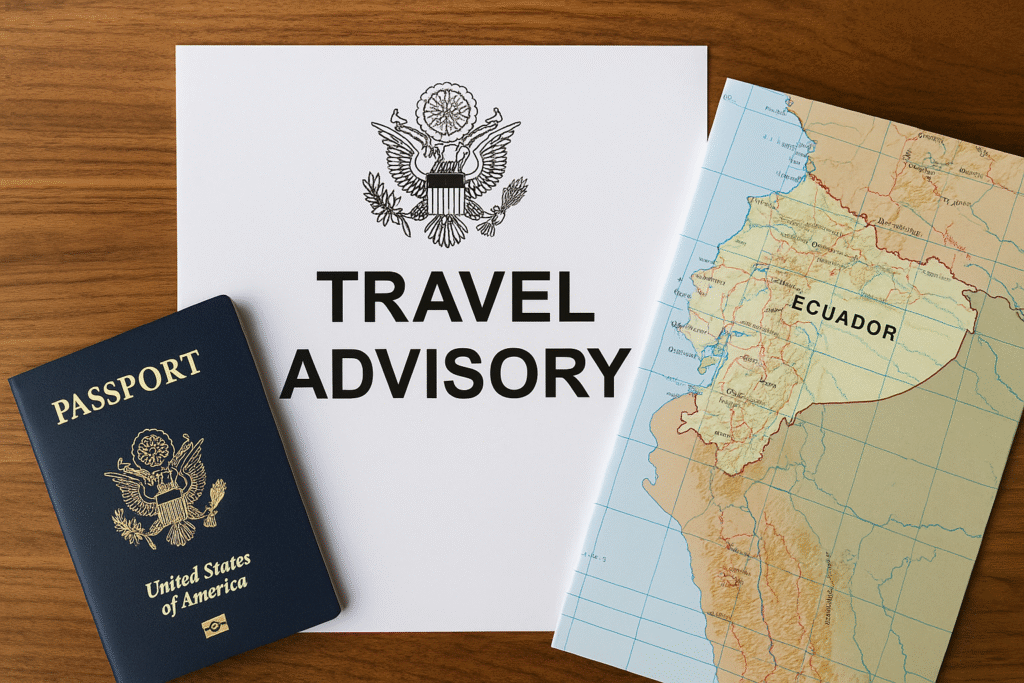
The United States has raised its travel warning for fall 2025, designating Ecuador as a country where visitors must “exercise increased caution.” The move places Ecuador alongside Brazil, Mexico, France, the UAE, Sri Lanka, and Cambodia—nations now flagged for escalating security risks.
In Ecuador, the advisory cites growing levels of violent crime, kidnapping, and gang activity as major concerns. Urban centers like Guayaquil and coastal areas are identified as hotspots. Authorities urge travelers to steer clear of vulnerable districts such as Guayaquil south of Portete de Tarqui, the border zones in Esmeraldas province, and towns like Huaquillas and Arenillas in El Oro. These regions face frequent robberies, assaults, and criminal gang presence.
The travel alert also warns of political tension, spontaneous protests, and the possibility of attacks by extremist groups. Public demonstrations may turn violent with little warning. Tourists are strongly advised to avoid all protests, maintain safe distances, and change plans swiftly if conditions shift.
Brazil: Border Zones and Urban Risks
Brazil remains a major draw for travelers, but the US advisory flags areas within 160 km of land borders—especially with Colombia, Venezuela, Bolivia, and Peru—as high risk. These border regions contend with organized crime and armed conflict. Even within Brazil’s cities, neighborhoods controlled by gangs (often within favelas) are off limits.
Governments counsel avoiding isolated areas after dark and remaining alert in crowded districts where pickpocketing and theft are common. Some zones around Brasilia are off-limits to US government personnel due to rampant crime.
Mexico: Cartel Violence and Kidnapping Threats
In Mexico, widespread cartel operations underpin the security threat. Kidnappings, robberies, and violence are most intense in states near the US border—such as Tamaulipas, Michoacán, and Guerrero. Even in major cities, tourists may be targeted by opportunistic petty criminals or fall victim to scams in nightlife locales. Travelers are urged to stay vigilant, avoid risky areas, and secure reliable transportation at night.
France: Terrorism and Civil Disruption
France continues to draw global visitors, yet risks remain. The US alert emphasizes the threat of terrorist attacks, especially in Paris, Nice, and other high-traffic zones. Demonstrations and strikes are common and may disrupt public transport or turn violent. Tourists should monitor local news closely and avoid protest zones or large political gatherings.
UAE: Regional Tensions and Attack Risk
Though the UAE enjoys a reputation for stability, recent geopolitical tensions warrant caution. The alert warns of possible aerial or missile attacks on sensitive areas, including tourist venues, malls, and government sites. Visitors must also respect strict local laws around behavior, alcohol, finance, and expression. Violating these can lead to legal action, fines, or deportation.
Sri Lanka: Political Strife and Blast Threats
Sri Lanka now faces a layered security environment. Economic instability has fueled protests, some of which have turned violent. There remains a threat from extremist groups targeting crowded locations, plus lingering danger from landmines in formerly war-torn zones. Travelers should stick to mainstream routes and avoid venturing off established paths, especially in northern and eastern districts.
Cambodia: Landmines and Crime Near Border Areas
Cambodia’s appeal lies in its ancient temples and natural beauty, yet the US alert flags risks in remote zones. Visitors may face street theft, particularly in Phnom Penh’s busy districts. In rural regions, especially near the Thai border, armed conflict and landmine contamination remain serious concerns. It is wise to travel only on maintained routes with local guides and avoid border districts unless well informed.
How Tourists Can Stay Safer
- Monitor local media and security bulletins regularly.
- Enroll in your country’s traveler alert program to receive updates.
- Avoid protests, political rallies, and large gatherings.
- Stay within well-populated zones and avoid traveling after dark in risky areas.
- Use registered taxis or ride services instead of walking alone late at night.
- Keep passports, valuables, and wads of cash hidden and secure.
- Consider travel insurance with coverage for evacuation or emergency changes.
- Register with your embassy or consulate before travel to receive urgent alerts.
This fall 2025 advisory signals rising concerns over tourist safety in several prominent destinations. From crime surges in Ecuador and Brazil, to cartel violence in Mexico, to disruptions in France and security risks in the Middle East and Asia, travelers face an increasingly complex global environment.
While many of these countries still welcome visitors, caution must guide every move. In Ecuador, select safer regions for travel and rely on local authority guidance. Stay alert, plan flexibly, and prioritize security when exploring regions with recent unrest. Knowledge and vigilance remain your best allies in mitigating risk.
For more travel news like this, keep reading Global Travel Wire