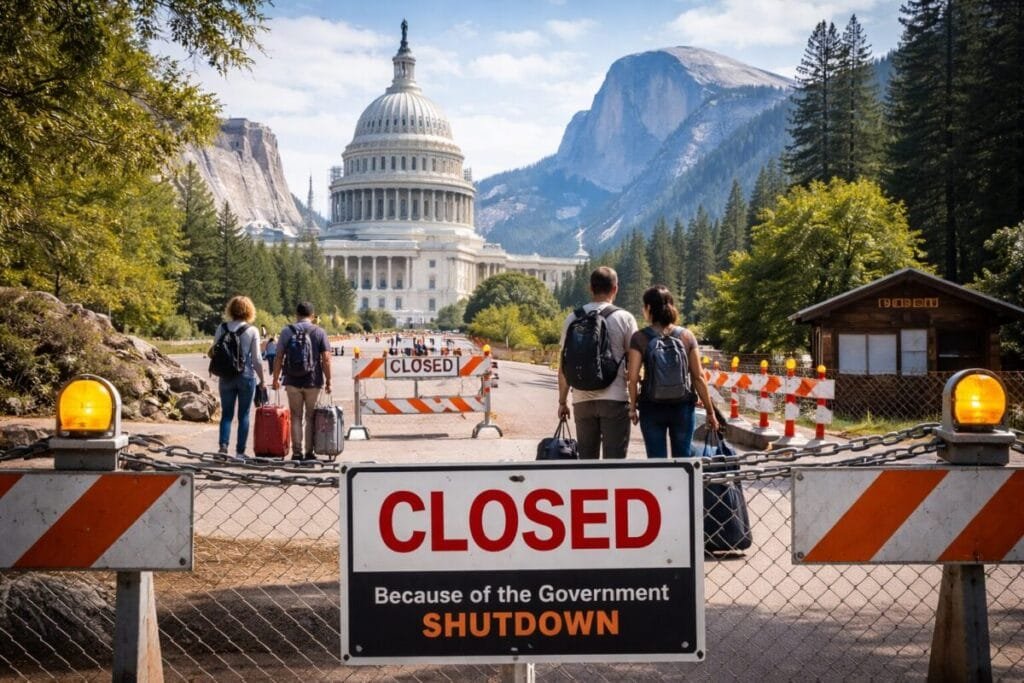
The record-breaking 43-day government shutdown that stretched from early October to mid-November 2025 caused severe disruption across the US travel industry. Tourism stalled, air travel slowed, and popular federal attractions closed. The estimated losses reached $6.1 billion, making it one of the most damaging policy standstills for travel in modern US history.
Tourism economists noted a sharp decline in visitor spending, cancellations, and business activity in states that rely heavily on national parks, federal sites, and government workers. Washington, Hawaii, California, Virginia, and Utah were among the hardest hit as travelers altered or canceled their plans. The shutdown reduced confidence in the broader travel sector and pushed many small tourism businesses into financial distress.
Federal Closures Hit Visitor Numbers
The shutdown immediately cut access to federally managed attractions. Nearly 90,000 fewer daily trips were estimated during the period. Museums, memorials, parks, and cultural institutions halted operations. Hotel occupancy dropped near major attractions, while tour operators lost bookings during what would normally be a strong travel season.
The shutdown also reduced spending from federal employees. Many workers were furloughed without pay, limiting local consumer activity and purchases tied to tourism, food services, and transportation.
Washington, D.C. Bears the Largest Hit
Washington, D.C. felt the economic shock first. The city relies heavily on government attractions such as the Smithsonian museums, the National Mall, and the U.S. Capitol visitor facilities. When doors closed, visitor foot traffic collapsed almost overnight.
Hotels near the National Mall reported declines. Restaurants lost regular lunch and tourist traffic. Retail shops catering to museum crowds also saw steep drops in revenue. Local analysts estimated the city would need months to recapture lost tourism demand even after reopening.
Hawaii Faces Dual Payroll and Tourism Strain
Hawaii ranked as the second hardest-hit state. Federal employees represent a notable share of the state workforce, which intensified payroll-related losses. The shutdown paused spending by tens of thousands of affected workers and slowed retail activity on the islands.
National park restrictions added to the strain. Key attractions such as Hawai‘i Volcanoes National Park and other federal recreational sites experienced reduced access. Tour companies canceled trips, cruise operators adjusted itineraries, and hotels faced weaker bookings. Popular island destinations dependent on park tourism saw a sharp decline in visitor numbers.
California Impacted by National Park Closures
California suffered significant disruption due to its collection of iconic national parks, including Yosemite, Sequoia, and Joshua Tree. Many of these parks either closed or operated with limited services, which discouraged travel during the peak fall season.
Communities around the parks rely heavily on seasonal tourism for survival. Lodges, restaurants, outfitters, and activity operators all reported losses as travelers canceled reservations. California’s broader tourism economy, a major driver of state revenue, felt the ripple effects for weeks following park reopenings.
Virginia Struggles With Reduced Government Travel
Virginia faced its own multi-layered challenge. Proximity to Washington means the state benefits from business travel, conferences, and visitor spillover linked to federal institutions. Shutdown conditions slowed this activity to a crawl.
National park sites in Virginia also closed, including Shenandoah National Park. With conferences delayed, visitors reduced, and government spending paused, hospitality businesses in Northern Virginia and Richmond felt noticeable strain. Many struggled to maintain employment levels due to weakened demand.
Utah Tourism Suffers Without Park Access
Utah’s tourism economy revolves around its famous “Mighty Five” national parks. With reduced access and closures across Zion, Arches, Bryce Canyon, Capitol Reef, and Canyonlands, the state experienced major visitor cancellations.
Outdoor tourism drives lodging, transportation, food services, and recreation industries. When visitors stayed home, corporate operators and small family businesses lost critical fall revenue.
Southwest and Mountain States Also Hit
New Mexico and Arizona, both home to popular federal parks and cultural sites, reported similar drops. Closed attractions such as Grand Canyon National Park and major cave and desert sites resulted in tourism delays and significant revenue losses for nearby towns that depend on seasonal travel.
Air Travel Delays Add to Industry Losses
The aviation sector faced widespread delays and cancellations as staffing shortages grew. Air traffic controllers and security officers worked without pay. Airlines dealt with cascading scheduling issues, lower passenger spending, and reduced demand for discretionary travel. Aviation-related losses were estimated at more than $2 billion, adding to the economic fallout.
Policy Shift Emerges After Shutdown
Following the crisis, lawmakers advanced measures to ensure that critical aviation and security personnel receive pay during future shutdowns. Travel groups began lobbying for broader protections to reduce exposure to political gridlock and prevent future tourism losses.
Long Road to Tourism Recovery
The 43-day shutdown exposed how fragile US tourism can be when federal operations halt. States that rely on national parks, cultural attractions, and public-sector travel spent months rebuilding visitor confidence. Industry leaders stressed the need for government stability to protect tourism jobs and economic output.
Even as attractions reopened and travel demand returned, analysts noted that lost seasonal revenue could not be restored. For many tourism businesses, especially small operators near national parks, the shutdown became a painful reminder of how national politics can disrupt local economies.
For more travel news like this, keep reading Global Travel Wire