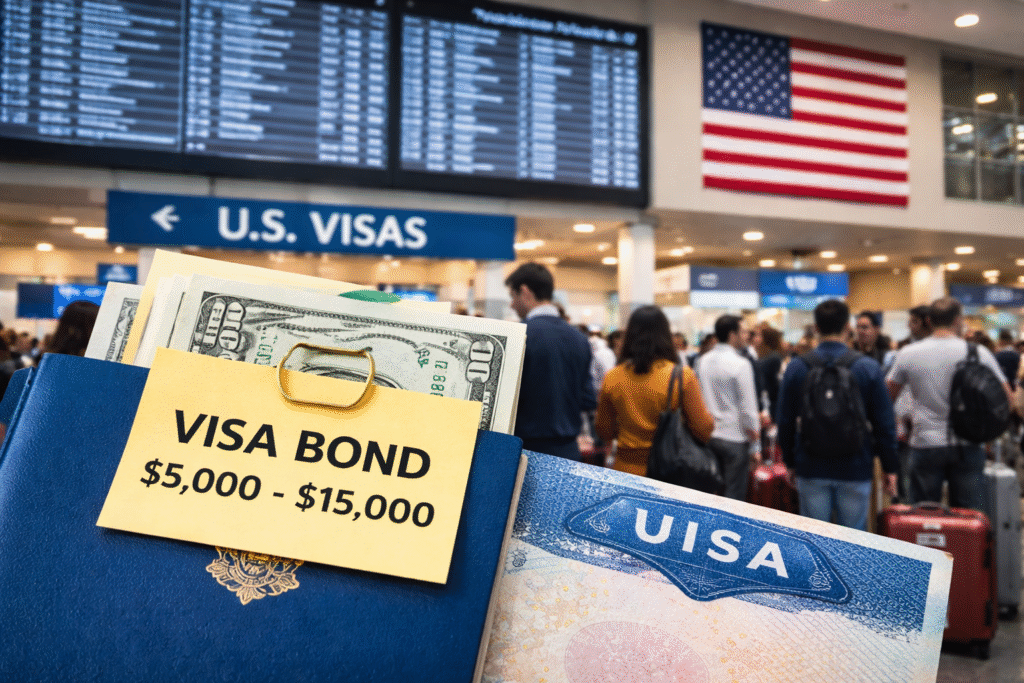
The United States will introduce major changes to its visitor visa rules starting January 21, 2026. Travelers from 33 countries, including Cuba, Venezuela, Nigeria, Uganda, Tanzania, and Zimbabwe, will face new financial requirements and additional scrutiny during the visa process. The visa bond policy creates a new complication for travel planning and could reshape tourism flows toward and away from the United States.
Bond Requirements Raise Barriers for Travelers
Under the policy, applicants for B1/B2 visitor visas may be required to post a refundable bond of $5,000, $10,000, or $15,000. The amount will depend on the outcome of the visa interview. The bond must be paid before travel and will be returned if the traveler leaves the United States before the visa expires.
The U.S. government argues that the measure targets chronic visa overstay rates. Federal immigration data has long identified overstays as a factor in immigration enforcement challenges. The bond aims to discourage visitors from remaining in the country beyond their authorized stay.
However, the financial requirements create a steep barrier for many potential travelers. For citizens of lower-income economies, the required bond represents more than several years of average earnings. This makes U.S. leisure travel unrealistic for a significant portion of the population.
Countries Most Affected by New Regulations
The expanded list covers 33 nations across Africa, the Caribbean, and South Asia. Most rely on tourism or international travel ties for commercial and cultural exchange. The US already requires visas from these nationals, but obtaining one will soon cost more and involve more steps.
The list includes Cuba, Dominica, Antigua and Barbuda, Cape Verde, Ivory Coast, Malawi, Botswana, Central African Republic, Guinea, Guinea-Bissau, Kyrgyzstan, Nepal, Tuvalu, Tonga, Senegal, Togo, Tanzania, Turkmenistan, Venezuela, Zambia, and others.
For some added countries, tourism remains a core pillar of their economy. International travel also supports academic exchange, family visits, business links, and diaspora mobility.
Tourism Experts Warn of Declining Visitor Numbers
Tourism analysts expect the policy to influence global travel patterns. The United States is a leading tourist destination with more than 70 million foreign arrivals per year before the pandemic. But competition for international travelers has intensified.
Many countries have moved in the opposite direction. The European Union expanded digital visa waivers for eligible visitors. Gulf tourism hubs such as the UAE and Qatar increased visa-free entry for dozens of nationalities. Several Asian destinations, including Thailand and Malaysia, expanded temporary visa-free travel to stimulate tourism after the pandemic.
In this context, higher costs and more bureaucracy could push some travelers toward other markets. Tour operators warn that families, students, and business visitors often switch destinations when hurdles increase.
Economic Stakes for the US Travel Sector
Tourism remains one of the United States’ largest service exports. Spending from international visitors supports airlines, hotels, restaurants, theme parks, retail districts, and cultural attractions. Cities like Miami, Orlando, New York, Los Angeles, and Las Vegas rely heavily on global travelers.
Bond requirements may reduce demand for U.S. tourism packages from developing markets. Travel agencies in affected countries expect higher cancellation rates due to the bond’s cost and financial risk. Business travel could also decline, especially for conferences and trade fairs.
Social and Diplomatic Implications
Beyond economics, the new requirements carry diplomatic consequences. Visa rules often signal broader political priorities. More restrictive entry policies can influence bilateral relations, especially with nations where large diaspora communities live in the United States.
Human rights organizations argue the system creates unequal access to travel based on nationality and income. Advocacy groups warn that the policy increases disparities between wealthy and poorer nations.
Balancing National Security and Global Mobility
Countries often adjust visa systems to match security assessments, labor needs, and migration trends. The U.S. government frames the bond as a targeted enforcement tool rather than a blanket ban. Officials believe higher compliance rates will compensate for administrative costs.
Yet global mobility has become a cornerstone of modern tourism strategy. Travelers now compare not only ticket prices and attractions but also visa hurdles. Policies that restrict mobility can alter travel demand, especially when alternatives exist.
A New Phase for US Travel Relations
As the 2026 policy rollout approaches, airlines, travel firms, and tourism boards are assessing long-term impacts. Industry observers expect a drop in tourist flows from affected regions unless the bond is waived for specific groups such as students, retirees, or transit passengers.
The changes highlight a broader shift toward balancing security concerns with economic opportunity. How travelers adapt will determine whether the United States remains among the world’s top destinations or cedes market share to emerging tourism competitors.
For more travel news like this, keep reading Global Travel Wire