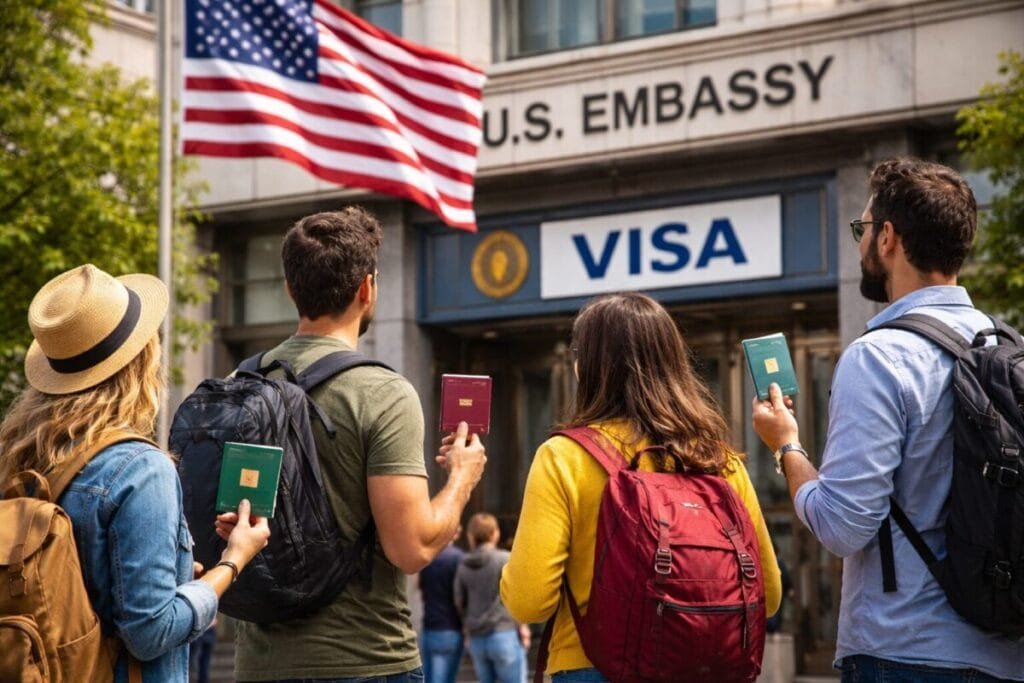
Europe’s travelers now face a major shift in US travel policies. The United States has announced higher visa fees and new social media checks. These changes will start in early 2026. They affect citizens from more than thirty-two European countries. Italy, France, Germany, Sweden, Portugal, Ireland, and others will feel the impact. The new rules are expected to change how Europeans plan trips to the US for tourism, study, work, and business.
Officials say these measures aim to boost security and update visa systems. But many travelers worry these stricter steps will make travel harder and costlier. Tourists, students, and professionals will need more time to adapt.
Rising Costs for Visas from Europe
Under the new policy, visa application fees will increase across most categories. Standard tourist visas (B-2), business visas (B-1), and student visas (F-1) will all cost more. An added Visa Integrity Fee of $250 will also apply in many cases. This brings total upfront costs higher for European applicants. Many travelers think this will reshape how often they visit the United States.
Countries with high travel volumes, like Italy, France, and Germany, will likely feel the changes first. Many Europeans travel to the US each year for vacations, reunions, or work trips. The fee hike comes at a time when travel demand from Europe is strong. Higher fees could change these plans.
Social Media Screening: A New Requirement
In a first for many European applicants, US consular officers will now review social media accounts. Applicants must provide handles used over the past five years. Platforms like Instagram, Facebook, Twitter, and LinkedIn will be part of the review. Authorities say this step helps strengthen national security.
Travelers should expect more detailed checks on public posts, affiliations, and shared content. Officials have said private messages won’t be required. Still, the new review could add time to the visa process. Some Europeans are concerned that old posts could be misinterpreted or delay approvals.
Who Is Most Affected in Europe?
Italy
Italian travelers are among those most affected by these changes. The country sends millions of citizens abroad each year. Many Italians travel to the US for tourism, work, or study. Italian students and young professionals are especially concerned. Higher fees and added screening may make long-planned trips more complex. Many families are rethinking their budgets for US vacations.
France and Germany
France and Germany have large numbers of US visa applicants each year. These include tourists, exchange students, and workers in tech and business. With fee hikes and new social media checks, many applicants expect longer wait times. Some universities in these countries have also raised concerns about delays for students planning study abroad programs.
Scandinavia: Sweden and Norway
Sweden and Norway see strong interest in US education and cultural exchange. Students in both countries often pursue graduate programs in the US. With more costly visa applications, some students are weighing alternative destinations. Others are adjusting timelines to apply earlier.
Ireland
Ireland’s close business links with the United States make visa access vital. Many Irish professionals work with US partners or travel for business meetings. The tech and pharmaceutical sectors are particularly concerned. Higher fees could affect smaller companies that send staff to the US regularly.
What It Means for European Tourism
For leisure travelers, the new rules may slow plans or reduce trips. Families and holidaymakers who travel to US landmarks like New York, the Grand Canyon, or Florida’s theme parks could rethink budgets. Higher upfront costs may lead travelers to book less frequently or choose shorter stays.
Travel agents across Europe are preparing for longer planning cycles. Many are advising clients to apply for visas earlier than before. Some tour operators are already adjusting travel packages to account for delays and extra expenses.
Study and Work Travel Faces New Challenges
Students from Europe who seek education in the US are a large group. Many European universities have exchange programs with American counterparts. With higher fees, some students may prefer destinations in Canada, the UK, or within the EU.
Workers seeking temporary US jobs or internships will also face steeper costs. Young professionals often take advantage of training or project opportunities in US firms. With added screening, employers may need to allow extra time for visa approvals.
Practical Tips for European Travelers
Review Your Social Media Now
Start cleaning up public posts and profiles. Remove old content that could be misunderstood. Set privacy settings where possible. This proactive step can reduce potential delays.
Start Visa Applications Early
With longer processing times expected, plan far ahead. Avoid last-minute applications. Try to schedule your interview many months before travel dates.
Prepare Supporting Documents
Bring clear evidence of your travel purpose. For students, include financial proof and school details. For business travelers, include company letters and travel agendas. Strong documentation can help smooth the process.
Looking Ahead
These visa changes mark one of the biggest shifts in years for European travelers to the United States. The new fee structure and social media screening are designed to modernize US border security. But they also raise concerns about travel accessibility and costs.
Tour guides, travel groups, students, and business professionals across Europe are now adapting. Many admit the changes bring uncertainty. But with early planning and careful preparation, European visitors can still pursue their US travel goals.
In the coming months, travel professionals across Europe are expected to offer more guidance for applicants. As the new system rolls out, updates may refine fee rules and screening practices.
Final Thoughts
European travel to the United States is entering a new chapter. Higher visa fees and social media checks will make planning more detailed. Italy, France, Germany, and many other nations will feel these changes deeply. For tourism, education, and business travel, early planning and preparation are now more important than ever. European travelers can still reach the US, but the path requires extra time, documentation, and care.
For more travel news like this, keep reading Global Travel Wire