


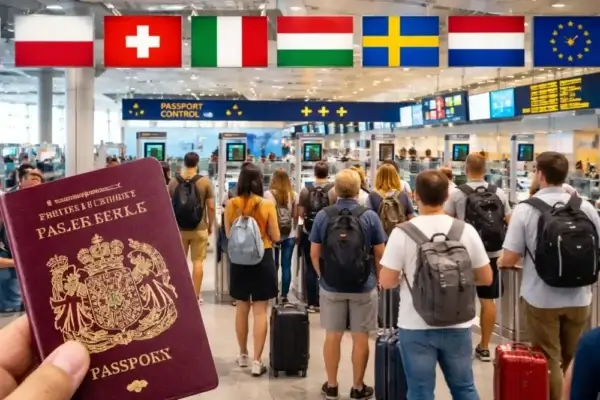




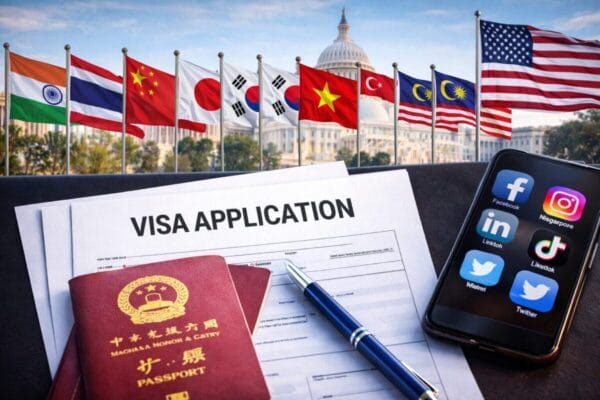
The United States has introduced tougher visa screening measures that are reshaping travel prospects for Asia. Thailand and India now join South Korea, China, Vietnam, Japan, Singapore, Malaysia, Taiwan, and others facing stricter controls. These measures stem from expanded US visa regulations introduced last year and enforced more broadly from December 15, 2025.
The new rules require deeper scrutiny of visa applicants’ online presence. This change affects skilled workers, dependents, and frequent travelers. Tourism flows, business travel, and long-term mobility now face new uncertainty.
Online Scrutiny Becomes Central to Visa Decisions
US consular officers now review publicly available online content during visa processing. This review includes social media profiles, posts, photos, comments, and affiliations. The expanded checks now apply to H-1B skilled worker visas and H-4 dependent visas.
Previously, this level of scrutiny focused on student and exchange visas. The extension marks a major shift in how the US evaluates professional travelers. Asian applicants now face a more complex process.
Thailand and India Feel Immediate Impact
India and Thailand stand among the most affected countries due to high visa demand. Indian professionals dominate H-1B applications, especially in IT and engineering. Thai applicants often travel for business, hospitality, and technical roles.
Any slowdown in visa processing affects employers, families, and travel planners. Professionals now face longer timelines and higher uncertainty before committing to travel.
Wider Asian Region Faces Similar Challenges
South Korea, China, Vietnam, Japan, Singapore, Malaysia, Taiwan, and Indonesia also face the same scrutiny. These economies rely on strong business links with the United States. Technology, manufacturing, research, and healthcare sectors depend heavily on mobility.
The stricter rules may reduce short-term travel while increasing compliance costs. Regional governments now monitor how these changes affect outbound travel trends.
Tourism and Business Travel Face Disruption
Although the rules target work visas, tourism feels indirect effects. Travelers often mix business, family, and leisure trips. Visa delays disrupt itineraries, bookings, and seasonal travel plans.
Airlines, hotels, and tour operators could see softer demand from Asian markets. The US remains a top destination for shopping, education visits, and cultural tourism. Uncertainty dampens confidence.
Social Media History Gains New Importance
Applicants must now ensure public visibility of online profiles. Consular officers assess content for security risks and behavioral red flags. Even old posts can influence outcomes.
This requirement forces travelers to reassess their digital footprint. Many now review years of online activity before applying. Digital behavior has become part of travel eligibility.
Longer Processing Times Expected
The expanded screening adds time to every application. Even applicants without concerning content face delays. Officers must review online material manually.
Processing slowdowns affect peak travel periods most. Professionals risk missing work start dates. Families face postponed reunification. Travel planning now requires longer lead times.
Employers Adjust Workforce Planning
Companies that rely on international talent now revise hiring strategies. Employers must prepare for visa delays and uncertain approval timelines.
Human resource teams increasingly advise employees on online conduct. Businesses also adjust project schedules to accommodate travel uncertainty.
Government Rationale Focuses on Security
US authorities state that the measures strengthen national security. Officials aim to prevent threats through deeper background checks. Online activity provides additional context during vetting.
Security-driven policies now play a larger role in global mobility. Travelers must balance openness with caution in digital spaces.
Asia Responds with Caution and Adaptation
Asian governments track how the rules affect citizens abroad. Travel advisories, employer guidance, and public awareness campaigns have increased.
Professional associations now educate members on compliance expectations. Travel agencies adjust timelines and client advice accordingly.
Travel Behavior Shifts May Accelerate
Some travelers may choose alternative destinations with simpler entry rules. Countries in Europe, the Middle East, and Southeast Asia could benefit.
The US still attracts strong interest, but barriers influence decision-making. Ease of travel now competes with opportunity value.
Digital Presence Becomes a Travel Asset
Online behavior now affects mobility more than ever. Professionals must maintain consistent, responsible digital identities.
This shift reflects a broader global trend. Governments increasingly use digital data in border decisions. Transparency and preparedness now define successful travel.
Long-Term Effects on Global Mobility
The stricter US visa approach signals a lasting change. Travel will involve more documentation, screening, and planning.
For Asia, the impact extends beyond individuals. Tourism, trade, education, and innovation depend on smooth movement. Policymakers and travelers must adapt.
Preparing for the New Travel Reality
Applicants should plan early, review online content, and expect delays. Employers should communicate clearly and build flexibility into schedules.
The new visa environment rewards preparation and awareness. Travel remains possible, but the path now requires greater care.
As Thailand, India, and the wider region navigate these changes, global travel enters a more controlled and scrutinized era.
For more travel news like this, keep reading Global Travel Wire