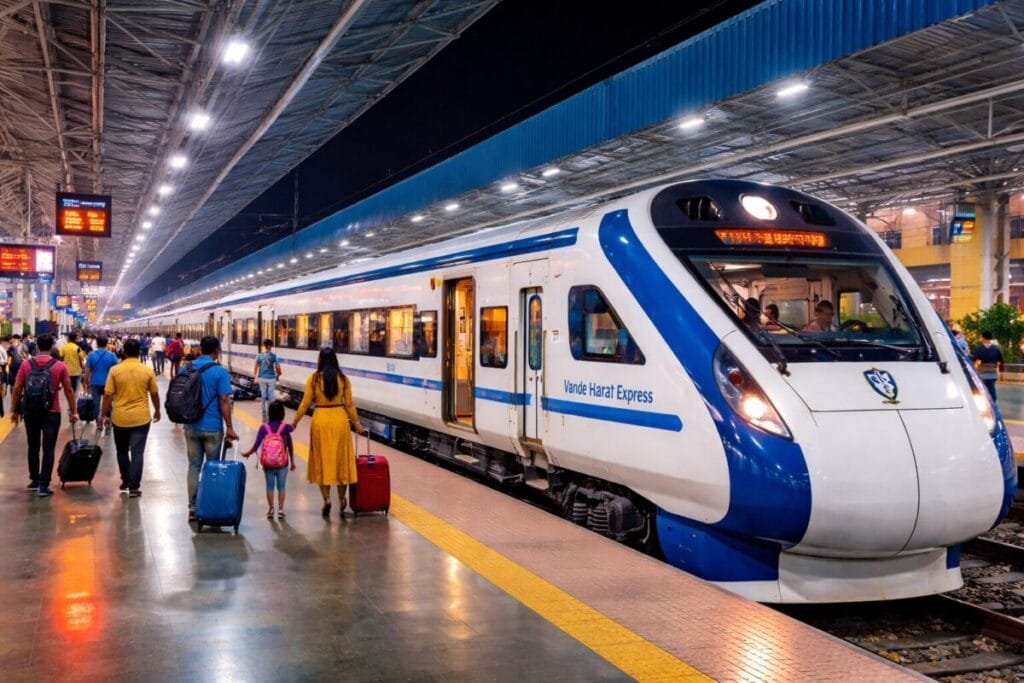
Indian Railways launches a major upgrade to long-distance rail travel in Kerala through the new Vande Bharat Sleeper trains. These sleepers combine comfort, reliability, and speed across key inter-state routes. The trains target both business and leisure travelers seeking a modern alternative to conventional sleeper services.
Kerala’s geography makes rail essential for mobility. The state stretches along India’s southwestern coast with dense population centers and major economic hubs. Efficient rail links support students, migrants, tourism, and trade. The arrival of Vande Bharat Sleeper trains strengthens this network and delivers an experience that rivals domestic aviation for medium distances.
Key Routes Strengthen Inter-State Connectivity
The first three routes include Thiruvananthapuram–Chennai, Thiruvananthapuram–Bengaluru, and Thiruvananthapuram–Mangaluru. Officials prioritize the Chennai and Bengaluru sectors due to high passenger demand throughout the year. These routes handle heavy business travel, student travel, and festival travel. The Mangaluru route supports coastal movement and migrant passenger flows.
The sleeper trains follow the successful introduction of the first Vande Bharat Express in Kerala in 2023. Public response proved strong and demonstrated that high-speed rail can compete with buses, flights, and cars when comfort and punctuality align. The sleeper variant takes these advantages into overnight operations.
New Sleeper Design Enhances Comfort and Capacity
Each Vande Bharat Sleeper train features 16 fully air-conditioned coaches. Indian Railways allocates 11 three-tier AC coaches, four two-tier AC coaches, and one first-class AC coach. Total capacity reaches 823 passengers. This capacity allows rail operators to serve more long-distance travelers without crowding.
The coaches include modern interiors, ergonomic berths, improved air circulation, automated doors, and digital information systems. The trains use reduced noise insulation and vibration control to improve overnight sleep quality. Travelers no longer worry about heat, dust, or outdated interiors that have long affected Indian sleeper travel.
Confirmed Bookings Replace Waitlists and Uncertainty
Indian Railways introduces a booking policy that allows only confirmed tickets. The system excludes RAC and waitlist options. This change eliminates uncertainty for long-distance passengers and helps families and business travelers plan with confidence. The minimum booking distance of 400 kilometers positions the service squarely within the long-distance segment.
Passengers often express frustration with unpredictable berth allotments and RAC clusters during peak seasons. The new booking structure increases reliability and reduces travel stress.
Faster Trips Transform Passenger Experience
The sleeper trains also shorten travel times across all three corridors. The Mangaluru–Thiruvananthapuram sector drops from 14 hours to 10.5 hours. The Thiruvananthapuram–Chennai corridor drops from 16.5 hours to 13.5 hours. Meanwhile, the Thiruvananthapuram–Bengaluru sector drops from 15.5 hours to 12.5 hours. These reductions make overnight journeys more practical for both work and leisure trips.
Fares increase due to higher comfort levels and faster speeds. Passengers pay ₹500 more on the Mangaluru sector, ₹800 more on the Bengaluru sector, and ₹1,000 more on the Chennai sector. The price difference sits lower than air travel costs on most dates, giving passengers strong incentives to shift from aviation to premium rail.
Election-Year Connectivity and Policy Strategy
The new services arrive during active infrastructure planning between Kerala and Tamil Nadu. Government planners seek stronger rail corridors to support economic exchange, commuter mobility, and interstate tourism. The sleeper services also align with broader modernization goals within Indian Railways as the network prepares to introduce semi-high-speed technologies across multiple states.
Kerala benefits from these initiatives as it continues to expand tourism, healthcare travel, and IT-sector migration. Bengaluru and Chennai attract large numbers of Kerala residents for employment opportunities. Faster trains support this mobility and reduce pressure on inter-state road networks.
Rail Infrastructure Modernization Accelerates
India continues to invest heavily in premium rolling stock. Vande Bharat Sleeper trains represent a major technological step beyond traditional ICF coach designs. The service also builds on the success of premium categories such as Tejas and Vande Bharat Express.
Improved rail products help reduce reliance on short-haul flights. Overnight trains also reduce airport congestion, cut emissions, and provide more flexible luggage allowances for passengers. These advantages align with national sustainability goals.
Boost for Kerala Tourism and Regional Mobility
Tourism officials expect the Vande Bharat Sleeper trains to boost travel into Kerala. The state attracts wellness tourists, monsoon travelers, Ayurveda enthusiasts, and cruise passengers. Faster trains support this tourism mix and improve access to key cities and heritage towns.
The Chennai and Bengaluru links also support inbound tourism from two of India’s largest urban markets. With confirmed berths and reduced travel times, weekend and festival tourism become more feasible.
A Promising Future for Indian Rail Travel
The arrival of Vande Bharat Sleeper trains marks a turning point for long-distance rail travel in India. Passengers gain a premium product that blends speed, comfort, and reliability. Kerala gains stronger inter-state connectivity and improved tourism potential. Indian Railways gains credibility as it modernizes both infrastructure and passenger services.
As more sleeper trains enter service, travelers across India will gain improved mobility choices that reshape how they move across the country.
For more travel news like this, keep reading Global Travel Wire