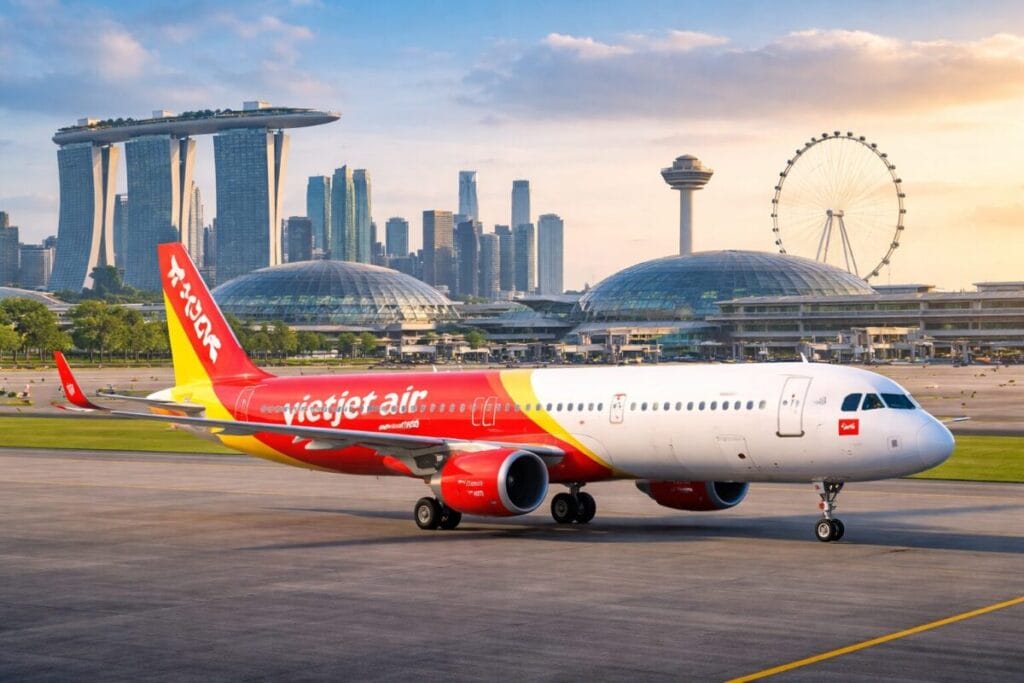
Vietnam’s privately owned airline Vietjet Air has announced a strong expansion strategy aimed at increasing its presence across the Asia Pacific region. The announcement followed key milestones achieved during Singapore Airshow 2026, one of the aviation industry’s most important global events.
The airline outlined ambitious plans to modernise its fleet, strengthen regional connectivity, and expand into high-growth travel markets. Among these, the Philippines has emerged as a major focus due to rising passenger demand and strong tourism potential.
Vietjet also confirmed aircraft engine procurement and financing agreements valued at approximately US $6.1 billion. These deals signal a long-term commitment to expanding routes, improving efficiency, and strengthening its position as a leading low-cost carrier in Asia.
Strategic Deals to Support Fleet Modernisation
A central part of Vietjet’s strategy involves upgrading its aircraft fleet. During the airshow, the airline secured agreements covering new generation aircraft engines and maintenance services. These include support for Airbus A321neo and A321XLR aircraft, known for improved fuel efficiency and longer range capabilities.
The airline also reached financing arrangements with global asset management partners. These agreements aim to strengthen capital access while supporting future aircraft deliveries.
Fleet modernisation plays a crucial role in the airline’s growth model. Newer aircraft reduce operational costs, lower emissions, and allow airlines to operate longer routes more efficiently. For passengers, this often translates into improved comfort, better reliability, and expanded travel options.
Asia Pacific Aviation Financial Hub Launch
Another major highlight from the Singapore Airshow was Vietjet’s involvement in launching the Asia Pacific Aviation Financial Hub in Ho Chi Minh City. This initiative aims to create a regional ecosystem that integrates aircraft financing, training, maintenance services, and aviation logistics.
The hub is expected to attract investment into Vietnam’s aviation sector while strengthening the country’s role as a regional aviation center. Government aviation strategies across Southeast Asia have increasingly focused on developing infrastructure and financing capabilities to support rising air travel demand.
By participating in this initiative, Vietjet positions itself at the center of industry development while supporting long-term network expansion.
Why the Philippines Is a Key Growth Market
The Philippines represents a strategic opportunity for Vietjet’s future growth. The country’s tourism industry continues to expand, supported by strong domestic travel and increasing international visitor numbers.
Geographically, Vietnam and the Philippines offer strong potential for short-haul and medium-haul routes. Increased air connectivity between major cities could stimulate tourism, business travel, and student mobility.
Regional aviation trends show rising demand for affordable travel options. Low-cost carriers play a key role in serving this market segment. Expanded services between Vietnam, the Philippines, and neighboring destinations may offer travellers more flexibility and lower fares.
Impact on Asia Pacific Tourism and Connectivity
More Routes and Increased Flight Frequencies
Additional aircraft will allow Vietjet to introduce new routes and increase frequency on existing ones. This could shorten travel times and provide more scheduling options for passengers.
Competitive Pricing Opportunities
Low-cost airlines often drive fare competition across markets. Vietjet’s expansion could encourage more affordable travel across Southeast Asia, especially for leisure travellers and younger passengers.
Stronger Regional Integration
Asia Pacific remains one of the fastest-growing aviation markets globally. Rising middle-class income levels and increasing cross-border tourism continue to drive demand. Improved connectivity helps travellers explore multiple destinations more easily.
Support for Cargo and Tourism Supply Chains
Expanded airline capacity also benefits cargo movement. Faster logistics support tourism businesses, exporters, and regional trade networks.
Benefits for Travellers
Greater Travel Choice
Passengers may gain access to new destinations and more convenient flight schedules. This improves connectivity between secondary cities as well as major hubs.
Improved Passenger Experience
Modern aircraft typically feature quieter cabins, improved fuel efficiency, and updated interiors. These enhancements contribute to better overall travel experiences.
Potential for Multi-Destination Trips
Enhanced regional networks make it easier to plan multi-city travel across Southeast Asia without relying solely on traditional full-service airlines.
Challenges and Risks Ahead
Aircraft Delivery Timelines
Fleet expansion depends on aircraft production schedules. Delays in deliveries may slow the introduction of new routes.
Competitive Market Pressure
Asia Pacific aviation remains highly competitive. Airlines must carefully balance growth with profitability to sustain operations.
Infrastructure Constraints
Some regional airports may face capacity challenges as flight numbers increase. This could affect punctuality during peak travel seasons.
Regulatory Approvals
International route expansion requires government approvals and bilateral agreements. These processes can influence how quickly new routes launch.
Future Outlook for Regional Travel
Vietjet Air’s announcements at Singapore Airshow 2026 highlight strong confidence in the recovery and growth of Asia Pacific travel. The airline’s investment in fleet expansion, financial infrastructure, and regional partnerships indicates a long-term strategy focused on connectivity and affordability.
If executed successfully, these developments could reshape travel patterns across Southeast Asia. Travellers may benefit from increased route options, competitive fares, and stronger links between emerging tourism destinations.
As demand for regional travel continues to rise, Vietjet’s expansion plans could play an important role in shaping the future of low-cost aviation and tourism growth across the Asia Pacific region.
For more travel news like this, keep reading Global Travel Wire