Central Vietnam is battling one of the most destructive flood events in recent memory as record torrential rains have inundated key tourist destinations, including the heritage cities of Hue and Hoi An. The intense downpour has submerged towns, cut off infrastructure, and forced mass evacuations—delivering a severe blow to the region’s tourism economy and underscoring the escalating impact of climate extremes.
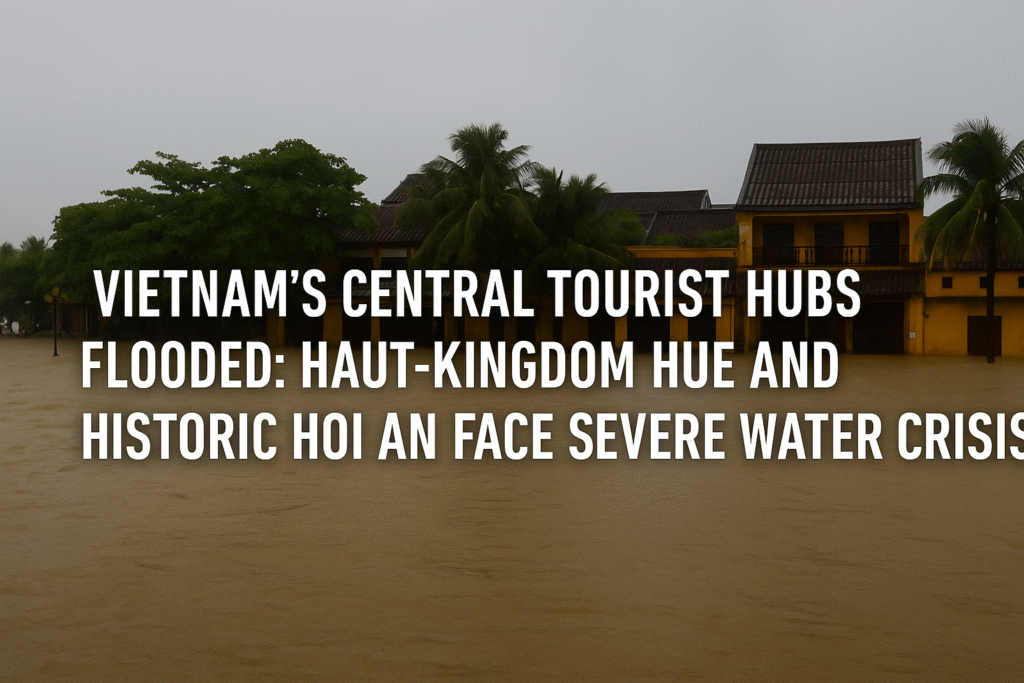
Several days of relentless rainfall pounded the central coastal provinces, with the city of Hue recording an astonishing level of over 1,000 millimetres in a 24-hour period. The surge in water levels caused the Perfume River to rise dramatically, flooding streets and neighborhoods. In Hoi An, the ancient town’s low-lying areas were engulfed, with many houses submerged up to their roofs and emergency boat evacuations underway to rescue both residents and stranded tourists.
Authorities estimate that tens of thousands of people have already been evacuated from the flooded zones. In Hue Province alone, more than 30 out of 40 communes were affected, with floodwaters measuring between one and two metres deep in many places. The disruption is extensive: roads have been washed out or blocked by landslides, railway services between major cities are suspended, and power outages affect hundreds of thousands of households across the region.
For the tourism-dependent local economies in Hue and Hoi An, the impact is immediate and profound. Once-bustling heritage centres and market streets are now silent, with shuttered businesses, empty hotels and suspended tour operations. Visitors who arrived before the deluge found themselves trapped, evacuated by boat, or forced to cancel and depart prematurely. Hotels and hospitality operators are scrambling to respond, and the region’s tourism future has entered a period of acute uncertainty.
Beyond the tourism implications, the flooding has exposed wider vulnerabilities in Vietnam’s disaster defence and infrastructure systems. Central Vietnam, with its mountainous terrain and long coastline, has long been susceptible to typhoons, storms and flooding. This year’s event, however, has set new benchmarks for severity and speed of onset. Meteorological agencies warn of further rainfall and elevated risk of landslides in the days ahead, while national agencies and local governments mobilise rescue and relief operations.
The government has called for national and international support for post-disaster recovery, pointing to economic losses already mounting into the billions of dong and hinting at longer-term costs to GDP. Experts say the scale of destruction is amplified by the effects of climate change—warmer seas and changing weather patterns are increasing the intensity of storms and rainfall, particularly in Southeast Asia’s monsoon and typhoon-affected landscapes.
For tourists considering visits to Vietnam in the near term, the advisory is clear: travel to the central region—especially Hue and Hoi An—is currently high-risk. Substantial disruptions to hospitality services, access and transport infrastructure are underway. For operators, earmarked itineraries involving central coastal zones should be reconsidered or postponed. Visitors already in the region should monitor local advisories, follow emergency instructions, and stay alert for further weather warnings.
Despite the gravity of the situation, there are reasons for careful optimism: Vietnam’s national disaster management systems are active, emergency evacuations are ongoing and relief supplies are being deployed. Local authorities are working in tandem with national agencies to restore power, repair access routes and ensure evacuation shelters are operational. Long-term, the focus is shifting toward enhancing flood-resilience: stronger dykes, better drainage in heritage towns, and reinforced infrastructure to cope with next-generation weather events.
Still, the road to normalcy will be long. Heritage sites such as Hue’s Imperial Citadel and Hoi An’s ancient town face damage and cleanup tasks ahead if tourism is to rebound. The local economies that depend heavily on inbound visitors will need support and time to recover. For travellers in future, the events here serve as a vital reminder: even the most iconic and well-visited destinations are vulnerable when extreme weather strikes.
In summary, central Vietnam’s flood crisis has crossed the threshold from seasonal disruption into full-blown disaster. The combination of record rainfall, overwhelmed systems and heritage‐rich tourist zones in the cross-hairs makes this a cautionary episode for global travel. As the storm clouds pass and waters recede, the twin cities of Hue and Hoi An will need sustained aid and thoughtful rebuilding to get back on their feet—and to welcome travellers again with confidence.
For more travel news like this, keep reading Global Travel Wire