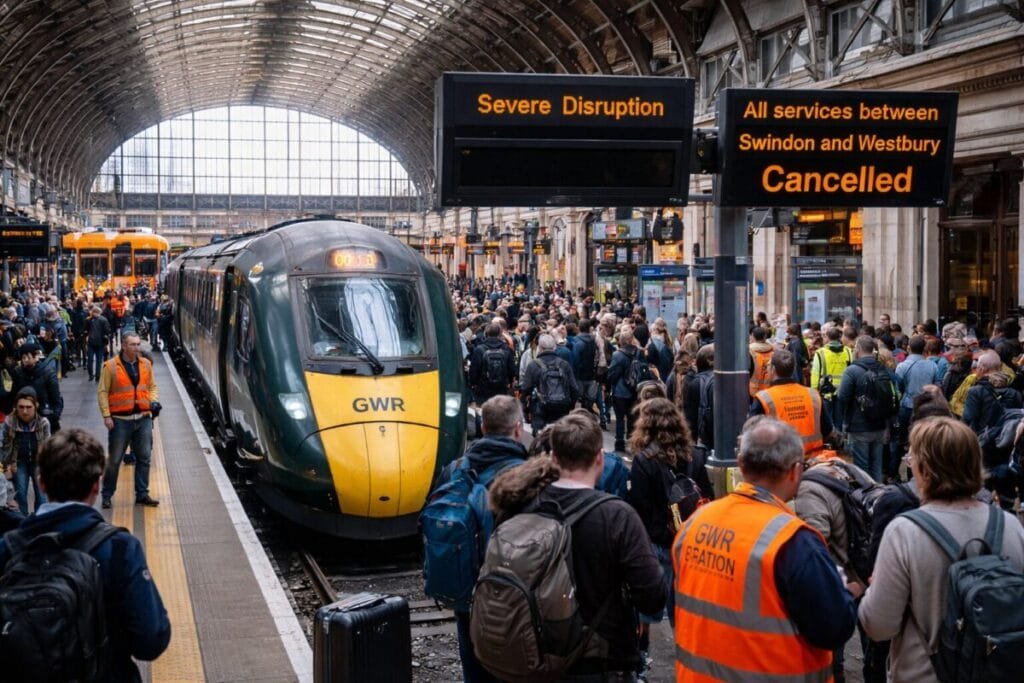
Travelers across Wiltshire faced serious rail disruption on January 13 after a freight train broke down at Melksham and blocked the Swindon-Westbury line. GWR cancelled several services as teams worked to manage the unexpected outage and reroute passengers. The disruption marked the second major train issue in Wiltshire during the same day, increasing frustration for commuters and travelers across the region.
GWR confirmed that cancellations and delays would continue through midday January 14, prompting warnings for passengers to adjust travel plans and expect slower journeys.
Breakdown Blocks Key Rail Corridor
The breakdown at Melksham halted movement between two important stations on the GWR network. Swindon serves as a regional hub with strong business travel demand, while Westbury links into wider routes connecting the southwest. With the line blocked, GWR suspended local services and shifted traffic toward alternate hubs to maintain limited travel options.
Earlier in the day, another train experienced mechanical failure between Westbury and Reading. That issue also caused delays and disrupted passenger flow across Wiltshire. Two incidents in rapid succession created a cascading effect that strained GWR’s resources and scheduling systems.
Infrastructure experts note that Wiltshire sits at a strategic point for rail travel in southern England. Passenger and freight traffic move through the county as part of larger routes linking Bristol, Bath, Cardiff, and London. Disruptions in this region often trigger wider travel complications across southern rail corridors.
Impact On Commuters And Tourism Travel
The breakdown hit business and tourism sectors during a period of heightened travel volume. Business travelers who rely on rail services for meetings and site visits faced cancelled trips or missed connections. Commuters traveling into Swindon and nearby commercial districts experienced long delays and revised schedules.
Tourism also felt the disruption. Wiltshire attracts visitors with attractions such as Salisbury Cathedral, Stonehenge, and the market towns scattered across the county. Many travelers use GWR trains to move between Bath, Salisbury, and Swindon as part of multi-day itineraries. Tours and guided experiences often depend on reliable rail timetables to function smoothly.
Tour operators reported rescheduled departures, while some travelers shifted to bus and car rentals to maintain their plans. Flexibility has become increasingly important for tourists navigating seasonal travel across the United Kingdom.
GWR Implements Diversions And Support Measures
To reduce disruption, GWR directed passengers to travel through Bath Spa, which offered more consistent routing toward Westbury and onward destinations. Train services between Bath Spa and Westbury continued with minimal interruption, providing a workable connection for many affected travelers.
At Melksham, GWR arranged road transport for passengers unable to board replacement trains. Staff guided travelers to buses and taxis serving nearby operating stations. Travelers received travel time warnings, as road transfers increased journey duration and created bottlenecks during peak hours.
Passenger guidance focused on four main points: travel early, check service updates, remain flexible, and plan for multimodal transport. These suggestions aimed to reduce missed appointments and provide travelers with time to adjust.
Business And Freight Face Operational Challenges
The disruption also impacted freight logistics. Rail remains an essential link for moving goods across southern England due to its speed and reliability. Industrial goods, agricultural shipments, and consumer products often travel through the corridor. Freight delays can reach manufacturers and wholesalers within hours and affect supply chains.
Businesses that depend on punctual meetings and onsite visits also faced interruptions. Swindon maintains a strong business base with roles in finance, technology, and automotive manufacturing. Many firms rely on GWR routes for employee mobility and corporate travel.
Some companies instructed employees to switch to remote platforms or postpone engagements until after full rail restoration.
Travel Advice For Affected Passengers
Passengers navigating disruptions across Wiltshire benefited from several practical adjustments:
Use Bath Spa as a diversion route. Travelers moving between Swindon and Westbury accessed more reliable service through the Bath corridor.
Expect slower connections through Melksham. Road transport continued to bridge gaps between broken links, but journey times increased.
Monitor service alerts. Real-time updates helped travelers catch revised departures and avoid unnecessary waits at stations.
Build in extra travel time. Delays remained unpredictable, so travelers who planned ahead avoided missed appointments.
Consider mode switching. Long-distance buses, taxis, and rental cars offered alternate mobility for time-sensitive trips.
Maintenance And Infrastructure Questions Emerge
Mechanics examined the broken freight train as GWR and Network Rail assessed repair needs. The incident renewed attention on aging rail assets and the ongoing need for upgrades across the UK network. Industry analysts continue to highlight the importance of infrastructure investment to maintain reliability and protect regional economies.
The situation also highlighted the importance of robust maintenance schedules for both passenger and freight fleets. Local leaders stressed the need for consistent investment in rail corridors that support business travel and tourism growth.
Tourism Still Holds Strong Regional Value
Despite temporary travel challenges, Wiltshire remains an attractive tourism region. Visitors continue to explore cultural and historical sites, rural landscapes, and seasonal events throughout the year. Rail travel supports that tourism economy by offering convenient access from London, Bristol, and Bath.
Industry stakeholders expect travel to normalize once rail services return to full capacity. GWR continues to update restoration timelines and coordinate with local authorities to minimize traveler disruption.
For more travel news like this, keep reading Global Travel Wire