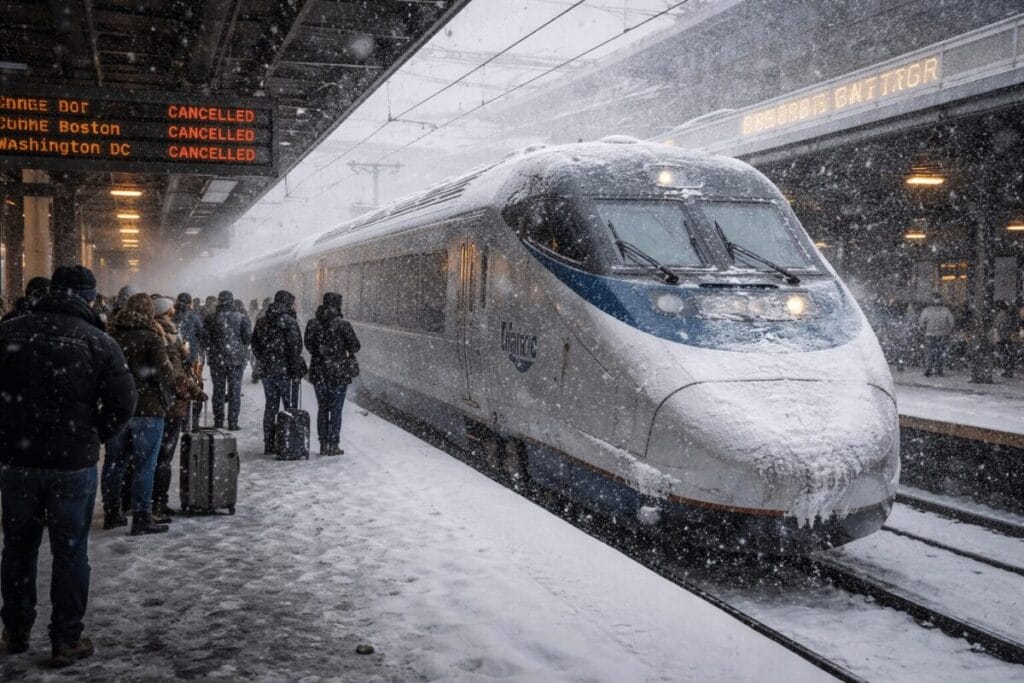
A powerful winter storm sweeping across the Northeastern United States has caused major disruptions to rail travel. Amtrak canceled more than 30 trains as extreme weather conditions created safety concerns across key routes.
Cities such as New York, Washington DC, Boston, Philadelphia, Chicago, Pittsburgh, and Cleveland faced widespread travel delays. The storm brought heavy snowfall, strong winds, and freezing temperatures. These conditions made rail operations unsafe in several regions.
Transport authorities acted early after meteorologists predicted one of the strongest winter storms in recent years. Despite preparations, the scale of the storm forced extensive service cancellations.
For tourists and commuters alike, the sudden changes created significant challenges.
Key Routes Affected by Amtrak Cancellations
Several of Amtrak’s busiest routes faced disruptions. These services form the backbone of travel along the Northeast Corridor, one of the most heavily traveled rail regions in the country.
Northeast Regional Services
The Northeast Regional line saw the highest number of cancellations. This route connects Virginia to Massachusetts and includes major stops in Washington DC, New York City, and Boston.
Millions of passengers rely on this service each year. Tourists often use it for city-to-city travel due to its affordability and frequent departures.
Canceled trains disrupted daily commuters, business travelers, and leisure visitors planning multi-city trips.
Acela High-Speed Service
Amtrak’s high-speed Acela trains also faced heavy disruption. The Acela connects major economic and cultural centers, offering fast travel between Boston, New York, and Washington DC.
Tourists often choose this service for short weekend trips or business travel. Its suspension created gaps in schedules and forced passengers to seek alternative transport.
Keystone Service Interruptions
The Keystone Service, linking Harrisburg with New York City through Philadelphia and Newark, experienced temporary suspension. This route remains popular among regional travelers exploring Pennsylvania and nearby destinations.
The halt affected both local tourism and commuter traffic.
Tourism Industry Feels Immediate Impact
The cancellations quickly affected tourism across the Northeast. Visitors traveling between major cities rely heavily on rail services. The sudden shutdown disrupted sightseeing schedules, event attendance, and hotel check-ins.
New York City experienced an increase in last-minute hotel bookings. Travelers stranded due to canceled trains sought temporary accommodations. Washington DC and Boston reported similar patterns.
Popular attractions faced changing visitor flows. Broadway shows, museum visits, historic landmarks, and sporting events saw fluctuating attendance as tourists adjusted plans.
Tour operators and hospitality businesses adapted quickly. Many offered flexible schedules or revised booking options to accommodate travelers affected by the storm.
Travelers Adjust Plans Amid Weather Challenges
Passengers responded by exploring alternative travel solutions. Some shifted to buses or flights. Others postponed travel until conditions improved.
Amtrak encouraged passengers to monitor real-time updates through official platforms. Travelers could rebook tickets without penalties or request refunds.
Flexibility became essential. Tourists began reshaping itineraries, extending stays, or choosing nearby destinations instead of long-distance journeys.
Experts recommend allowing extra travel time during winter months. Weather disruptions remain common across northern regions, especially during peak storm seasons.
Ripple Effects Across the Transportation Network
Rail disruptions often extend beyond train schedules. The winter storm created a chain reaction across other travel systems.
Airlines experienced increased demand as passengers sought replacements for canceled trains. Some flights filled quickly, while weather delays added further complications.
Bus services saw higher bookings. Highway conditions, however, slowed travel in certain areas due to snow accumulation.
Travelers with connecting flights from major hubs like New York and Washington DC faced additional stress. Missed connections forced rescheduling and itinerary changes.
This interconnected nature of transportation highlights how rail disruptions can influence the broader tourism ecosystem.
How Tourism Businesses Are Responding
Hotels, travel agencies, and tour operators adapted rapidly to shifting conditions. Many introduced flexible cancellation policies. Some offered extended stays or discounted rates for stranded guests.
Local tourism boards increased communication through social media and visitor centers. They provided updates on open attractions and safety guidance.
Restaurants and entertainment venues adjusted staffing levels as visitor numbers changed throughout the storm period.
Such quick responses helped reduce traveler frustration and maintained confidence in regional tourism services.
Preparing for Future Winter Travel
Severe weather events are becoming more frequent. Transportation providers continue investing in infrastructure upgrades and operational improvements.
Rail operators aim to strengthen resilience through better forecasting tools, advanced safety systems, and modernized equipment.
Travel experts advise passengers to prepare for seasonal disruptions. Booking refundable tickets, purchasing travel insurance, and monitoring weather forecasts can reduce stress during unexpected events.
Planning extra time between connections also helps travelers avoid missed departures.
Outlook for Northeast Travel Recovery
As weather conditions improve, services will gradually return to normal schedules. However, travelers should expect some lingering delays while crews inspect tracks and restore operations.
Tourism across the Northeast remains resilient. Major cities continue welcoming visitors despite temporary setbacks.
For those planning trips to New York, Washington DC, Boston, or nearby destinations, staying informed and maintaining flexibility will ensure smoother travel experiences during winter months.
The recent storm highlights both the challenges and adaptability of the region’s transportation network. Even amid disruptions, tourism continues to evolve as businesses and travelers adjust to changing conditions.
For more travel news like this, keep reading Global Travel Wire