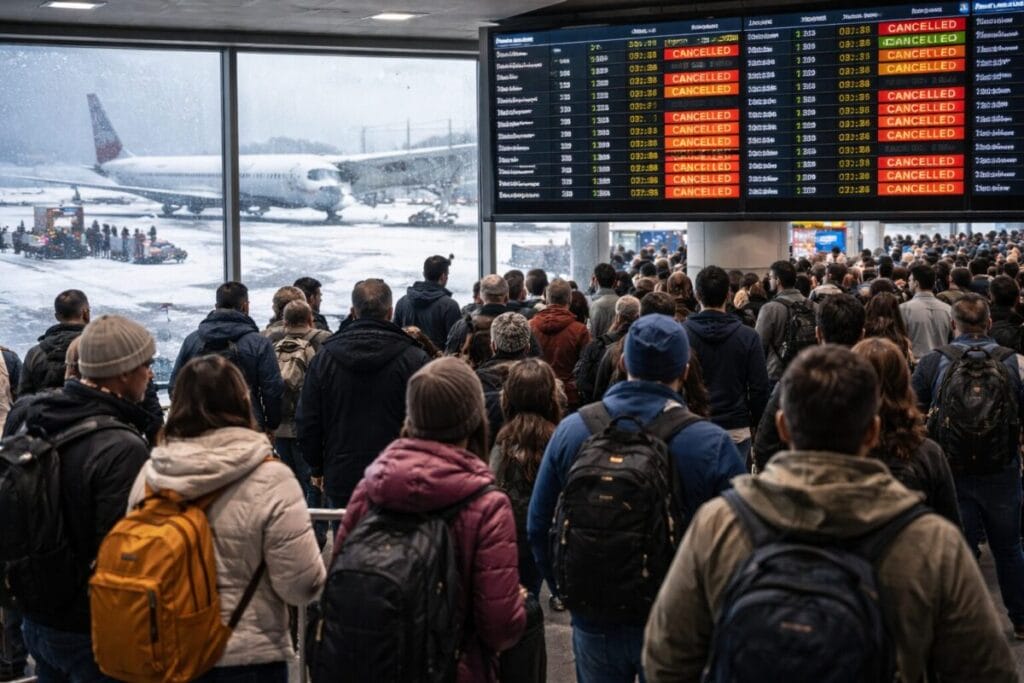
Winter Storm Fern unleashed widespread chaos across the United States as airline operations buckled under heavy snow, ice and freezing temperatures. Thousands of travelers ended up stranded in crowded terminals while airlines scrapped thousands of flights and delayed thousands more. The aviation system strained under one of the most disruptive winter weather events in recent years.
American Airlines took the brunt of the storm due to its large hub network and heavy domestic footprint. The carrier apologized to customers as passengers scrambled to secure food, hotel rooms and rebooked itineraries. Other major airlines also struggled as Fern advanced from the Southern Plains to New England during peak travel days.
Severe Weather Conditions Tested Infrastructure
Meteorologists warned that Fern produced intense snowfall bands, dangerous ice and sustained wind gusts. Southern states encountered rare freezing rain, which forced road closures and airport shutdowns. Northern states endured whiteout conditions that halted runway operations. The storm cut power to millions of households as tree limbs and power lines snapped under ice loads.
Governors issued emergency declarations and told residents to avoid travel. Road crews battled icy bridges and multi-car accidents throughout the day. Airport ground teams rushed to manage de-icing queues and runway clearing as flight boards filled with cancellations. Many passengers checked weather apps and airline alerts as travel windows closed.
Airline Schedules Collapse Under Storm Pressure
Flight tracking data showed thousands of cancellations within a single day as Fern intensified. Airlines canceled more than nine thousand flights and delayed several thousand more as the storm reached major aviation hubs. American Airlines led cancellation totals due to the scale of its network at Dallas–Fort Worth, Charlotte and northeastern cities.
Delta Air Lines and United Airlines issued travel waivers to help passengers modify itineraries. JetBlue, Southwest and Alaska Airlines also struggled with aircraft positioning challenges. Airlines use repositioning strategies to protect crews and equipment from being stranded at frozen airports. Yet these strategies can also create national ripple effects that frustrate travelers in unrelated regions.
New York Region Airports Face Overwhelming Demand
New York area airports fell into crisis as LaGuardia, JFK and Newark experienced heavy snow. Long de-icing lines trapped aircraft on taxiways and extended departure queues. Arriving flights diverted to other cities as airport capacity collapsed. Passengers slept on terminal floors and waited for updates while restaurants, cafes and lounges reached capacity.
New York airports play a critical role as international and domestic connectors. Once the region stalled, disruptions cascaded across the entire aviation network. Midwestern and Southern airports felt the consequences even as their runways remained clear of snow.
Airline Responses Highlight Operational Realities
American Airlines issued an apology as the storm’s damage expanded. The airline thanked frontline teams as employees worked extended shifts in dangerous weather. The carrier urged passengers to use its digital tools to track schedules and rebooking opportunities. Other airlines issued similar statements that stressed safety and operational limits.
Aviation analysts noted that the U.S. network relies on tight coordination between aircraft, crews and air traffic control. Weather events break that coordination and trigger multi-day recovery cycles. Crews may time-out under federal regulations. Aircraft may sit in remote cities due to storm blockage. These factors delay return to normal schedules.
Traveler Rights and Government Messaging
Federal travel authorities reminded passengers of refund rules during weather disruptions. Passengers qualify for refunds when airlines cancel flights outright. Trip insurance providers also processed claims for covered interruptions. Federal guidelines do not require airlines to offer hotel rooms or meals during weather events, though many carriers provide limited support as gestures of goodwill.
Authorities also encouraged passengers to rely on official airline apps and airport screens rather than third-party platforms. Real-time data updates improved during recent years due to upgrades in airline notification systems.
Human Stories Reveal Emotional Impact
Travel disruptions during winter often affect families and holiday travelers. Passengers shared stories of missed graduations, medical appointments and family gatherings. Children and elderly travelers faced the greatest challenges as terminals overcrowded. Airports offered blankets, bottled water and snacks in some cases as wait times extended into the night.
Not all moments involved frustration. Travelers described acts of kindness across terminals. Passengers shared chargers, snacks and travel tips with strangers. Airline workers assisted families with strollers and helped elderly travelers find seating. These encounters softened the emotional pressure of the travel crisis.
Recovery Outlook for U.S. Travel
As Fern weakened and snowplows cleared runways, airlines began restoring schedules. Air traffic controllers reopened key corridors as visibility improved. Crews repositioned aircraft to their intended hubs. Analysts estimated that some disruptions could linger for several days due to uneven crew assignments and displaced aircraft.
Travel experts advised passengers to maintain flexibility during winter months. They stressed that storm events of this scale reveal vulnerabilities in global aviation networks. The United States handles some of the highest commercial flight volumes in the world, which increases sensitivity during severe weather.
Conclusion
Winter Storm Fern delivered a powerful blow to the U.S. travel system and tested the resilience of airlines, airports and passengers. Although the storm disrupted thousands of lives and forced widespread cancellations, recovery efforts demonstrated strong coordination once conditions improved. The event served as a reminder that extreme weather continues to challenge modern travel, yet cooperation and resilience can guide travelers through even the most difficult journeys.
For more travel news like this, keep reading Global Travel Wire