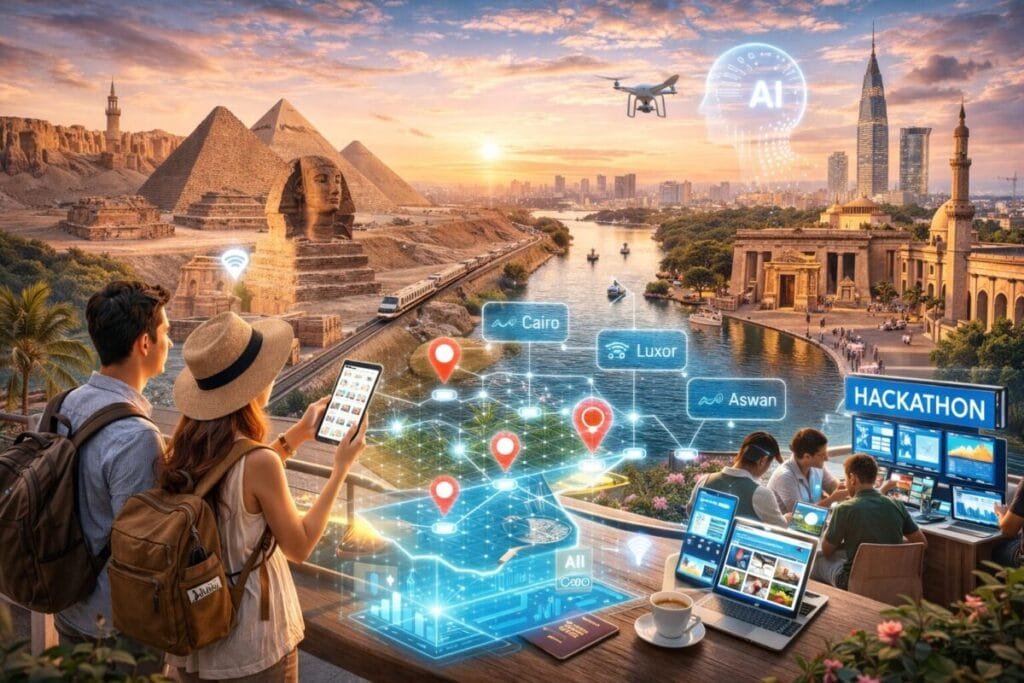
Egypt continues to transform its tourism sector through digital innovation and strategic technology investment. Under Egypt Vision 2030, authorities now integrate artificial intelligence, smart mobility systems, and youth-driven innovation into travel experiences. This transformation reflects a broader shift where tourism evolves into a data-driven ecosystem rather than a traditional heritage industry.
Cities such as Cairo, Luxor, and Aswan lead this digital reinvention. Meanwhile, emerging destinations like the New Valley Governorate demonstrate how technology can unlock new tourism potential. Government-backed hackathons now serve as catalysts for innovation, encouraging developers to create real-world solutions for travel challenges.
Tourism remains a major contributor to Egypt’s economy. As visitor numbers increase, authorities focus on improving efficiency while preserving cultural heritage.
Hackathons Become Engines of Tourism Innovation
Hackathons play a central role in Egypt’s digital tourism strategy. These intensive innovation events bring together students, startups, and developers to design practical technology solutions.
Participants focus on addressing issues such as mobility bottlenecks, visitor crowding, and heritage interpretation. Instead of theoretical concepts, organizers encourage deployable applications that tourism authorities can implement quickly.
In regions like the New Valley, innovation programs support ecological tourism and desert exploration through digital platforms. Developers create navigation tools for remote attractions, real-time dashboards for authorities, and booking systems that connect small operators with national networks.
This approach allows Egypt to modernize tourism infrastructure without altering historic sites. Digital tools reduce physical strain on monuments while improving visitor access and information.
Digital Egypt Strategy Integrates Tourism into National Development
The Ministry of Communications and Information Technology positions tourism at the center of its Digital Egypt initiative. This national roadmap prioritizes cloud technology, digital skills training, and entrepreneurship.
Tourism benefits directly from these investments. Egypt’s diverse geography requires flexible solutions, as each region faces unique challenges. Cairo manages heavy urban visitor flows, while Luxor and Aswan focus on heritage preservation and site accessibility.
Digital solutions provide scalable answers. Authorities now explore AI-driven crowd forecasting to manage peak seasons. Augmented reality enhances museum exhibitions, allowing visitors to experience history interactively. Multilingual digital guides also support independent travelers who seek flexible itineraries.
These tools enable rapid testing and continuous improvement. Unlike physical infrastructure, software solutions evolve quickly based on real-time feedback.
Artificial Intelligence Enhances Visitor Experiences
Artificial intelligence now reshapes how travelers explore Egypt’s iconic destinations. Developers apply machine learning to predict visitor behavior and optimize operations.
AI-powered systems can analyze visitor flow at major attractions, helping authorities reduce congestion. Personalized itinerary platforms recommend routes based on travel duration, interests, and seasonal conditions.
Smart pricing models adjust transportation and entry fees dynamically, improving accessibility while maintaining operational efficiency. Digital preservation technologies also help protect fragile artifacts through advanced monitoring systems.
Institutions such as the Grand Egyptian Museum already integrate digital components into exhibitions. Future developments may combine augmented reality with immersive storytelling, allowing travelers to visualize ancient environments during visits.
Smart Mobility Improves Travel Between Destinations
Travel satisfaction often depends on transportation rather than attractions themselves. Egypt recognizes that efficient mobility plays a critical role in shaping visitor perceptions.
Hackathon-driven solutions focus on integrating transportation systems into unified digital platforms. Developers work on interfaces that connect rail services, domestic flights, and local transport options.
These tools simplify route planning and provide transparent pricing information. Travelers benefit from reduced waiting times and improved safety updates.
Smart mobility also encourages exploration beyond traditional hotspots. Improved digital coordination supports lesser-known destinations such as Western Desert oases, distributing tourism more evenly across the country.
Direct Benefits for Global Travelers
Digital transformation delivers tangible advantages for international visitors. Future travel applications may allow tourists to organize their entire itinerary before arriving in Egypt.
Pre-booked entry systems reduce queues at major attractions. AI-powered navigation tools guide visitors through large complexes like Karnak Temple, helping them maximize time while avoiding crowded areas.
Sustainability also improves through digital monitoring. Authorities can track visitor density in real time, protecting fragile archaeological sites from overuse.
These enhancements create smoother journeys while preserving the authenticity of Egypt’s cultural heritage.
Building a Domestic Travel Technology Ecosystem
Hackathons generate innovative prototypes, but long-term success depends on scaling solutions into viable businesses. Egypt supports this process through startup incubators and investment programs.
Cairo’s growing entrepreneurship ecosystem provides opportunities for travel technology companies to expand. By nurturing local talent, Egypt reduces reliance on external solutions and builds a sustainable innovation pipeline.
Tourism’s economic importance makes this strategy essential. Digital capacity strengthens resilience against external disruptions while improving operational efficiency.
Technology startups often disrupt traditional industries through targeted solutions. Egypt aims to create a similar environment where small innovations collectively reshape tourism operations.
Vision 2030 Blends Heritage with Digital Advancement
Egypt Vision 2030 promotes sustainable development and technological leadership. Tourism modernization forms a key component of this vision.
Authorities now treat tourism as a dynamic operational system supported by data analytics. Youth innovation programs ensure that emerging talent contributes to cultural preservation.
Software solutions enhance heritage experiences without replacing traditional storytelling. Instead, technology complements ancient monuments by improving accessibility and engagement.
From Cairo’s urban energy to the historic landscapes of Luxor and the remote beauty of the New Valley, digital innovation transforms how visitors interact with Egypt.
The Future of Travel in Egypt
Egypt’s experiment with technology-driven tourism continues to evolve. Not every innovation will achieve widespread adoption, but the direction signals long-term commitment to smart tourism development.
Travelers can expect more personalized, efficient, and sustainable journeys in the coming years. Digital tools will streamline planning, enhance on-site experiences, and support responsible exploration.
As Egypt balances thousands of years of history with modern innovation, the country demonstrates how technology can shape the future of global travel without losing cultural authenticity.
For more travel news like this, keep reading Global Travel Wire