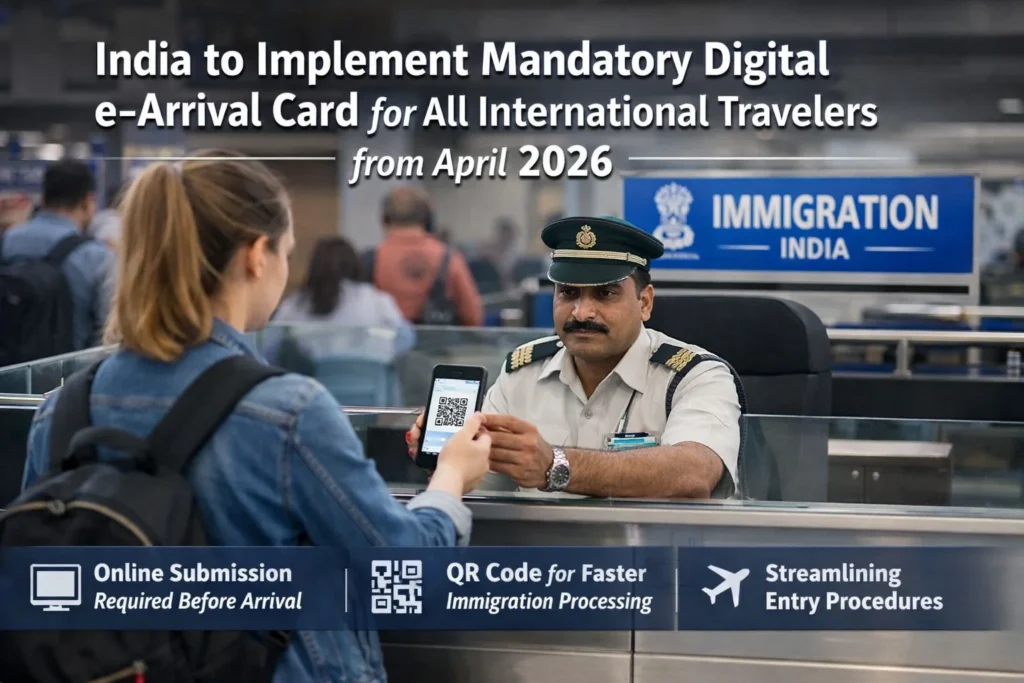
India is set to implement a major change in its travel entry procedures starting April 1, 2026, with the introduction of a mandatory digital e-Arrival Card for all international visitors. The new system will affect travelers from countries including the United Kingdom, Canada, Germany, France, Brazil, Mexico, Hungary, and many others, marking a significant step toward modernizing the country’s immigration framework.
This shift reflects India’s broader efforts to digitize its border control systems, improve efficiency at airports, and reduce reliance on paper-based processes. While the initiative promises smoother arrivals in the long run, it also introduces a new requirement that travelers must carefully follow before their journey.
What the Digital e-Arrival Card Means
The e-Arrival Card is an online form that must be completed by all foreign nationals prior to traveling to India. Unlike previous procedures where passengers filled out arrival forms at the airport, this system requires travelers to submit their details digitally within a specified timeframe before departure.
The form collects essential information such as passport details, travel itinerary, accommodation, and the purpose of the visit. Once submitted, the data is processed in advance, allowing immigration authorities to review traveler information before arrival.
Travelers will receive a digital confirmation, often in the form of a QR code, which must be presented upon landing.
A Move Toward Faster and More Efficient Immigration
The introduction of the digital system is designed to streamline airport operations and reduce waiting times at immigration counters. By pre-processing traveler information, authorities can speed up verification procedures and minimize congestion, particularly during peak travel periods.
This approach aligns with global trends, as many countries adopt digital solutions to enhance border management and improve the overall travel experience.
Officials have emphasized that the system will not only improve efficiency but also strengthen security by enabling better screening of incoming passengers.
New Requirement Brings Additional Steps for Travelers
While the benefits are clear, the new rule introduces an additional step that travelers must complete before their trip. The requirement to submit the form within a limited timeframe means that visitors must plan ahead and ensure all details are accurately provided.
Failure to complete the e-Arrival Card in advance may result in delays at immigration or the need to complete the process upon arrival, potentially disrupting travel plans.
For frequent travelers, especially those used to simpler procedures, this change may initially feel like an added inconvenience.
Impact on Travelers from Key Countries
The new regulation will have a noticeable impact on travelers from several major tourism markets. Visitors from the United Kingdom, for example, form a significant portion of India’s international arrivals, traveling for business, leisure, and family visits.
Similarly, travelers from Canada and the United States often have strong cultural and professional ties with India, making the new requirement particularly relevant for these groups.
European countries such as Germany and France, along with emerging markets like Brazil and Mexico, will also see their travelers adjusting to the digital system. In each case, the requirement emphasizes the importance of preparation before departure.
Transition from Paper to Digital Systems
India’s move away from paper-based forms is part of a global shift toward digitalization in travel. Paper forms have long been associated with delays, errors, and inefficiencies, especially in high-traffic airports.
The digital e-Arrival Card aims to eliminate these issues by providing a more organized and accurate system. Travelers can complete the form at their convenience, reducing the need for manual processing upon arrival.
This transition also supports environmental goals by reducing paper usage and promoting sustainable practices in travel operations.
Preparing for the New Travel Requirement
To ensure a smooth journey, travelers are advised to complete the e-Arrival Card well in advance of their departure. Providing accurate and complete information is essential to avoid complications during the entry process.
It is also important to keep a copy of the confirmation received after submission, as this will be required for verification at immigration checkpoints.
Travelers should also stay informed about any updates or changes to the system, as authorities may refine the process over time.
Benefits for Tourism and Infrastructure
The new system is expected to benefit India’s tourism sector by improving the overall arrival experience. Faster processing times can enhance visitor satisfaction and encourage repeat travel.
For airport authorities, the digital system offers better control over passenger flow and more efficient use of resources. This is particularly important as India continues to see growth in international travel.
The integration of digital tools into immigration processes also supports the country’s broader vision of becoming a leading global travel destination.
Challenges During the Transition Phase
As with any major change, the introduction of the e-Arrival Card may come with initial challenges. Travelers unfamiliar with the system may face difficulties in understanding the requirements or completing the form correctly.
Airlines and travel agencies are expected to play a key role in educating passengers and ensuring compliance with the new rule.
Authorities may also need to provide additional support at airports during the early stages of implementation to assist travelers who encounter issues.
A Step Toward Modern Travel Infrastructure
India’s decision to implement the digital e-Arrival Card represents a significant خطوة toward modernizing its travel infrastructure. By embracing technology, the country is aligning itself with global standards and improving its ability to handle increasing passenger volumes.
The move highlights the growing importance of digital solutions in shaping the future of travel, where efficiency, security, and convenience are key priorities.
What Travelers Should Remember
As the new rule comes into effect, travelers must ensure they complete the e-Arrival Card within the required timeframe and carry their confirmation for verification. Preparation and awareness will be essential to avoid disruptions.
While the system introduces a new step in travel planning, it also offers the promise of a smoother and more efficient arrival experience.
With this initiative, India is taking a decisive step toward creating a modern, digital-first travel environment that benefits both visitors and authorities alike.