As Christmas and New Year travel begins, cybersecurity experts have issued a new warning for business travelers. Cybercriminals increase attacks during the holiday rush. Professionals traveling with sensitive data face the highest risk.
End-of-year travel creates distractions. Tight schedules and packed airports reduce awareness. Cyber attackers exploit these moments aggressively.
Experts urge travelers to stay alert and prepared. Cybersecurity now ranks as a core travel priority.
Cyberattacks Rise Sharply During the Holidays
Cybersecurity specialists report a 30 percent rise in ransomware attacks during the holiday season. Criminal groups target professionals more than casual travelers. Business devices hold valuable information.
Laptops, phones, and tablets often store company data. Attackers see these devices as gateways into corporate networks. One breach can trigger major financial and reputational damage.
The holiday period offers criminals ideal conditions. Travelers rush, multitask, and relax security habits.
Why Business Travelers Face Greater Risk
Business travelers carry high-value digital assets. These include contracts, financial records, client data, and internal communications. Many also hold elevated system access.
Cybercriminals understand this advantage. They focus efforts on fewer but more valuable targets. A single compromised device can expose an entire organization.
Travel environments increase vulnerability. Professionals often work in public spaces without safeguards. This behavior attracts attackers.
Airports and Hotels Create Hidden Cyber Risks
High-traffic travel hubs provide ideal conditions for cybercrime. Airports, hotels, and cafes host thousands of connected devices. Criminals blend in easily.
Public networks lack strong protection. Attackers monitor traffic or create traps. Travelers often connect without verification.
Business travelers check emails, join meetings, and access files in these spaces. Each action increases exposure.
Public Wi-Fi Remains a Major Threat
Public Wi-Fi networks remain one of the biggest risks. Many networks lack encryption. Others operate as fake hotspots.
Attackers create rogue networks with familiar names. These include airport or hotel references. Once connected, attackers capture data silently.
Emails, passwords, and documents become exposed. Travelers often remain unaware until damage occurs.
Rogue Wi-Fi Networks Trick Even Experienced Travelers
Fake Wi-Fi networks pose a serious danger. Criminals design them to appear legitimate. Names closely resemble official networks.
Once connected, attackers intercept all transmitted data. This includes login credentials and company files. Travelers unknowingly hand over access.
Experts advise avoiding unknown networks entirely. Verification remains essential before any connection.
Shoulder Surfing Risks Increase During Busy Travel
Crowded spaces also enable physical data theft. Shoulder surfing remains common in airports and lounges. Criminals observe screens and keyboards discreetly.
Passwords, codes, and emails become visible. Business travelers often underestimate this risk.
Privacy screens offer strong protection. Awareness of surroundings also reduces exposure significantly.
Phishing Attacks Exploit Holiday Stress
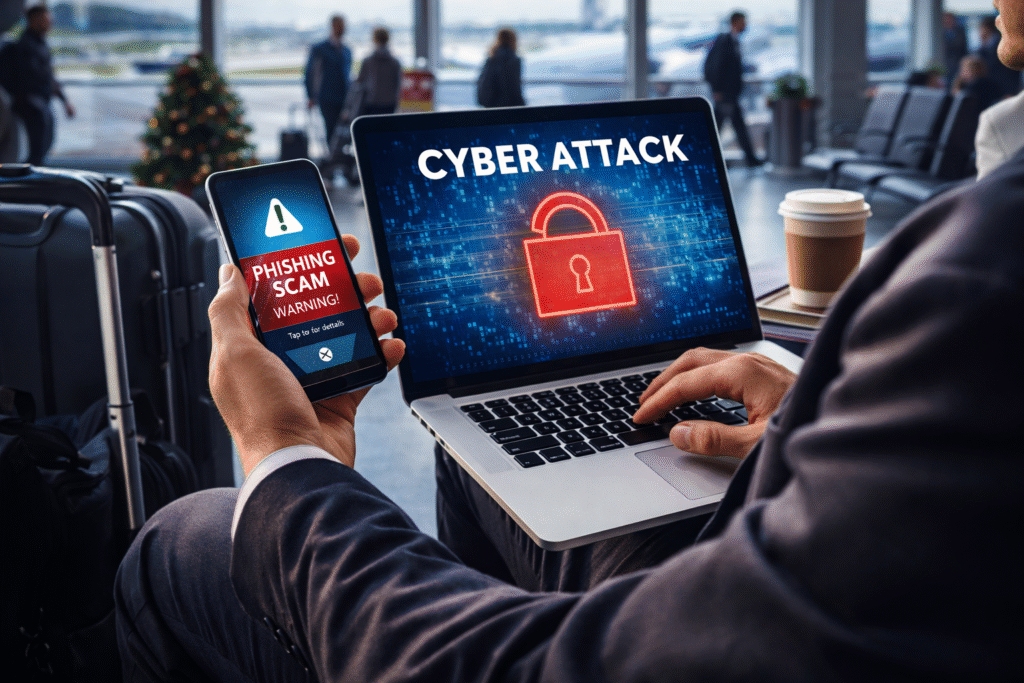
Phishing attacks surge during holiday travel. Criminals exploit anxiety around delays and cancellations. Messages often appear urgent.
Fake emails mimic airlines, hotels, or booking services. They request immediate action. Links lead to malicious sites.
Busy travelers click without verification. This mistake installs malware or steals credentials instantly.
Experts advise direct verification through official platforms. Urgency often signals deception.
Device Theft Adds Another Layer of Risk
Physical device theft also rises during holiday travel. Airports and hotels attract opportunistic thieves. Crowded areas increase distractions.
Laptops and phones hold valuable data. A stolen device creates immediate risk.
Travelers should maintain constant device awareness. Encryption and strong passwords provide essential backup protection.
Preparation Remains the Strongest Defense
Cybersecurity experts stress preparation above all. Travelers should adopt strict digital habits before departure.
Simple steps reduce risk significantly. Consistency matters more than complexity.
A cybersecurity checklist should guide every trip.
Essential Cybersecurity Practices for Business Travelers
Business travelers should follow these proven measures:
Use a VPN on public networks
Verify Wi-Fi networks before connecting
Avoid public USB charging ports
Enable multi-factor authentication everywhere
Disable auto-connect features
Turn off Bluetooth when unused
Ignore urgent travel-related links
Access accounts through official websites only
These steps limit exposure and prevent common attacks.
Cybersecurity Becomes a Travel Essential
Travelers now treat cybersecurity like passports and tickets. Digital safety defines modern mobility.
Companies also share responsibility. Employers should train traveling staff regularly. Clear guidelines reduce costly incidents.
Cyber awareness protects both individuals and organizations.
Holiday Travel Requires Extra Vigilance
Holiday travel combines opportunity and risk. Festive distractions lower defenses. Criminals exploit that reality.
Business travelers should slow down digital decisions. Verification saves time and trouble later.
Security awareness must travel with you.
Safe Travel Depends on Smart Digital Choices
A single mistake can trigger widespread damage. Cyber incidents rarely stay isolated. Entire networks can suffer.
Strong habits reduce this risk. Awareness builds resilience.
Business travelers who prepare thoroughly travel with confidence.
Conclusion: Protect Your Data While Traveling This Holiday Season
Holiday travel brings celebration and connection. It also brings elevated cyber risk for professionals.
Cyberattacks rise sharply during Christmas and New Year travel. Business travelers face targeted threats across airports, hotels, and public networks.
Preparation remains the strongest protection. Simple cybersecurity practices prevent serious consequences.
By staying alert and disciplined, travelers protect their data and their organizations. Safe digital habits ensure holiday travel stays productive, secure, and stress free.
For more travel news like this, keep reading Global Travel Wire