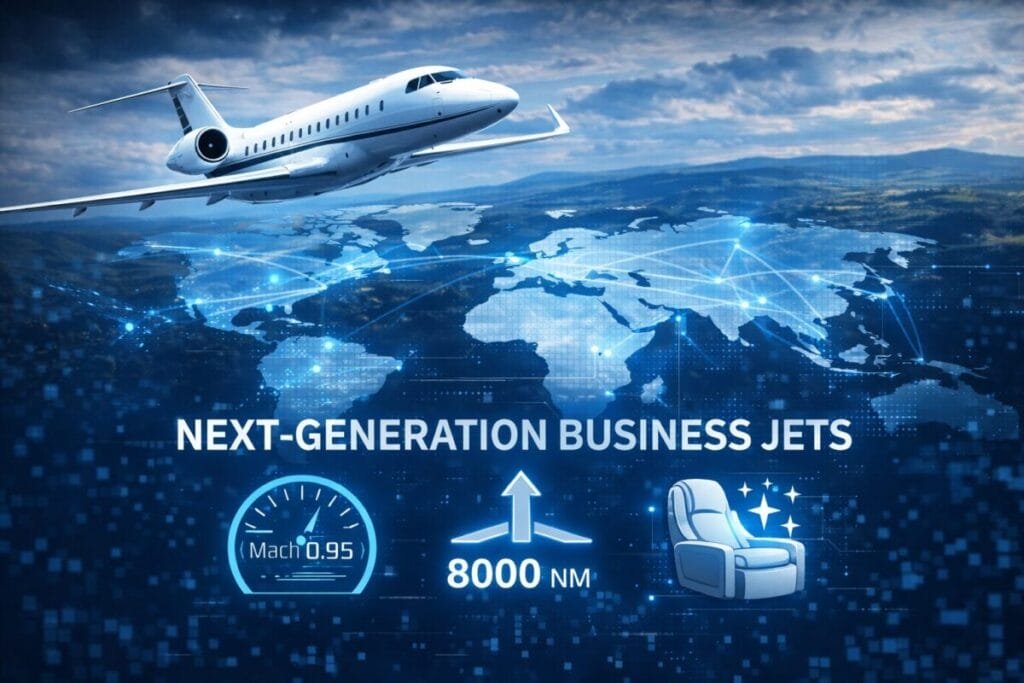
Business tourism is entering a transformative phase as next-generation private and executive jets begin redefining how corporate travelers move between international markets. For decades, executives relied primarily on commercial airline networks that often required connections, layovers, and rigid scheduling constraints. Today, advances in aircraft technology are changing that reality, enabling faster travel, longer nonstop routes, and more flexible itineraries tailored to business needs.
The recent certification of advanced ultra-long-range jets such as the Bombardier Global 8000 highlights a broader shift in aviation innovation. These aircraft are not simply upgrades in speed or comfort; they represent a fundamental change in how business mobility will operate in the future. By combining high performance with advanced cabin design, next-generation jets are expected to transform corporate travel patterns and influence global tourism economies.
Certification Opens Doors for Global Operations
Aircraft certification by major aviation regulators is a critical step that determines where and how a new aircraft can operate commercially. Approval across major regions enables operators to deploy aircraft internationally, making them viable for executive charters, corporate fleets, and luxury travel services.
With regulatory pathways opening across multiple markets, new aircraft models can enter global service more quickly. This increases accessibility for multinational corporations and high-net-worth travelers who depend on efficient international mobility. Certification also simplifies fleet planning for operators who manage flights across multiple continents, ensuring consistent standards and streamlined compliance.
For business tourism, this translates into faster adoption of new travel technologies and expanded opportunities for direct intercontinental journeys.
Speed and Range Redefine Corporate Travel Efficiency
One of the most significant advantages of next-generation business jets is their ability to combine extreme speed with ultra-long range. Modern aircraft capable of approaching near-supersonic cruising speeds dramatically reduce travel time between key financial and business hubs.
In practical terms, faster aircraft allow executives to attend meetings across continents without sacrificing productivity or requiring extended downtime. Reduced travel time means shorter business trips, more efficient scheduling, and greater flexibility in responding to global opportunities.
Equally important is extended range capability. Jets capable of flying thousands of nautical miles nonstop enable direct routes between cities that previously required multiple flight segments. This eliminates layovers, reduces logistical challenges, and enhances privacy for corporate travelers who prefer discreet, efficient journeys.
The combination of speed and range positions business aviation as a strategic asset rather than simply a luxury option.
Nonstop Connectivity Changes Travel Behavior
Traditional airline networks are optimized for volume and hub-and-spoke operations, often requiring passengers to transit through major airports. Next-generation business jets challenge this model by enabling direct connections between smaller or secondary cities.
For corporate travelers, this means avoiding congested hubs and arriving closer to their final destination. Direct flights reduce fatigue, simplify travel planning, and allow executives to maintain momentum during multi-city business tours.
As these capabilities expand, business tourism may evolve into a more continuous and dynamic process. Instead of limited annual conferences or infrequent international visits, executives may travel more frequently, visiting multiple markets within shorter timeframes.
This shift has the potential to reshape travel demand, encouraging companies to adopt more agile global strategies supported by advanced aviation technology.
Wellness and Productivity Become Central to Luxury Aviation
The concept of luxury in business aviation is also evolving. Modern corporate travelers increasingly prioritize health, comfort, and productivity over traditional symbols of opulence. Next-generation jets reflect this trend through cabin innovations designed to support physical wellbeing and mental clarity.
Features such as lower cabin altitude, improved air quality systems, and advanced noise reduction technologies help reduce fatigue during long flights. These elements allow travelers to arrive feeling refreshed and ready to engage in business activities immediately upon landing.
Cabin layouts are also becoming more versatile, incorporating meeting areas, private workspaces, and rest zones that allow passengers to transition seamlessly between work and relaxation. In many cases, the aircraft functions as a hybrid environment combining office productivity with the comfort of a luxury retreat.
This wellness-focused approach aligns with broader trends in luxury tourism, where personalized experiences and health optimization play a central role.
Expanding Opportunities for Emerging Business Destinations
Another significant impact of next-generation business jets is their potential to reshape the geography of business tourism. Historically, major hubs dominated corporate travel because they were easily accessible via commercial airline networks.
With aircraft capable of flying longer distances and accessing smaller airports, secondary cities and emerging business centers may gain increased visibility. Executives can travel directly to innovation hubs, industrial regions, or regional capitals without routing through traditional gateway cities.
This expanded accessibility could stimulate economic growth in previously overlooked destinations. Increased executive travel may encourage investment in luxury hotels, conference facilities, fine dining, and premium transportation services, creating a ripple effect across local tourism economies.
Strategic Implications for Corporate Travel Planning
As advanced business jets become more widely available, companies are rethinking their approach to global mobility. Faster travel enables leadership teams to maintain closer oversight of international operations, respond quickly to market changes, and strengthen relationships with partners and clients worldwide.
The ability to move efficiently between continents supports faster decision-making and reduces delays that often occur when relying solely on commercial airline schedules. For many organizations, business aviation is transitioning from a convenience to a strategic tool that enhances competitiveness.
At the same time, charter operators and luxury travel providers are likely to expand offerings that cater to high-end business tourism, blending executive efficiency with personalized service.
The Future of Business Tourism: Speed, Flexibility, and Innovation
The emergence of next-generation business jets signals a major turning point for global business travel. Faster aircraft, longer nonstop routes, and wellness-focused cabins are reshaping expectations for executive mobility and redefining the role of aviation in international commerce.
As technology continues to evolve, business tourism will likely become more fluid and interconnected. Travelers will benefit from increased flexibility, reduced travel time, and more personalized experiences tailored to professional needs.
Ultimately, the future of business tourism will be shaped by aircraft that make distance less relevant and efficiency more achievable. By combining cutting-edge engineering with a focus on comfort and productivity, next-generation jets are poised to transform how executives travel, collaborate, and engage with opportunities across the globe.
For more travel news like this, keep reading Global Travel Wire