
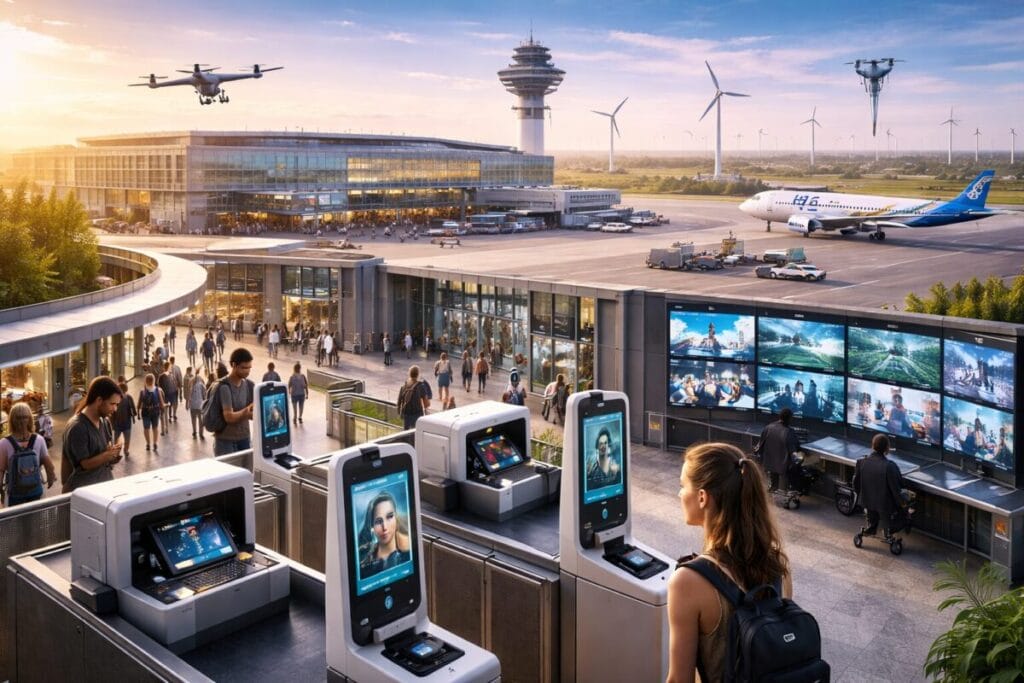
The landscape of European air travel is set for a dramatic transformation beginning in 2026. With sweeping changes introduced by governments and aviation authorities across the continent, airports from Heathrow to Charles de Gaulle are undergoing a digital and green evolution. Advanced biometric systems, artificial intelligence, sustainable infrastructure, and contactless services will redefine how passengers move through airports.
This aviation revolution aims to enhance passenger experience, reduce environmental impact, and streamline operations—ushering in a future where air travel is faster, safer, and more efficient than ever before.
Biometric Borders and Digital Identity Systems
One of the most significant changes passengers will encounter is the implementation of the Entry/Exit System (EES), which replaces passport stamping for non-EU travelers. Through facial and fingerprint biometrics, EES will automate border control processes at all external EU borders by April 2026. This system enables real-time tracking of entries and exits, ensuring enhanced security and quicker processing.
Complementing this will be the European Travel Information and Authorisation System (ETIAS). Set to launch in late 2026, ETIAS will pre-screen visa-exempt travelers before they arrive in Europe, adding a critical layer of security.
To further improve convenience, the European Digital Identity Wallet (EDIW) will become standard. This smartphone-based digital wallet will store passports, boarding passes, and identity credentials. Passengers will simply scan their phones at biometric gates—replacing physical documents for a fully contactless journey. With legal mandates in place, all EU states will offer this solution, making widespread adoption inevitable.
Airport Security Gets Smarter
Security screening at European airports is also entering the future. By 2026, CT X-ray scanners—already being adopted across the UK—will become standard in many EU hubs. These scanners provide 3D images of luggage, eliminating the need to remove liquids or electronics during checks. The result: quicker, less intrusive, and more accurate screenings.
In addition, many airports are installing automated tray return systems and deploying remote screening technologies, where officers analyze scans from secure, off-site locations. Combined with AI-driven threat detection, this layered approach allows passengers to move swiftly through checkpoints while improving security accuracy.
Greener Airports with Zero-Emission Goals
Europe is also reimagining its airports as sustainable travel hubs. Under the Alliance for Zero-Emission Aviation (AZEA), plans are underway to integrate hydrogen and electric infrastructure into airport operations. These facilities will support the future deployment of hydrogen-powered and hybrid aircraft, particularly at regional airports.
Airports will include hydrogen storage systems, electric charging stations, and fueling points to accommodate the next generation of low-emission aircraft. This transformation aligns with the EU’s broader climate goals, placing Europe at the forefront of green aviation.
Additionally, the ReFuelEU Aviation regulation will mandate the blending of Sustainable Aviation Fuel (SAF) into all jet fuel supplies starting in 2025. By 2050, SAF is expected to make up 70% of all aviation fuel. These changes mean that even today’s flights will be partially powered by renewable energy, contributing to reduced carbon footprints without any action needed by travelers.
Digital Air Traffic Services and Remote Towers
The way air traffic is managed is also undergoing a revolution. Many control towers are being replaced with remote digital towers, where air traffic controllers manage operations using high-definition cameras and sensors from off-site locations. This technology enhances efficiency and safety while reducing the need for physical infrastructure at every airport.
The Single European Sky initiative is also pushing the development of virtual air traffic control centres. These centres, powered by secure cloud systems, allow seamless coordination across borders. For passengers, this digital shift means fewer delays, smoother routing, and better on-time performance.
U-Space and the Rise of Drone Integration
By 2026, Europe will also lead in integrating drones into controlled airspace, especially around airports. The U-space framework, guided by the SESAR Joint Undertaking, establishes regulations and operational standards to ensure drones can coexist safely with traditional aircraft.
Designated U-space areas will manage drone flights digitally, using geo-fencing and AI-based monitoring systems. While passengers may spot drones performing deliveries or surveillance duties, these operations will be tightly coordinated to prevent interference with commercial air traffic.
This integration also lays the foundation for urban air mobility, such as air taxis and emergency response drones, turning airports into dynamic hubs for multi-modal travel.
Category-Wise Technology Highlights
| Category | Technology | Purpose |
|---|---|---|
| Border Control | EES and ETIAS | Automates entry for non-EU travelers, enhances border security |
| Digital Identity | European Digital Identity Wallet | Enables fully contactless check-in and border crossing |
| Security Screening | CT X-ray Scanners | Removes need for separating liquids or laptops in security lanes |
| Green Infrastructure | Hydrogen & Electric Infrastructure | Supports zero-emission aircraft refueling and storage |
| Sustainable Aviation | SAF Blending (ReFuelEU Regulation) | Reduces aviation emissions using renewable fuels |
| Air Traffic Services | Remote Towers and Virtual Centres | Digitizes and decentralizes traffic control for efficiency and safety |
| Drone Airspace | U-space Implementation | Manages drones near airports for safe integration and urban mobility |
Conclusion: The Airport of the Future
By 2026, Europe’s airports will be virtually unrecognizable to today’s travelers. Facial recognition will replace passport stamping. Security lanes will become faster and less stressful. Planes will run partly on renewable fuel, and drones will share the sky with commercial jets—without disrupting safety.
These changes are not merely experimental; they are backed by EU legislation, national mandates, and coordinated pan-European initiatives. The unified aim is to create a smarter, greener, and more efficient aviation ecosystem.
For travelers, the experience will be smoother, faster, and more sustainable—marking a bold leap into the future of global travel.
For more travel news like this, keep reading Global Travel Wire