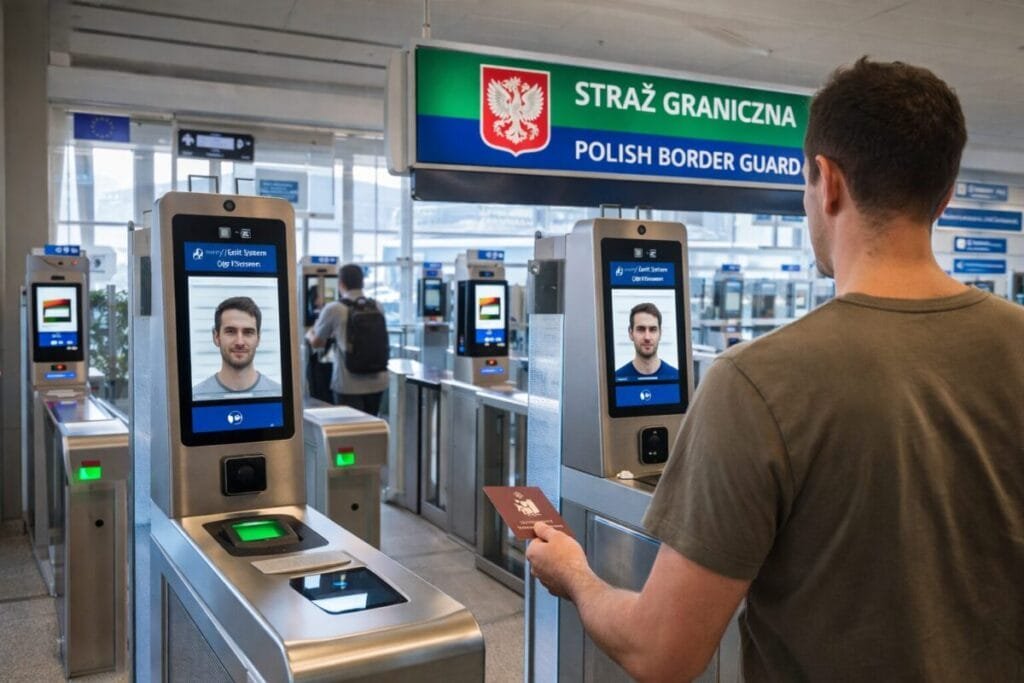
Poland has entered a new era of border management with the launch of a fully digitalized entry system aligned with the European Union’s Entry/Exit System (EES). The implementation marks a major milestone in Europe’s broader effort to modernize border controls using biometric technology, automated processing, and centralized data management.
Beginning in February 2026, Poland transitioned away from traditional passport stamping for non-EU travelers, replacing manual checks with advanced biometric verification at land crossings, airports, and rail checkpoints. The new system is designed to enhance efficiency, improve security, and streamline travel across the Schengen Area while preparing the region for upcoming digital travel frameworks.
A Shift Toward Digital Border Control
The introduction of the EES represents one of the most significant changes to European border procedures in decades. Instead of relying on physical stamps to record entries and exits, the system now creates a digital record for each eligible traveler, allowing authorities to track travel history and legal stay durations automatically.
Self-service kiosks installed at major entry points enable travelers to register facial images and fingerprints during their first entry into Poland under the new system. Once enrolled, returning visitors can move through automated e-gates using facial recognition technology, significantly reducing waiting times.
This transformation aligns with global trends toward smart borders, where digital technology replaces manual processes to create faster and more reliable traveler experiences.
Automated Tracking of Schengen Stay Limits
One of the most notable features of the system is its ability to automatically calculate the permitted duration of stay within the Schengen Area. For non-EU visitors subject to the 90-days-in-180-days rule, the centralized database monitors entries and exits in real time.
Automated tracking eliminates potential human error in calculating complex travel histories, ensuring consistent enforcement of visa rules. If a traveler exceeds the allowed stay or attempts to re-enter too soon, border officers receive instant alerts, enabling immediate decision-making.
This feature is expected to improve compliance while reducing disputes or confusion related to overstay calculations.
Enhancing Security While Simplifying Travel
Authorities emphasize that biometric technology enhances both efficiency and security. Facial recognition and fingerprint verification create a reliable identity confirmation process, helping reduce fraud and identity misuse.
Digital data exchange between Schengen member states ensures that border guards have access to accurate information during inspections. Rather than focusing on manual document checks, officers can concentrate on risk assessment and security analysis.
For travelers, the shift means fewer repetitive procedures and faster border crossings, particularly for frequent visitors who have already completed biometric registration.
Impact on Airports, Land Crossings, and Carriers
The new system affects not only travelers but also airlines, rail operators, and bus companies transporting passengers into Poland. Carriers are required to ensure that passengers meet entry requirements before boarding, encouraging closer coordination between transport providers and border authorities.
Many airlines and transport companies have updated their check-in systems to integrate with European databases, allowing staff to verify traveler eligibility before departure. These adjustments aim to minimize disruptions at border points and reduce the risk of denied entry upon arrival.
Airport staff across Poland have received specialized training to assist passengers unfamiliar with the new technology, particularly during the initial rollout phase.
Adapting to Digital Travel for Businesses and Frequent Travelers
Multinational corporations and frequent business travelers are also adapting to the new border procedures. Companies operating in Poland are increasingly monitoring travel schedules and compliance with Schengen stay limits to avoid disruptions to work assignments.
Some organizations have begun encouraging employees to complete biometric registration early in their travel journey to reduce waiting times. Digital border systems require careful planning but offer long-term benefits through faster processing and greater predictability.
As digital travel records become standard, travelers must remain aware of their travel history and legal stay allowances, as overstays are recorded automatically and cannot be altered.
Preparing for Future Systems Like ETIAS
The EES rollout is part of a broader European strategy to introduce more advanced digital travel tools, including the European Travel Information and Authorisation System (ETIAS), expected to launch in the coming years. ETIAS will require visa-exempt travelers to obtain pre-travel authorization before entering Schengen countries.
Poland’s new biometric infrastructure is already equipped to integrate with future systems, allowing seamless expansion of digital border procedures. Authorities anticipate that combining EES and ETIAS will create a comprehensive travel ecosystem where pre-clearance, biometric verification, and automated tracking work together.
Benefits for Tourism and Regional Connectivity
For tourism, the modernization of border controls could enhance Poland’s appeal as a gateway to Central and Eastern Europe. Faster entry procedures and reduced congestion may encourage more travelers to visit, particularly those arriving from long-haul markets.
Streamlined borders also support regional connectivity, enabling travelers to move more efficiently between Schengen destinations. Improved processing times may benefit both leisure and business tourism by reducing uncertainty associated with border crossings.
As travel demand continues to grow, efficient infrastructure becomes increasingly important for maintaining competitiveness in global tourism.
Conclusion: A New Chapter in European Travel
Poland’s adoption of the EU Entry/Exit System signals a major transformation in how borders operate across Europe. By embracing biometric technology and digital verification, the country is helping shape the future of secure and efficient travel within the Schengen Area.
While travelers may initially need to adjust to new procedures, the long-term benefits include faster processing, improved security, and a more seamless travel experience. As Europe moves toward a fully digital border framework, Poland’s implementation demonstrates how technology can redefine international travel while maintaining high standards of safety and efficiency.
For more travel news like this, keep reading Global Travel Wire