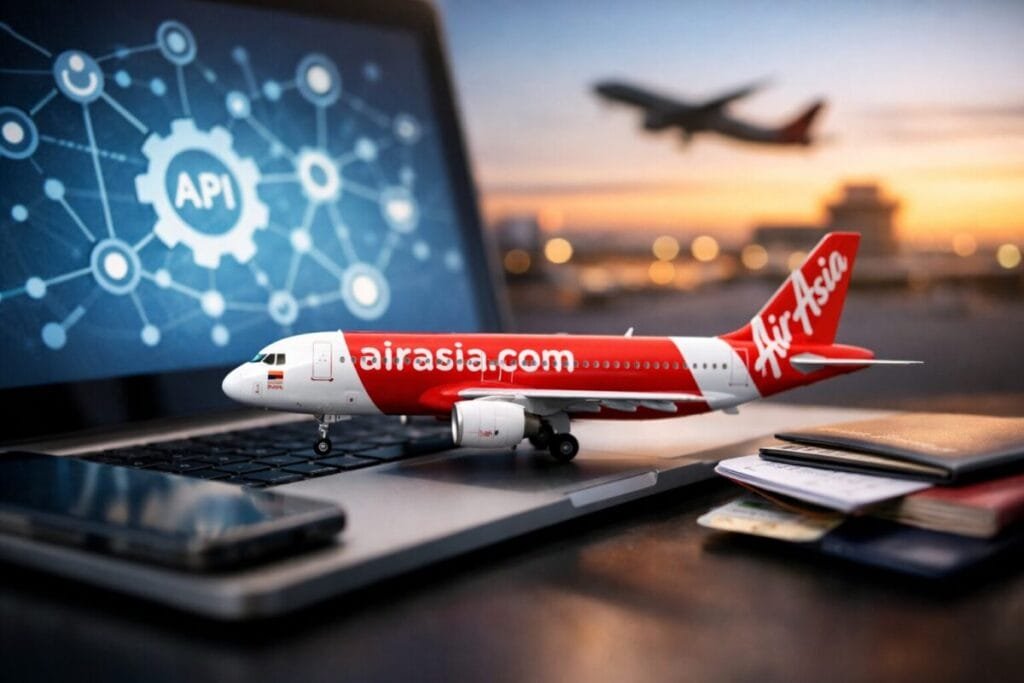
Singapore’s aviation technology landscape is taking a significant step forward as Singapore-based travel technology platform Atlas unveils an upgraded direct API integration with AirAsia. The strengthened connection is set to transform how travel agencies, online booking platforms and distribution partners access one of Asia’s largest low-cost airline networks.
The enhanced system is designed to provide scalable, high-capacity distribution while ensuring consistent real-time access to fares and seat availability. As Southeast Asia continues to rank among the most active aviation regions globally, the importance of dependable airline connectivity has never been greater.
Meeting the Demands of Southeast Asia’s Dynamic Aviation Market
The Southeast Asia aviation market is defined by dense short-haul traffic, competitive pricing models and strong cross-border leisure and business travel demand. Major city pairs such as Kuala Lumpur–Bangkok, Singapore–Jakarta and Manila–Kuala Lumpur remain among the busiest corridors in the region. At the same time, secondary cities are witnessing steady passenger growth as tourism infrastructure improves and middle-class travel demand expands.
In such a fast-moving environment, even minor system delays or mismatched inventory can disrupt booking flows and erode customer confidence. Atlas’ enhanced direct API framework addresses these operational risks by eliminating intermediaries that often create latency or data inconsistencies.
Through the upgraded integration, travel sellers gain reliable, real-time access to AirAsia’s full economy class inventory across its affiliated carriers. This includes accurate fare displays, live seat availability and round-trip booking functionality, ensuring that travel businesses can confidently offer competitive options without system instability.
Supporting AirAsia’s Expanding International Footprint
AirAsia’s network spans more than 150 destinations across over 20 countries, linking key hubs and leisure destinations throughout Asia Pacific. Its footprint extends beyond Southeast Asia into Australia, Central Asia, the Middle East and parts of Europe, reflecting the airline group’s broader ambitions in affordable long-haul travel.
As fleet modernisation and route expansion continue, scalable distribution becomes critical. The upgraded API infrastructure is built to accommodate higher booking volumes while maintaining speed and accuracy. This ensures that as new routes are introduced and capacity increases, distribution partners can integrate inventory seamlessly without compromising performance.
For travel businesses targeting ASEAN markets and beyond, this deeper integration provides a dependable gateway to affordable regional and international connectivity.
Enhancing Ancillary Retailing Capabilities
Ancillary services are a cornerstone of the low-cost carrier model. Today’s travellers expect flexibility and transparent pricing, selecting add-ons such as seat selection and checked baggage based on their specific needs.
The enhanced Atlas-AirAsia integration embeds ancillary services directly into the booking flow. Travel sellers can now offer seat assignments and multiple checked baggage weight categories within a single transaction environment. This mirrors the airline’s direct retail model and eliminates the need for redirection to external systems.
By incorporating ancillary products within the API framework, Atlas enables agencies and online platforms to build customised travel packages while maintaining brand consistency and pricing transparency. This not only enhances the passenger booking experience but also supports revenue optimisation strategies for travel sellers.
Operational Efficiency and Faster Confirmations
Beyond inventory access, operational performance is a major advantage of the strengthened API connection. Direct integration reduces system latency and accelerates booking confirmations, which is particularly important in high-demand markets where seat availability can fluctuate within minutes.
Rapid confirmation reduces failed transactions and improves overall customer satisfaction. For agencies managing large booking volumes during peak travel seasons, enhanced system reliability can translate directly into higher conversion rates and improved operational efficiency.
The platform’s infrastructure is designed to handle traffic surges during promotional fare campaigns and holiday travel peaks, ensuring stability even under heavy load conditions.
Multi-Currency Capabilities for Global Retailing
Reflecting AirAsia’s diverse international customer base, the integration also incorporates multi-currency payment capabilities. Transactions can be processed in 24 currencies, supporting cross-border retail operations and simplifying financial workflows for global travel businesses.
This functionality is particularly valuable in a region characterised by varied currencies and strong intra-ASEAN travel demand. By enabling seamless multi-currency processing, Atlas strengthens its appeal to agencies serving travellers from multiple source markets.
Aligning with Aviation’s Digital Transformation
The upgraded integration reflects broader digital transformation trends reshaping the airline industry. Carriers are increasingly prioritising direct connectivity, data-driven retailing strategies and dynamic product offerings. Technology providers capable of delivering resilient, scalable API frameworks play a critical role in supporting this evolution.
As airlines expand hybrid models that combine low-cost efficiency with extended range operations, distribution systems must evolve in parallel. The Atlas-AirAsia partnership demonstrates how advanced direct connectivity can future-proof airline retail strategies while supporting distribution partners at scale.
Strengthening ASEAN’s Air Connectivity Ecosystem
ASEAN’s aviation sector continues to grow, supported by economic integration, rising disposable incomes and government-backed tourism initiatives. Enhanced digital infrastructure is central to sustaining this growth trajectory.
By reinforcing direct API integration with AirAsia, Atlas positions itself as a key technology enabler within the region’s aviation ecosystem. The focus on operational consistency, real-time accuracy and scalable performance provides travel sellers with the tools needed to compete effectively in one of the world’s most dynamic air travel markets.
As Southeast Asia’s skies grow busier and passenger expectations continue to evolve, reliable airline distribution technology will remain essential. The upgraded Atlas-AirAsia integration signals a strategic move toward stronger connectivity, improved booking experiences and expanded access to affordable air travel across Asia and beyond.
For more travel news like this, keep reading Global Travel Wire