
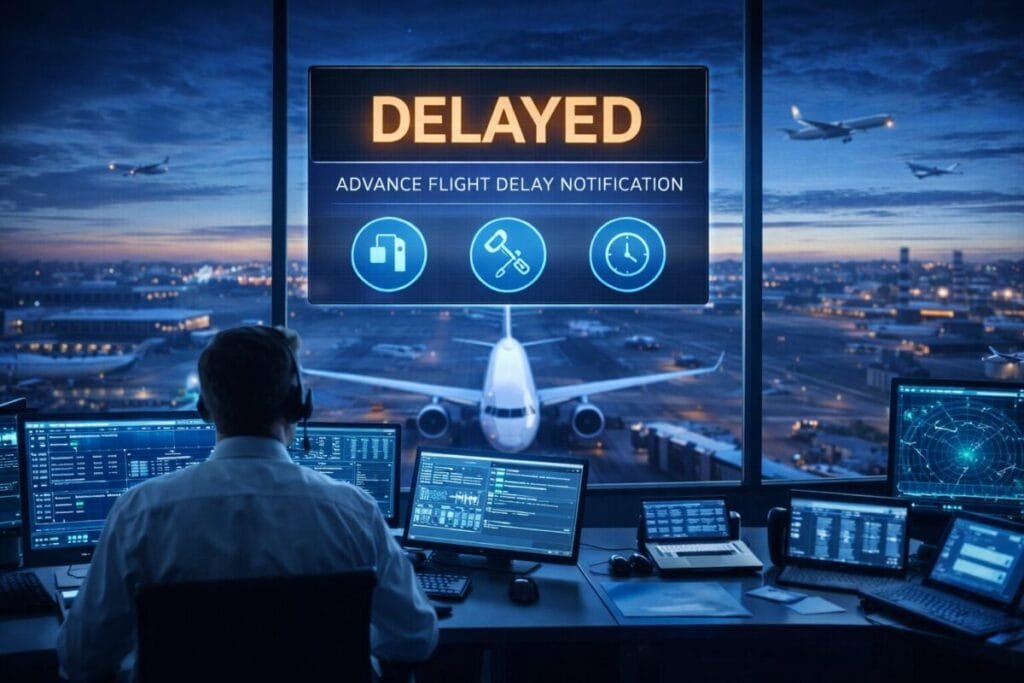
The aviation industry is embracing new digital solutions to tackle one of its most persistent challenges: flight delays. SITA’s newly introduced flight delay notification technology represents a significant step forward in how airlines and airports manage disruptions, optimize operations, and improve the overall travel experience. By providing early visibility into potential delays through automated notifications and real-time data sharing, the system aims to minimize operational bottlenecks while ensuring passengers receive timely updates about their journeys.
As global air traffic continues to increase, delays have become a common occurrence, affecting schedules, resource planning, and passenger satisfaction. Industry experts emphasize that the issue is not only the delay itself but also how quickly and effectively stakeholders can respond. SITA’s innovation focuses on enabling proactive decision-making, giving airport teams and airline staff the time needed to adjust operations before disruptions escalate.
Addressing a Growing Challenge in Aviation
Flight delays can create a ripple effect across the aviation ecosystem. Late arrivals may lead to missed connections, prolonged gate occupancy, crew scheduling challenges, and disruptions to aircraft servicing. These complications often result in additional operational costs and frustration for passengers.
Historically, one of the main challenges has been the lack of early notification. When destination airports receive delay information too late, there is limited time to reorganize resources or prepare alternative arrangements. This can lead to inefficiencies such as idle ground staff, unplanned gate changes, or last-minute passenger management issues.
SITA’s flight delay notification system seeks to close this gap by delivering early alerts based on predictive data analysis. The technology evaluates departure information and expected flight duration to anticipate potential delays and notify relevant stakeholders in advance. By offering earlier insight, airlines and airports can initiate contingency plans more effectively.
Real-Time Data for Smarter Decision-Making
Central to the system is a real-time notification framework designed to streamline communication between airlines, airports, and operational teams. Automated alerts ensure that key stakeholders—including ground handlers, service crews, and airport management—are informed simultaneously.
This synchronized communication reduces reliance on manual updates and phone-based coordination, which can slow down response times during disruptions. Instead, automated notifications allow teams to make informed decisions quickly, improving operational efficiency and reducing stress during high-pressure situations.
For example, if a flight’s departure is expected to be delayed, arrival teams can adjust gate assignments, schedule maintenance tasks differently, and update passenger handling procedures ahead of time. These small but critical adjustments can significantly reduce operational congestion and improve turnaround times.
Enhancing Passenger Experience Through Transparency
Passenger expectations have evolved in recent years, with travelers increasingly demanding real-time updates and transparency throughout their journeys. Delays can be particularly frustrating when information is unclear or arrives too late for travelers to adjust their plans.
By integrating automated passenger notifications into the system, airlines can provide timely updates about delays or schedule changes. This allows travelers to make informed decisions, such as rebooking connecting flights or adjusting airport arrival times, ultimately improving customer satisfaction.
Clear communication also helps reduce congestion at airport counters and call centers, as passengers receive updates directly through digital channels rather than relying solely on staff assistance.
Reducing Operational Costs and Improving Efficiency
Delays often carry significant financial implications for airlines and airports, ranging from increased fuel costs to additional staffing requirements. A large portion of these expenses arises from reactive responses rather than proactive planning.
SITA’s technology emphasizes early intervention, enabling organizations to reallocate resources efficiently before disruptions escalate. Ground teams can prepare for revised arrival times, crew schedules can be adjusted within regulatory limits, and aircraft servicing can be rescheduled to avoid unnecessary downtime.
The automation of notifications also eliminates repetitive manual processes, allowing staff to focus on higher-value tasks rather than constantly monitoring schedules or communicating updates across multiple channels.
Integration with Existing Aviation Systems
The flight delay notification solution is designed to integrate seamlessly with existing airline and airport infrastructure. Delivered through secure and encrypted digital connections, the system ensures that data is shared reliably and safely among authorized partners.
Continuous tracking of flight information allows updates to be sent automatically as conditions evolve. This dynamic approach ensures that stakeholders remain informed throughout the lifecycle of a disruption, rather than receiving only a single notification.
As aviation becomes increasingly data-driven, such integrations highlight the importance of interoperability between technology platforms. Industry leaders believe that collaborative digital ecosystems will play a critical role in improving resilience across global air transport networks.
Preparing for the Future of Air Travel
The introduction of advanced delay notification technology reflects a broader shift toward predictive analytics and automation in aviation. Airlines and airports are investing in digital tools that enhance situational awareness, enabling faster responses to unexpected challenges.
With passenger numbers steadily increasing worldwide, the ability to manage disruptions efficiently will become even more important. Technologies that leverage real-time data and automation are expected to shape the next phase of operational innovation, helping the industry maintain reliability while meeting growing demand.
SITA’s flight delay notification system demonstrates how targeted technological advancements can address long-standing operational issues. By providing early insights into potential disruptions, enhancing communication among stakeholders, and improving transparency for passengers, the solution contributes to a more efficient and traveler-friendly aviation ecosystem.
As air travel continues to evolve, innovations like this will play a crucial role in ensuring smoother journeys, better resource management, and stronger operational performance across the global aviation sector.
For more travel news like this, keep reading Global Travel Wire