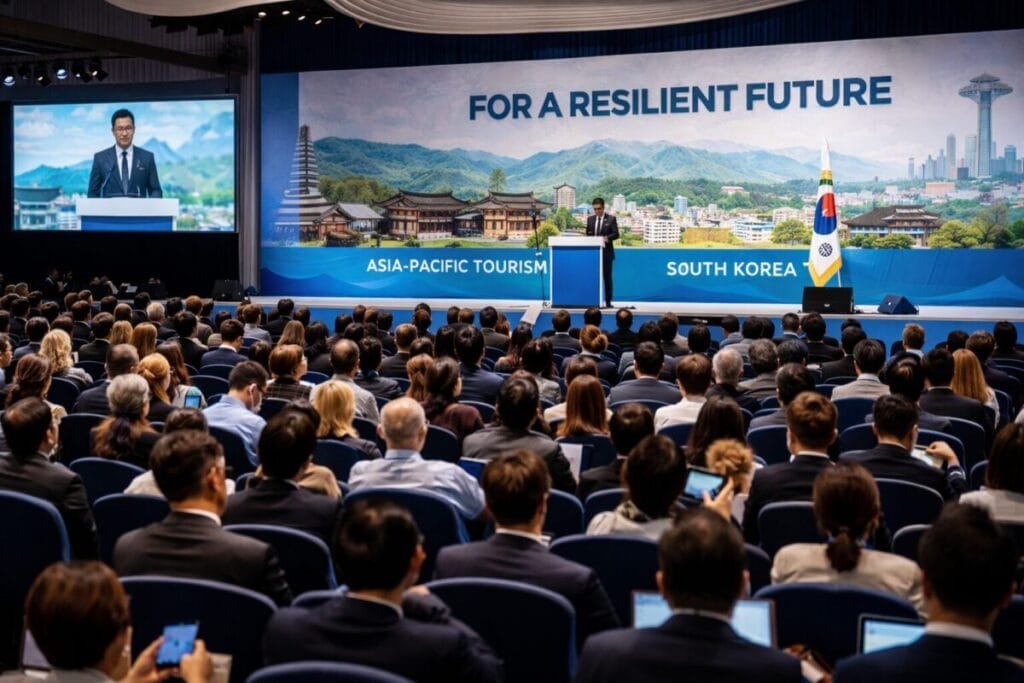
The Pacific Asia Travel Association will host the PATA Annual Summit 2026 in Gyeongju and Pohang, South Korea. The event will take place from May 11 to May 13 and gather global tourism leaders, policymakers, and industry experts. The summit aims to address emerging challenges and create strategies for resilient tourism growth across the Asia-Pacific region.
Tourism stakeholders face increasing pressure from climate change, evolving traveler expectations, geopolitical shifts, and rapid technological transformation. Therefore, the summit will focus on strengthening long-term resilience through innovation and collaboration.
The event also marks the organization’s 75th anniversary, which adds historical significance and future-focused momentum.
A New Vision for Resilient Tourism Development
The summit theme, “Navigating Towards a Resilient Future,” reflects a shift in global tourism priorities. Destinations no longer focus solely on growth numbers. Instead, industry leaders emphasize sustainability, stability, and adaptability.
Discussions will explore governance strategies, responsible destination marketing, and integrated tourism planning. Experts expect these conversations to influence policy development across Asia-Pacific destinations.
Governments increasingly adopt balanced approaches that combine economic growth with environmental protection. Tourism authorities aim to build systems that withstand disruptions while preserving local communities and heritage.
Artificial Intelligence Drives Tourism Innovation
Artificial intelligence will play a central role during the summit’s sessions. Industry leaders continue adopting AI-powered tools to improve marketing, visitor management, and operational efficiency.
AI helps tourism boards analyze travel patterns and predict demand trends. These insights allow destinations to manage crowd levels and distribute visitors more evenly. Technology also enables personalized travel experiences through data-driven recommendations.
Participants will discuss smart tourism ecosystems that integrate real-time analytics, digital platforms, and automated services. These systems aim to enhance visitor satisfaction while reducing pressure on infrastructure and heritage sites.
Digital transformation remains essential for maintaining competitiveness in the global tourism market. Therefore, many destinations seek practical strategies to integrate technology into everyday operations.
ESG Principles Shape Future Tourism Policies
Environmental, social, and governance frameworks will guide many conversations at the summit. Governments and investors increasingly prioritize responsible tourism development that aligns with sustainability goals.
Industry leaders plan to explore sustainable infrastructure models, carbon management strategies, and community-focused tourism policies. These initiatives support long-term growth while minimizing environmental impact.
Destinations across Asia-Pacific face growing expectations from travelers who value ethical travel practices. Sustainable tourism certifications, waste reduction initiatives, and eco-friendly accommodation investments continue gaining importance.
Embedding ESG discussions into a major industry event signals a broader transition toward responsible tourism planning. This approach encourages destinations to measure success beyond visitor numbers.
Heritage Tourism Gains Strategic Importance
Heritage preservation stands as another key focus area. The summit location in Gyeongju highlights the importance of cultural tourism as a strategic asset. The city offers significant historical sites that showcase Korea’s ancient heritage.
Industry leaders recognize that heritage tourism requires careful management to avoid overtourism. Discussions will address visitor flow strategies, conservation funding, and community involvement in cultural tourism development.
Travelers increasingly seek authentic cultural experiences. Therefore, destinations invest in heritage storytelling, immersive experiences, and responsible tourism practices. These efforts protect historical assets while generating economic benefits.
Experts expect the summit to encourage stronger partnerships between heritage organizations and tourism authorities.
Dual-City Hosting Creates a New Event Model
The PATA Annual Summit 2026 introduces a dual-city hosting approach across Gyeongju and Pohang. This format highlights both traditional heritage tourism and modern coastal experiences.
Gyeongju represents cultural history and heritage preservation. Pohang showcases urban innovation and coastal tourism development. Together, the cities present a diversified tourism corridor that encourages longer stays and varied experiences.
This model could influence future event planning strategies worldwide. Multi-destination hosting spreads tourism benefits across regions and reduces congestion in single locations.
Strengthening Collaboration Across Asia-Pacific
The summit program includes conferences, policy forums, industry roundtables, and networking events. Participants will discuss cross-border cooperation in areas such as aviation connectivity, destination marketing, and crisis management.
Youth engagement also plays a significant role through educational sessions and innovation discussions. Industry leaders aim to support the next generation of tourism professionals by encouraging fresh ideas and technological solutions.
Collaboration remains essential for addressing regional challenges. Shared strategies can help destinations respond effectively to global disruptions while building stronger partnerships.
Aviation Connectivity and Regional Growth
Aviation connectivity will feature prominently during the summit. Air routes determine accessibility and influence tourism growth patterns. Experts will explore ways to improve airline partnerships and expand connections to secondary destinations.
Enhanced connectivity could attract international travelers to emerging cities and regional attractions. For South Korea, discussions may support greater visibility for destinations beyond major urban hubs.
Improved air access often leads to increased tourism investment and economic development. Therefore, stakeholders view aviation collaboration as a key driver of future travel growth.
Long-Term Benefits for Gyeongju and Pohang
Hosting the summit offers significant opportunities for both cities. Gyeongju may strengthen its reputation as a global heritage tourism destination. Increased international attention could attract cultural travelers and investment in preservation initiatives.
Pohang may gain recognition for coastal tourism and modern urban experiences. Exposure to global tourism leaders could encourage new event tourism opportunities and infrastructure development.
Together, the cities could establish a stronger tourism identity that combines history, innovation, and natural attractions.
A Defining Moment for Asia-Pacific Tourism
The PATA Annual Summit 2026 aims to shape the next phase of tourism development across the Asia-Pacific region. By focusing on AI innovation, ESG sustainability, heritage protection, and aviation connectivity, the event sets a roadmap for future industry growth.
As tourism continues evolving, destinations must balance innovation with responsibility. The summit provides a platform where industry leaders can share knowledge, build partnerships, and design resilient strategies for the future.
With its forward-looking agenda and milestone anniversary, the event highlights a new era of tourism that prioritizes sustainability, technology, and cultural preservation.
For more travel news like this, keep reading Global Travel Wire