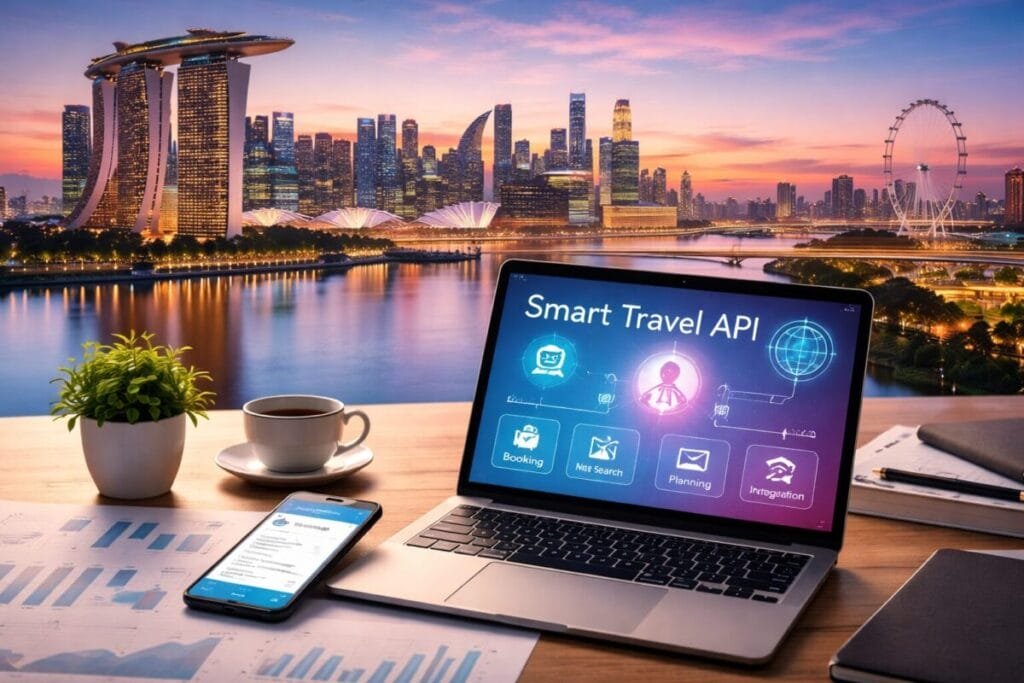
Singapore is once again capturing global attention as it unveils an open-source API agent designed to accelerate the next wave of smart tourism and travel technology integration. The announcement positions the city-state as a key global hub for digital travel innovation, reinforcing its long-standing reputation for combining tourism strategy with high-performance technological development. For an industry rapidly embracing artificial intelligence, data orchestration, and automation, Singapore’s latest initiative offers a foundational tool that helps travel systems communicate more efficiently and more intelligently.
For years, Singapore has stood out as a model for how policy, tourism, and technology can work in harmony. Its airport, transportation network, hotel sector, digital payments ecosystem, and visitor experience platforms have driven international rankings and attracted foreign companies to establish regional headquarters. By introducing an open-source API agent that simplifies how travel systems connect and exchange data, Singapore is demonstrating once again why it remains the preferred digital gateway for Asia’s tourism sector.
The innovation solves a long-standing challenge in travel technology: fragmented systems. Airlines, hotels, payments, tourism boards, and transportation operators operate on a patchwork of different data structures and legacy systems. Integrating them requires technical expertise and costly middleware. Singapore’s new open-source API agent reduces that complexity by allowing developers to interact with travel infrastructure using natural language rather than complex protocols. This streamlines experimentation, lowers entry barriers, and significantly accelerates innovation cycles for travel startups and established players alike.
The city’s move toward open-source strategies also reflects a broader shift occurring across the global travel industry. AI-enabled travel planning tools, dynamic pricing engines, voice assistants, and automated customer service platforms all require seamless access to travel data. Without an efficient and standardised way to surface this information, AI remains limited. Singapore’s solution fills that gap by making data more accessible, more structured, and more interoperable.
Singapore’s tourism ecosystem is particularly well positioned for such innovation due to its unique combination of governance stability, infrastructure readiness, and international connectivity. The country offers a skilled workforce, a thriving developer community, and a government willing to invest in emerging technologies to enhance national competitiveness. For travel companies, the ability to prototype, test, and deploy within a technologically advanced environment reduces risk and increases speed to market.
The advantages of the open-source API agent extend beyond developer convenience. For travel businesses, the technology supports new models of guest engagement, service personalisation, and operational automation. With simplified access to travel data, AI tools can assist travelers by offering smarter recommendations, faster search results, and more tailored itineraries. Hotels benefit from clearer integration between booking systems, check-in workflows, loyalty platforms, and customer support interfaces. Tourism boards can create dynamic destination platforms that reflect real-time availability, pricing, and event data.
One metric of Singapore’s success in travel technology is its growing ability to attract global tourism brands, travel platforms, and engineering talent. The city serves as a strategic headquarters for many travel tech firms due to its supportive regulatory landscape, intellectual property protections, and digital governance systems. By releasing open-source infrastructure rather than closed proprietary systems, Singapore positions itself not as a consumer of travel technology, but as a producer that shapes global standards.
The decision to make the API agent open-source promotes an inclusive and collaborative tech environment. Developers, startups, universities, and travel institutions worldwide can contribute improvements, test applications, and build new layers of innovation at no licensing cost. This accelerates adaptation across multiple travel verticals, from aviation and hospitality to event tourism and urban mobility.
Another core strength of the innovation is its built-in data processing capability. Travel data often requires joining, filtering, sorting, and aggregating information across different services. The API agent provides these functions natively, allowing users to derive insights without additional engineering tools. This enhances the value of travel data for planning platforms, revenue management systems, and tourism analytics dashboards.
For the tourism sector, the introduction of the open-source API agent arrives at a critical moment. Global travel demand is rebounding strongly, but traveler behavior has shifted toward digital independence, personalisation, and time-efficient services. Technologies that reduce friction and enrich the visitor experience are becoming powerful differentiators for destinations competing for tourism revenue and talent. Singapore’s initiative blends these priorities by enabling tourism services to become smarter without imposing heavy development burdens.
The long-term impact of the innovation is expected to extend beyond tourism and into Singapore’s broader economic positioning. The city-state has made digital transformation a strategic national priority, and travel technology is one of its most internationally visible channels for demonstrating that vision. With tourism contributing significantly to its economy, the integration of technology and visitor experience strengthens the country’s competitive edge as both a destination and a business hub.
As global travel systems move toward AI-driven architectures, Singapore’s open-source approach signals how the next generation of tourism infrastructure may be built: modular, interoperable, collaborative, and cognitively assisted. The announcement underscores that the future of tourism leadership is no longer defined solely by attractions and amenities, but by the sophistication of the digital frameworks that support them.
In shaping the travel systems of tomorrow, Singapore is not merely adopting global technology trends — it is helping define them. With policy discipline, engineering capability, and tourism strategy aligned, the city-state continues to demonstrate how destinations can build smart travel ecosystems that scale, adapt, and endure.
For more travel news like this, keep reading Global Travel Wire