China continues to merge ancient traditions with advanced technology, and Xi’an stands at the center of this transformation. During the Spring Festival, the city introduced smart tourism innovations designed to improve visitor experiences while preserving cultural heritage.
Xi’an, known for its historical significance and Tang Dynasty legacy, attracts millions of travelers during the Lunar New Year period. Authorities now combine digital tools with traditional celebrations to create immersive and efficient tourism environments. These developments reflect China’s broader strategy to modernize tourism through innovation and data-driven management.
Smart tourism initiatives aim to enhance accessibility, reduce congestion, and engage travelers through interactive experiences. By integrating technology into heritage sites, Xi’an showcases how digital solutions can strengthen cultural storytelling.
Robotic Experiences Bring Classical Culture to Life
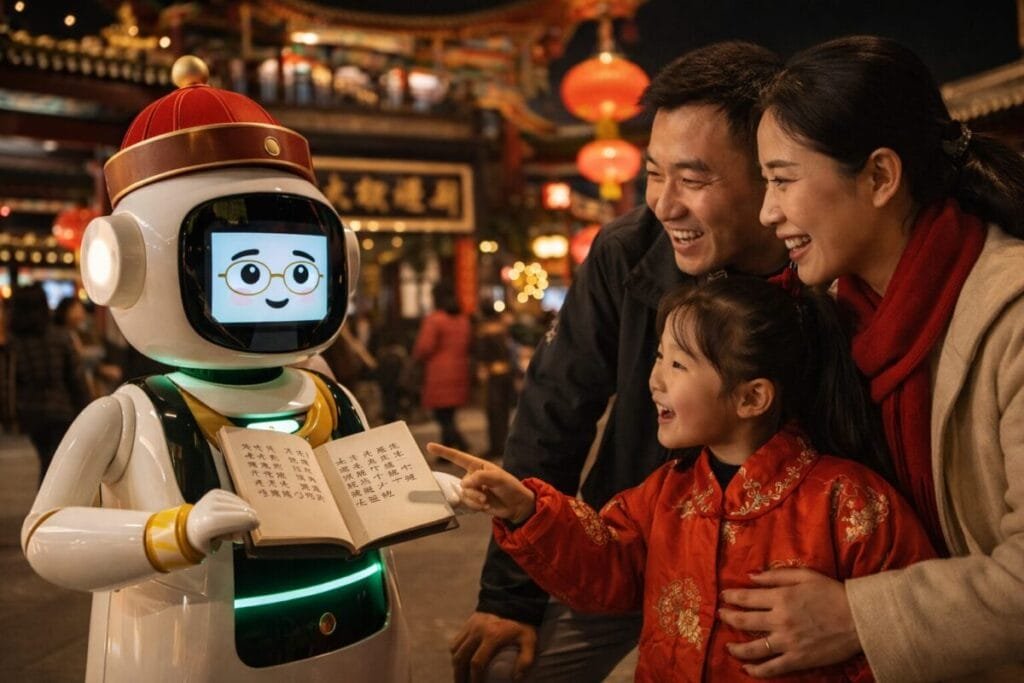
One of the most striking features of the Spring Festival celebrations involves poetry-reciting robots deployed across major cultural landmarks. These robots interact with visitors and present classical Chinese literature through engaging performances.
Families and students enjoy learning about historical poetry in a dynamic format. The robotic systems combine artificial intelligence with cultural education, creating memorable moments for tourists. This approach helps younger audiences connect with traditional literature in ways that feel modern and accessible.
Local authorities emphasize cultural preservation through innovation. Robots serve as educational tools that highlight linguistic heritage while demonstrating technological advancement. Visitors gain both entertainment and historical knowledge during their journey.
Autonomous Sightseeing Boats Enhance Urban Exploration
Xi’an has also introduced driverless sightseeing boats that operate along scenic waterways. These autonomous vessels offer panoramic views of illuminated city landscapes during evening celebrations.
Advanced sensors and navigation systems allow the boats to operate safely without manual steering. Travelers enjoy smooth rides while experiencing the city’s historical architecture from unique perspectives.
Autonomous transport reflects China’s growing investment in smart mobility solutions. By integrating automation into leisure tourism, authorities aim to reduce operational challenges while improving efficiency.
Such innovations highlight the broader trend of smart city development. Urban planners increasingly rely on technology to enhance transportation networks and tourist experiences simultaneously.
Wearable Technology Improves Accessibility at Heritage Sites
Exploring Xi’an’s vast historical areas often requires extensive walking. To support visitors, tourism operators introduced wearable exoskeleton devices that reduce physical strain.
These lightweight mechanical suits assist users with movement, making long tours more comfortable. Elderly travelers and visitors with limited mobility benefit significantly from this technology.
Accessibility plays a major role in modern tourism strategies. By offering supportive devices, Xi’an ensures that more people can explore its landmarks without fatigue.
The introduction of exoskeleton technology demonstrates practical applications of advanced engineering in everyday tourism activities. Travelers can enjoy cultural experiences without worrying about physical limitations.
Big Data and Real-Time Monitoring Improve Crowd Management
Spring Festival attracts massive crowds, and managing visitor flow remains a critical challenge. Authorities use big data systems and digital platforms to monitor tourist activity in real time.
Mobile applications provide updates on crowd density, waiting times, and transportation schedules. Travelers receive guidance that helps them avoid congestion and plan efficient routes.
Data-driven management allows local officials to respond quickly to changing conditions. By analyzing visitor patterns, teams adjust transportation services and deploy resources where needed.
Smart monitoring systems enhance safety and improve overall visitor satisfaction. Travelers enjoy smoother experiences while authorities maintain better control over large-scale events.
Digital Innovation Supports Sustainable Tourism Growth
China continues to invest heavily in digital transformation across tourism sectors. Government initiatives promote the integration of artificial intelligence, augmented reality, and smart infrastructure.
These technologies help preserve cultural heritage while supporting sustainable tourism growth. Digital storytelling tools allow historical narratives to reach global audiences through modern platforms.
Xi’an’s Spring Festival initiatives demonstrate how technology can enhance traditional celebrations without overshadowing cultural authenticity. Smart tourism solutions create balance between heritage preservation and innovation.
Tourism experts note that experiential travel continues to grow worldwide. Travelers seek deeper cultural engagement combined with convenience and personalization. Smart tourism meets these expectations by blending immersive experiences with digital support systems.
Strengthening China’s Position in Global Tourism Innovation
China positions itself as a leader in technology-driven tourism development. Cities like Xi’an serve as testing grounds for new solutions that may expand nationwide.
Digital tools encourage international visitors by offering multilingual services, navigation assistance, and interactive content. These features simplify travel planning and increase destination appeal.
Smart tourism also supports economic development by attracting new visitor segments interested in technology-enhanced experiences. As travel demand evolves, destinations must adapt to changing expectations.
Xi’an’s approach demonstrates how historical cities can remain relevant by embracing innovation. Technology allows ancient stories to reach modern audiences in creative ways.
The Future of Spring Festival Tourism
The integration of robotics, automation, and wearable technology signals a new chapter for cultural tourism in China. Visitors no longer experience festivals solely through traditional formats. Instead, they engage with immersive digital environments that enrich understanding.
As artificial intelligence and smart infrastructure continue to advance, more destinations may adopt similar strategies. Digital platforms will likely play a central role in managing crowds, enhancing accessibility, and creating personalized travel experiences.
Xi’an’s Spring Festival celebrations highlight the potential of smart tourism to transform cultural events. By combining history with innovation, the city offers a glimpse into the future of global travel experiences.
For more travel news like this, keep reading Global Travel Wire