








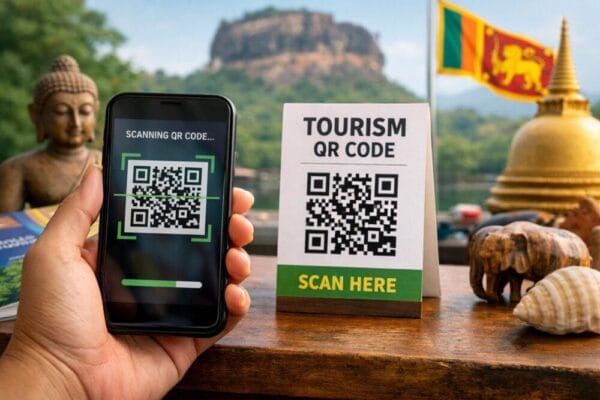
Sri Lanka plans to modernize its tourism industry with a new QR code verification system. The government announced the initiative to improve service quality and strengthen tourist confidence. Officials want to ensure that only certified tourism operators serve international visitors.
Tourism plays a vital role in Sri Lanka’s economy. The country attracts travelers with beaches, wildlife reserves, historic temples and cultural heritage. Authorities now aim to modernize the sector through digital technology and stronger regulation.
The QR code system will allow authorities and tourists to verify tourism operators quickly. Visitors will gain access to reliable services while authorities improve oversight across the industry.
Digital Verification for Tourism Operators
The new system will require tourism businesses to register with the Sri Lanka Tourism Development Authority. Hotels, tour guides, transport providers and travel agencies must complete official registration.
After registration, each service provider will receive a unique QR code. Authorities will link the code to the operator’s official tourism license and business information.
Tourists will scan the QR code using smartphones to confirm whether a service provider operates legally. This process helps travelers identify trusted companies quickly.
Government officials expect the system to reduce illegal tourism services and improve service standards.
Strengthening Transparency Across the Tourism Sector
Transparency remains an important factor in tourism development. Visitors prefer destinations where they can easily verify service providers.
The QR code system creates a transparent framework for tourism businesses. Travelers will know that registered operators meet national tourism standards.
Authorities can also monitor tourism services more efficiently. Digital records will help regulators identify businesses that operate without proper authorization.
This system supports fair competition within the tourism industry. Registered companies will benefit from stronger credibility among international visitors.
Tourism officials believe this approach will improve the reputation of Sri Lanka as a reliable travel destination.
Addressing Declining Tourist Arrivals
Sri Lanka introduced this initiative during a challenging period for tourism. Industry data shows a decline in visitor arrivals from certain international markets.
European and Middle Eastern travelers represent important tourism segments for Sri Lanka. However, recent geopolitical tensions have affected travel patterns across these regions.
Many European visitors reach Sri Lanka through transit hubs in the Middle East. Airlines operating through those hubs play a key role in connecting travelers to the island.
Regional tensions and travel disruptions have influenced tourism demand. Industry experts report reduced visitor numbers from Middle Eastern countries during the Ramadan period.
Tourism stakeholders estimate that arrivals from these markets declined by roughly twenty-five to thirty-five percent.
Enhancing the Tourist Experience
Sri Lanka hopes the QR code system will improve the experience for international visitors. Travelers often worry about scams or unreliable service providers when visiting new destinations.
Digital verification tools provide reassurance for tourists exploring unfamiliar markets. Visitors can confirm the legitimacy of tour guides, transport companies and travel agencies before booking services.
The system also simplifies communication between tourists and tourism authorities. Visitors can easily report concerns or verify information through official channels.
These improvements aim to create a safer and more comfortable travel environment.
Supporting the Recovery of Sri Lanka Tourism
Sri Lanka continues rebuilding its tourism industry after several economic and global disruptions. Tourism authorities recognize that trust plays a major role in recovery.
Visitors often choose destinations that demonstrate strong safety standards and organized tourism systems. Digital verification tools help build that confidence.
The QR code system represents part of a broader strategy to modernize tourism management. Authorities aim to integrate digital tools into several areas of tourism operations.
Improved technology can simplify visitor services, strengthen security and increase operational efficiency.
Tourism officials expect these changes to support long-term industry recovery.
Technology Drives Tourism Modernization
Digital technology now plays an essential role in global tourism development. Many destinations use mobile tools to enhance visitor services.
Sri Lanka has already introduced online visa applications and digital tourism information platforms. The QR code verification system builds on these initiatives.
Technology helps governments manage tourism more efficiently. Digital systems allow authorities to collect data, monitor businesses and respond to industry challenges quickly.
Travelers also benefit from faster access to information and services.
These innovations support a modern tourism ecosystem that meets the expectations of international visitors.
Building Confidence for International Travelers
Sri Lanka’s tourism strategy focuses strongly on rebuilding traveler confidence. Visitors want assurance that they will receive reliable services throughout their trip.
The QR code system allows tourists to verify accommodation providers, transport companies and tour operators. This transparency strengthens trust between travelers and local businesses.
Authorities also gain better oversight of the tourism sector. They can identify service issues quickly and address them through regulation or support programs.
These improvements encourage travelers to explore the island with greater confidence.
Sri Lanka Promotes a Safe and Organized Tourism Future
Sri Lanka continues investing in initiatives that support sustainable tourism growth. The country remains famous for its biodiversity, cultural heritage and scenic landscapes.
National parks such as Yala and Udawalawe attract wildlife enthusiasts from around the world. Cultural sites such as Sigiriya, Anuradhapura and Kandy offer deep historical experiences.
Tourism authorities believe digital modernization will strengthen the country’s position in global travel markets. Organized tourism systems help destinations attract repeat visitors and positive international attention.
The QR code verification program represents an important step toward this goal.
A Digital Step Forward for Sri Lanka Tourism
Sri Lanka’s new QR code system signals a commitment to modern tourism management. The initiative combines technology, regulation and service improvement to enhance visitor experiences.
Tourists will enjoy safer and more transparent services when exploring the country. Businesses will benefit from improved credibility and stronger industry oversight.
Authorities hope these improvements will help rebuild international visitor numbers. As the tourism sector adapts to digital innovation, Sri Lanka aims to strengthen its reputation as a trusted and welcoming travel destination.
For more travel news like this, keep reading Global Travel Wire