
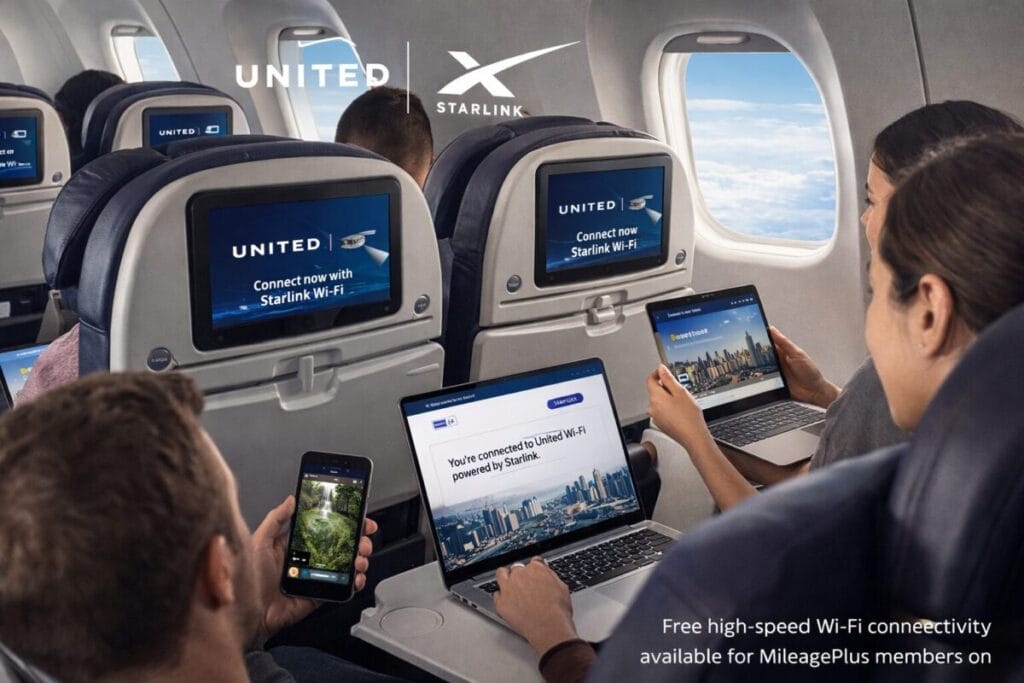
United Airlines is redefining the in-flight experience for millions of domestic travelers with the rapid deployment of Starlink Wi-Fi, a game-changer for tourism and mobility in the United States. With more than 25% of its daily flights now equipped with free, high-speed satellite connectivity, United has positioned itself at the forefront of the travel-tech revolution. This move not only enhances passenger satisfaction but also plays a critical role in strengthening regional and national tourism economies.
Starlink Wi-Fi Rollout: Fast, Free, and Far-Reaching
Within just a year, United Airlines has completed installations of Starlink’s low-latency satellite internet on over 300 two-cabin regional aircraft. The fleet includes popular models such as the Embraer E175, which connect crucial U.S. tourism hubs like Denver, Houston, and Indianapolis. These jets operate approximately 1,200 flights daily, bringing enhanced internet connectivity to a significant portion of regional air travel.
The new system allows passengers to stream, video call, and access digital services without disruptions — even while flying over remote landscapes, from the peaks of the Rockies to the bayous of Louisiana. Importantly, this service is entirely free for passengers who log in with their MileagePlus accounts, removing financial barriers to connectivity and encouraging widespread use.
Boosting Domestic Tourism Through Connectivity
The implications for tourism are substantial. With reliable gate-to-gate internet access, travelers can plan, share, and extend their trips in real time. Whether posting scenic shots from Colorado’s national parks or booking last-minute tours in Houston, passengers are empowered to stay connected and inspired.
Tourism boards across states have lauded this development as a catalyst for growth, especially for secondary cities and rural destinations that rely on regional flights. Starlink’s coverage enables real-time content sharing and digital planning, which in turn promotes spontaneous tourism spending and increases destination visibility.
Connecting Major Hubs and Hidden Gems
United’s regional routes form the connective tissue of U.S. tourism. With enhanced Wi-Fi now available on flights linking tourism-centric hubs like Kansas City, Denver, and Houston, these cities are becoming more attractive entry points for both domestic and international tourists.
The move also benefits smaller yet scenic destinations served by regional flights. Places like Colorado Springs, Reno, and Charleston — often overshadowed by larger markets — gain competitive appeal. Tourists now enjoy a connected travel experience from their arrival gate to their final destination, improving satisfaction and fostering longer, multi-city itineraries.
Expansion to Mainline Fleet: Nationwide Coverage by 2027
United Airlines plans to expand Starlink connectivity to its mainline fleet, aiming to equip over 800 aircraft with the system by the end of 2026. Initial installations have begun on Boeing 737s, with testing already showing speeds over 300 Mbps. These figures are impressive, enabling even data-heavy activities such as video conferencing and real-time cloud-based travel planning.
Wide-body aircraft, including Boeing 777s used on transcontinental and international routes, are expected to follow once regulatory approval is granted. This will allow international travelers to remain connected as they transfer to domestic legs, supporting seamless tourism planning across the country.
By 2027, United’s Wi-Fi upgrade will cover over 1,000 aircraft, creating a nearly complete high-speed air network for tourism-related travel.
Technology Meets Sustainability and Accessibility
This connectivity isn’t just a convenience — it’s a strategic enabler of sustainable travel. High-speed Wi-Fi helps reduce the need for printed travel guides and promotes digital bookings and e-tickets. Passengers can check into hotels, buy park passes, or navigate local transit using online platforms even before they land, making tourism more efficient and environmentally friendly.
Moreover, United’s free Wi-Fi democratizes access. Unlike traditional pay-per-use models, Starlink service is available throughout the cabin. Whether a digital nomad finalizing a project or a family streaming a travel documentary, every passenger benefits equally — a rare level of service in domestic aviation.
Targeted Aircraft and Future Fleet Compatibility
Currently, the service focuses on higher-capacity regional jets like Embraer E170/E175 and CRJ-700 models, prioritizing aircraft most commonly used on premium U.S. tourism routes. Smaller aircraft such as the CRJ-200 and Embraer E145 are not yet eligible, but this has minimal impact on the overall tourism experience due to their limited deployment on key routes.
Future upgrades include Airbus A321s and additional Boeing models, with ongoing FAA approvals supporting a broader rollout. The ultimate goal: consistent digital service across all tourist entry points, from the nation’s largest cities to its remote nature reserves.
Strategic Marketing and Local Economic Impact
United Airlines has begun marketing its Starlink rollout in key tourism regions, notably Denver and Houston. By integrating the connectivity message into tourism campaigns, the airline aligns itself with modern travel expectations.
City and state tourism departments recognize the broader benefits. With passengers able to research local attractions, book reservations, and share experiences mid-flight, the economic impact multiplies. Hotels, museums, restaurants, and tour operators all benefit from better-informed, better-connected visitors.
A New Era for Connected Travel in America
In a world where connectivity defines convenience, United Airlines is setting the benchmark. By making free Starlink Wi-Fi a reality on a large portion of its fleet, the airline is transforming not just flights — but the entire travel journey.
This move cements the United States’ reputation as a forward-thinking tourism destination. With seamless digital experiences now integrated into regional and national routes, travelers are more likely to explore, share, and return. The era of connected tourism is here — and United Airlines is flying it forward.
For more travel news like this, keep reading Global Travel Wire